
Beginner Bodyweight Exercises: Build Strength at Home Without Equipment
Bodyweight exercises are the most accessible way to start building real strength — no gym membership, no equipment, no experience required. See 8 key benefits and how to begin.
Key Takeaways
- Mimics real-life actions – pushing, pulling, squatting, hinging – building usable strength.
- Aim for 3-4 days a week with at least one rest day – recovery is when strength develops.
- Start with just three to four exercises per session: squats, push-ups, glute bridges, plank.
- The first four weeks are about consistency and correct movement, not transformation.
- A yoga mat and 20-30 minutes are genuinely enough – no dumbbells or bands required.
Beginner bodyweight exercises are the most accessible way to start building real strength — no gym membership, no equipment, and no experience required. Whether you’re starting from scratch or returning after a long break, a structured bodyweight workout plan for beginners helps you develop foundational muscle, improve posture, and build the consistency that makes fitness stick long-term.
8 Key Benefits of Bodyweight Training for Beginners
- Builds Functional Strength Bodyweight movements mimic real-life actions — pushing, pulling, squatting, and hinging. Training these patterns develops strength you actually use day to day, not just in the gym.
- Boosts Metabolism Over Time Consistent resistance training — even without weights — adds lean muscle tissue. More muscle means your body burns more energy at rest, which gradually supports better body composition.
- Improves Bone Density Loading your joints and bones through bodyweight movements places healthy mechanical stress on the skeleton. Regular practice may help support long-term bone strength, especially as you age.
- Enhances Functional Strength and Mobility Moves like squats and lunges improve hip mobility, ankle flexibility, and joint stability simultaneously. This makes everyday movement — climbing stairs, lifting bags — feel noticeably easier.
- Supports Gradual Fat Loss Bodyweight training elevates your heart rate while building muscle — a combination that may gradually support fat loss when paired with consistent practice and reasonable nutrition habits.
Explore exercises for functional strength to understand how movement quality directly affects daily life.
How to Get Started with Beginner Bodyweight Exercises
What You Need to Begin
Almost nothing. A yoga mat or a soft floor, comfortable clothing, and about 20–30 minutes of uninterrupted time is genuinely enough to start. You don’t need dumbbells, resistance bands, or a pull-up bar for the foundational movements in a beginner bodyweight workout.
Setting Realistic Goals
Aim to train 3–4 days per week with at least one rest day between sessions. Your goal in the first four weeks is not transformation — it’s consistency and learning correct movement patterns.
Progress in reps and form before you ever think about intensity. Avoid the trap of training every day back-to-back when you’re starting out; recovery is when strength actually develops.
Start with the Basics
Begin with just three to four exercises per session. Focus on slow, controlled reps over speed. A simple beginner bodyweight workout plan might look like: squats, push-ups, glute bridges, and a plank hold. Master these before adding variations or combining movements into circuits.
Best Beginner Bodyweight Exercises
Squats
The foundational lower-body movement. Stand feet shoulder-width apart, lower your hips as if sitting into a chair, and press through your heels to stand back up. Keep your chest tall and knees tracking over your toes. Start with: 3 sets of 10–12 reps.
Push-Ups
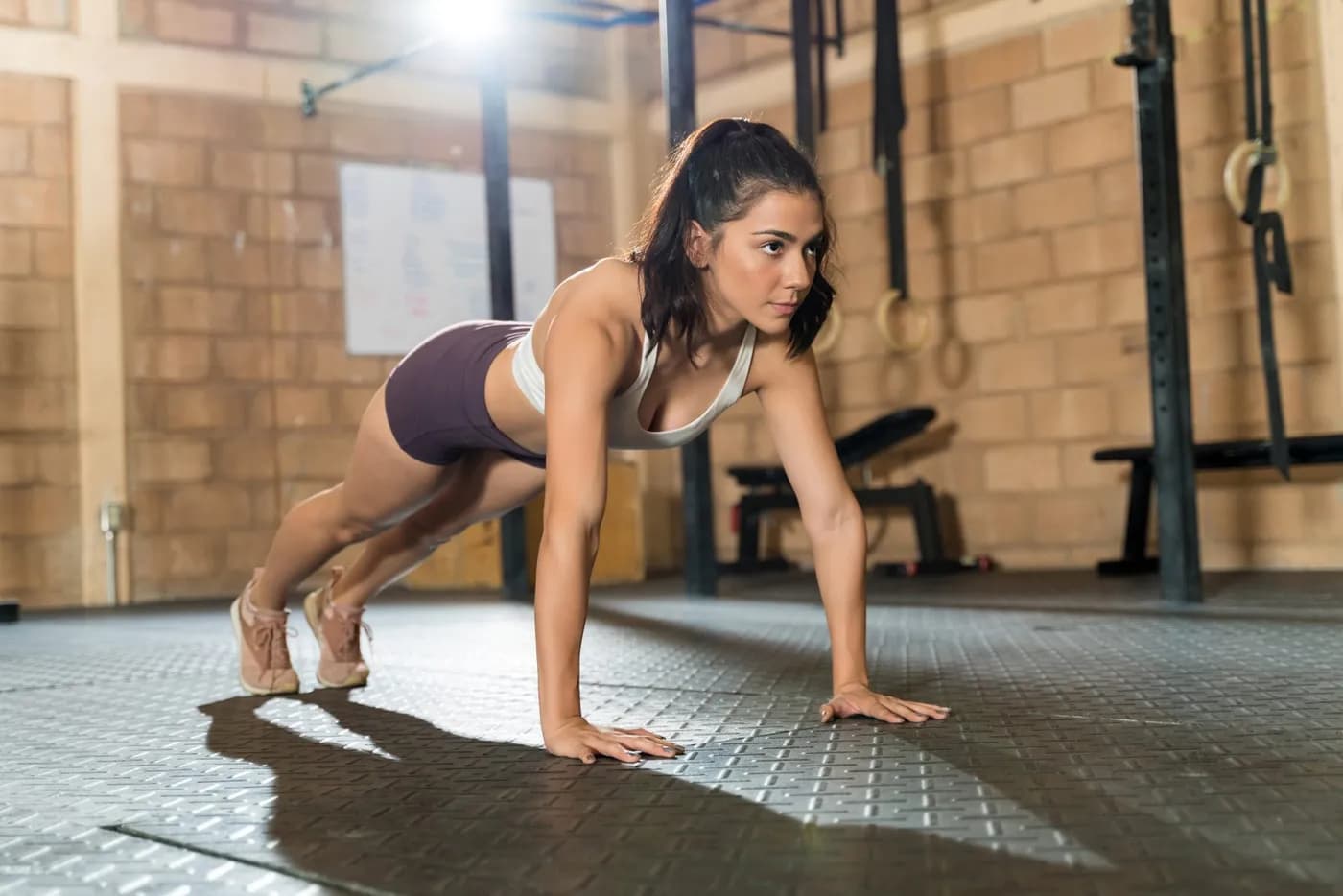
The upper-body staple. Begin on your knees if a full push-up is too challenging. Lower your chest toward the floor with elbows at roughly 45 degrees, then press back up. This works your chest, shoulders, and triceps simultaneously. Start with: 3 sets of 6–10 reps.
Lunges
Step one foot forward and lower your back knee toward the floor, keeping your front shin vertical. Alternate legs. Lunges build single-leg stability and strength through the quads, hamstrings, and glutes. Start with: 3 sets of 8 reps per leg.
Plank
Hold a forearm or straight-arm plank position with your body in a straight line from head to heels. Avoid letting your hips sag or rise. This builds deep core stability that supports every other exercise in your routine. Start with: 3 holds of 20–30 seconds.
Glute Bridges
Lie on your back with knees bent, feet flat on the floor. Drive your hips upward by squeezing your glutes, hold for one second at the top, then lower slowly. Excellent for activating the posterior chain that’s often weak from prolonged sitting. Start with: 3 sets of 12–15 reps.
Mountain Climbers
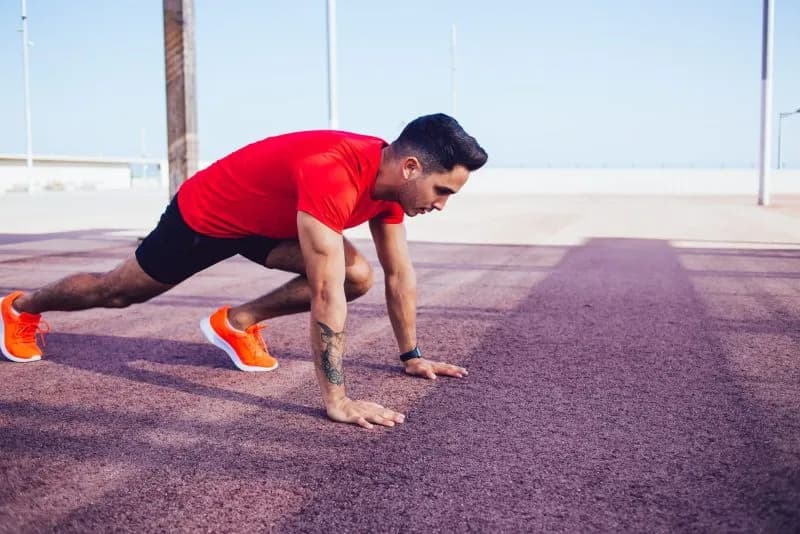
From a push-up position, alternate driving each knee toward your chest in a controlled, rhythmic motion. This challenges your core, shoulders, and cardiovascular system together. Start with: 3 sets of 20 total reps (10 each side).
Superman Hold
Lie face down, extend your arms forward, and simultaneously lift your arms, chest, and legs off the floor. Hold for two seconds, then lower. This strengthens the lower back and spinal erectors — muscles critical for good posture. Start with: 3 sets of 8–10 reps.
Common Mistakes to Avoid
- Poor Form Prioritizing speed or rep count over technique is the fastest route to injury and the slowest route to progress. For each exercise, choose a range of motion you can control fully — a half-rep with perfect form builds more strength than a sloppy full rep.
- Skipping the Warm-Up Five minutes of light movement — leg swings, arm circles, hip rotations — dramatically reduces injury risk and improves exercise performance. Cold muscles don’t contract as efficiently, which limits both strength output and coordination.
- Overtraining Too Soon Many beginners train every single day in the first two weeks and then burn out or get injured by week three. Muscle repair happens during rest days. Three to four sessions per week with recovery time between them consistently outperforms daily training for beginners.
- Inconsistency The single biggest differentiator between people who see results and those who don’t is showing up regularly over weeks — not training harder in a single session. A repeatable bodyweight workout plan for beginners done three times a week will outperform an intense program you abandon after ten days.
For deeper insight into how consistency drives strength, see what a full body no-equipment strength workout looks like when practiced regularly.
Who Should Try Beginner Bodyweight Exercises?
- Beginners If you’ve never trained before, bodyweight exercise is the ideal entry point. There’s no weight to load or machines to configure — just your body, gravity, and a structured plan. The learning curve is gentle, and the results compound quickly in the first few weeks.
- Women One of the most persistent myths in fitness is that strength training makes women bulky. It doesn’t. Women have far lower testosterone levels than men, which means resistance training builds lean, functional muscle rather than bulk. Bodyweight training for women improves posture, joint stability, and energy levels noticeably within a few weeks of consistent practice.
- Older Adults Bodyweight training is an excellent way for older adults to maintain muscle mass, improve balance, and support bone density — all of which decline naturally with age. Exercises like squats and glute bridges are low-impact and highly effective. Note: If you have existing joint conditions, please consult your physician before starting any new exercise program.
- Working Professionals A 20–25 minute bodyweight session done three times a week is enough to produce meaningful strength and fitness improvements. For someone with a desk job, bodyweight exercises also directly counter the postural damage caused by prolonged sitting — strengthening the upper back, glutes, and core that get chronically underused during the workday.
Explore a dedicated female strength training program specifically structured for women’s goals and physiology.
Build Strength with a Routine That Actually Works
Building strength isn’t about doing random workouts or following a different YouTube video every day. It’s about consistency, expert guidance, and following a structured plan that progresses with you. With the right support, you can train effectively from home and see real progress over time — starting from your very first session.
What You Get with Habuild’s Strong Everyday Program:
- Daily live guided strength and yoga sessions
- Beginner-to-advanced progression — no experience needed
- No-equipment and home-friendly workouts
- Expert trainers who correct your form in real time
- A community of members to keep you accountable
For a broader look at how a structured plan accelerates your results, see beginner gym workout guidance for additional context on programming principles.
Related reads: Strength Training at Home Without Equipment · Bodyweight Exercises at Home: Benefits, Moves & Beginner Guide
Foundational muscle only develops when beginner bodyweight exercises are practised within a structured plan that adds difficulty as you improve — not repeated at the same level indefinitely. That kind of progression is easier to sustain with guidance built in. Strong Everyday offers exactly that: a guided program that builds on your beginner bodyweight foundation week after week.
Frequently Asked Questions
Related Articles
Beginner Fat Loss Workout: The Complete Guide to Getting Started at Home
A beginner fat loss workout doesn't need to be complicated to be effective — the right starting point, done consistently, makes all the difference. See the benefits, best exercises, and common mistakes.
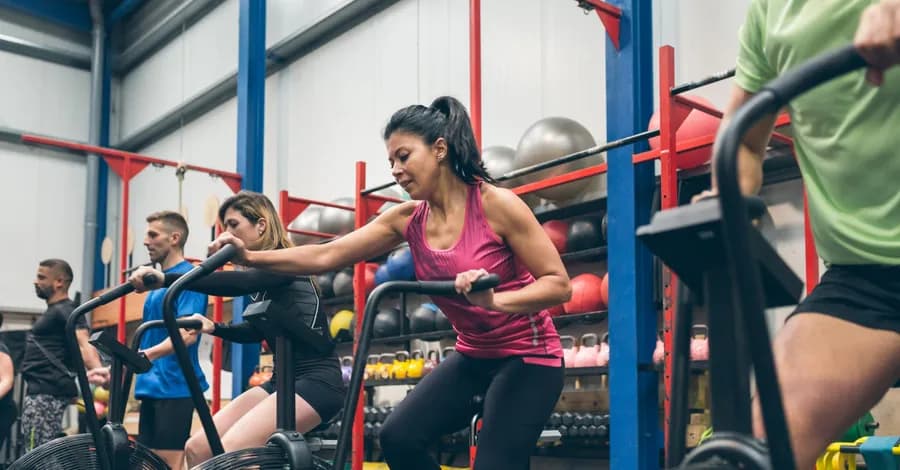
What Is Strength Training? Benefits, Exercises & How to Get Started
Strength training uses resistance — bodyweight, dumbbells, or bands — to challenge muscles and stimulate growth, building lean muscle and raising metabolism for all ages and experience levels. See the benefits and how to start.
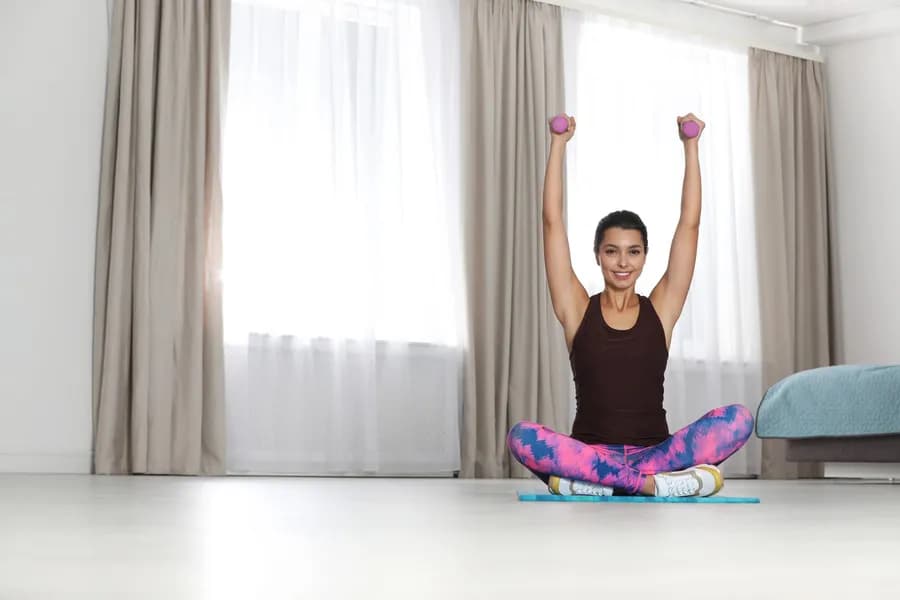
Strength Training for Women at Home: The Complete Guide
With three structured sessions a week, most women notice measurable gains in strength and posture within four to six weeks — using only bodyweight, dumbbells, or bands. See the complete guide.

What Muscles Do Push Ups Work?
Push ups engage the chest, triceps, front shoulders, core, and upper back stabilisers at once — a full-body compound movement requiring zero equipment. See the full breakdown.
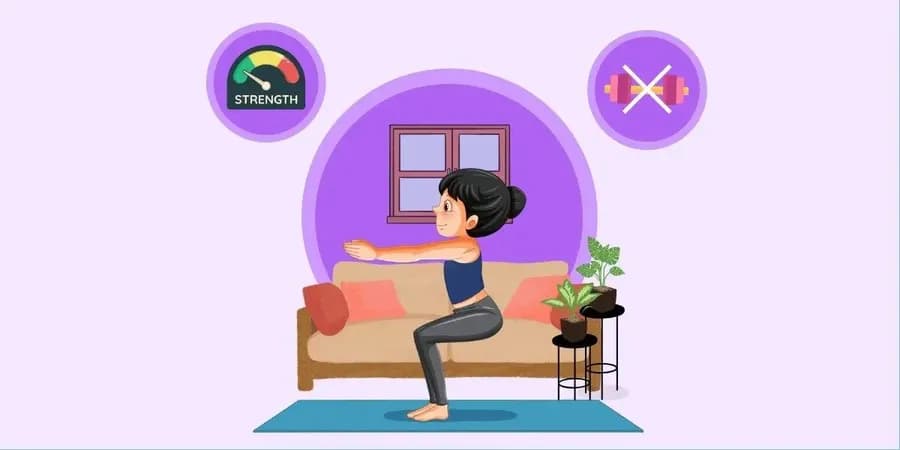
Strength Training Exercises at Home for Women
Building lean muscle and improving metabolism doesn't require a gym — just a routine that accounts for real life and actually sticks. See the benefits, best exercises, and common mistakes to avoid.
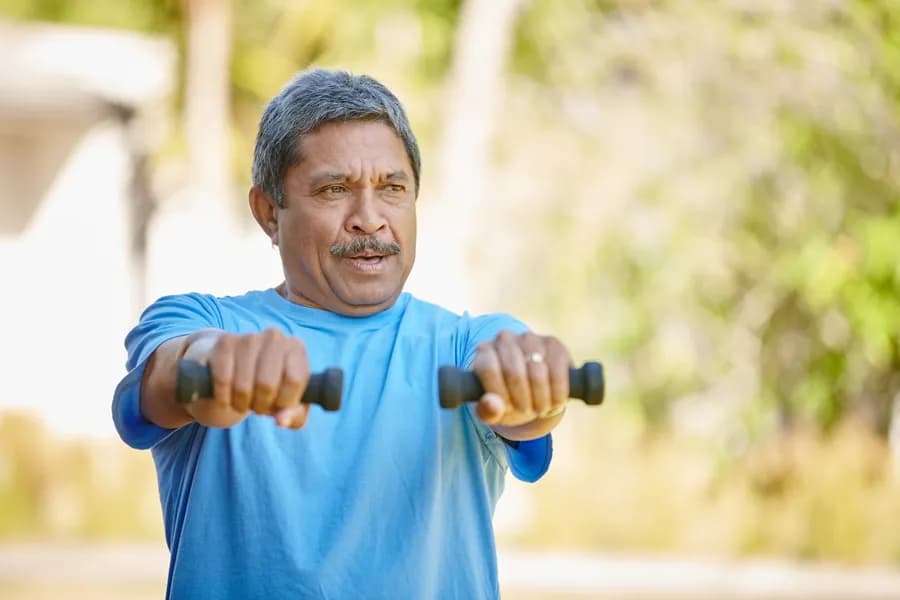
Strength Training for Older Adults: Benefits, Exercises & How to Start
Resistance exercise two to three times a week helps preserve muscle mass, support bone density, and maintain the functional strength needed for everyday independence, at any age from 50 onwards. See the key benefits and best exercises.