Strength Training vs Weight Training
Join live strength training classes from home with beginner-friendly guidance and expert coaching.
Quick Comparison: Strength Training vs Weight Training
Calories Burned — Strength Training: Moderate–High, depends on style. Weight Training: Moderate–High, load-dependent.
Muscle Building — Strength Training: High, all modalities can build muscle. Weight Training: Very High, progressive overload is easiest.
Strength Gain — Strength Training: High, neurological + muscular. Weight Training: Very High, heavier loads possible.
Fat Loss — Strength Training: High, full-body adaptable. Weight Training: Moderate–High, equipment-dependent.
Bone Density — Strength Training: Good with loaded variations. Weight Training: Excellent, heavy loads stimulate growth.
Metabolism Boost — Strength Training: High, lean mass raises BMR. Weight Training: Very High, larger muscle mass gains.
Beginner Friendly — Strength Training: Very High, bodyweight start. Weight Training: Moderate, form learning needed.
What Is Weight Training?
Weight training is a form of strength training that uses external resistance — dumbbells, barbells, kettlebells, or weight machines — to overload muscles and force adaptation. It is the most direct path to progressive overload, the principle that drives all muscle and strength gains. The progressive overload concept was formalised by Thomas DeLorme during World War II rehabilitation work and published in his 1945 paper "Restoration of Muscle Power by Heavy-Resistance Exercises" in The Journal of Bone and Joint Surgery — the foundational citation behind every modern resistance training programme.
A typical weight training session involves external weights at moderate-to-heavy loads, 5–15 reps per set depending on goal, 3–5 sets per exercise, 60 seconds to 3 minutes rest between sets, and a focus on adding weight, reps, or sets across weeks. Weight training is what most people picture when they hear "gym training" — and it remains the most direct path to serious muscle and strength building.
That said, it is not the only path. Bodyweight strength training, resistance band programmes, and kettlebell complexes all build muscle and force production through strength training principles without external weights, making strength training broadly more accessible than weight training alone.
Strength Training vs Weight Training for Muscle Building
How Effective Is Each for Muscle Building?
Weight training edges ahead for pure muscle building because it allows precise, measurable progressive overload. You can objectively add 2.5 kg to the bar every week or two and track your progression numerically. Bodyweight strength training plateaus faster — once you can do 20 push-ups, the next progression step is not always obvious without programming knowledge. That said, advanced bodyweight strength work (pistol squats, handstand push-ups, muscle-ups) absolutely builds serious muscle — it is simply harder for most lifters to scale without coaching.
Training Impact & Body Response
Weight training tends to create localised fatigue — you feel it in the specific muscle group you trained, with clear separation between body parts and clear DOMS patterns. General strength training (bodyweight, resistance bands) often creates more systemic fatigue because compound movements work multiple muscle groups together.
Speed of Results & Sustainability
Visible muscle gains from weight training: typically 4–8 weeks for beginners, with measurable strength jumps weekly during the first few months. From bodyweight strength training: 6–12 weeks for visible gains, slower but often more functional. Weight training requires gym access or home equipment, while broader strength training needs almost nothing — making it dramatically more sustainable for those who travel, live in smaller spaces, or cannot consistently access a gym.
Best Choice for Muscle Building
If you have consistent gym access and want maximum muscle gain, weight training wins. If you want sustainable lifetime training that adapts to any environment, broader strength training wins. The smartest path uses both — and that is exactly how Strong Everyday is structured: weighted compound work paired with bodyweight accessory progressions that work whether you have equipment or not.
Strength Training vs Weight Training for Functional Fitness
How Effective Is Each for Functional Fitness?
For functional fitness — real-life movement strength — general strength training often beats pure weight training. Bodyweight movements like push-ups, squats, lunges, and planks train multiple muscle groups in coordinated patterns that mirror exactly how your body moves through everyday life. Weight training tends to isolate muscles more — leg extensions build strong quadriceps but do not teach your body to stand up from a chair more efficiently. A goblet squat does both.
Training Impact & Body Response
Functional strength work leaves you feeling more coordinated, more balanced, and more confident in everyday movement — climbing stairs without pause, carrying heavy shopping without strain, picking up children without back wariness. Machine-heavy weight training builds visible muscle, but the strength does not always transfer to unprogrammed daily movement.
Speed of Results & Sustainability
Functional improvements arrive quickly — climbing stairs more easily, lifting groceries without strain, better posture — typically within 3–4 weeks of consistent training.
Best Choice for Functional Fitness
Mixed strength training wins for functional fitness. A smart weekly plan includes compound weight movements (squats, deadlifts), bodyweight work, and mobility — exactly how Strong Everyday is programmed.
When Strength Training May Be the Better Long-Term Choice Than Weight Training
Broader strength training has long-term advantages that pure weight-training-only plans miss. Sustainability across life stages — travel, sickness, busy weeks, gym closures — bodyweight and band work continues when gym access fails. Lower injury rate without permanently heavy loads, since overuse injuries drop significantly when training adapts to recovery state. Full-body integration through compound bodyweight movements that train coordination weight training often skips, joint longevity from sub-maximal loading that is gentler on knees, shoulders, and lower backs over decades, and accessible progression through tempo, range of motion, and unilateral variations rather than only added weight.
That said, weight training remains unbeatable for maximum hypertrophy and measurable strength peaks. The right answer is blending both — which is where solo lifters struggle most.
Best Strength Training Approaches That Compete with Weight Training
If you want non-weight-training strength work that delivers real muscle and force production, these approaches deliver:
Progressive bodyweight training — adding difficulty through leverage adjustments, elevated push-ups, pistol squats, and one-arm progressions to provide endless overload without external weights.
Resistance band programmes — variable resistance that challenges muscles through the full range of motion, particularly effective for joint-sensitive lifters.
Kettlebell training — combines strength, conditioning, and power in single movements; one of the most efficient training tools for limited-equipment situations.
Suspension training (TRX) — unstable bodyweight work that builds core stability and movement quality alongside muscle.
Controlled tempo bodyweight — slowing reps to 4-second descents multiplies difficulty without adding weight, ideal for home training.
How Habuild Strong Everyday Classes Compare to Weight Training
Build Muscle & Burn Fat Together
Strong Everyday blends weighted work with bodyweight conditioning, producing size gains and fat loss in the same programme. You are not forced to choose between gym access and effective training — programming adapts to the equipment you have available.
Guided Live Format vs Solo Training
The biggest problem with solo weight training is progression — most people lift the same weight for months because they have no structured plan. A live coach programmes progression for you, and live form correction prevents the small errors that compound into injury or stalled progress.
Progressive Overload with Expert Guidance
Trishala Bothra structures weekly load increases, rep adjustments, and exercise variations so you are always advancing, never stagnating.
Daily Structured Practice for Habit Building
Missing sessions is the single largest reason solo trainers fail. Daily live classes at fixed times solve attendance through structure.
Works for All Fitness Levels
Scaled bodyweight versions for beginners. Full loaded versions for intermediates. Periodised cycles for advanced lifters.
Flexible Batch Timing
Choose morning or evening classes and join the slot that suits your day.
Morning
6:30 am - 7:15 am
7:30 am - 8:15 am
8:30 am - 9:15 am

Evening
5pm - 5:45pm
6pm - 6:45pm
7pm - 7:45pm

Meet Your Strength Training Trainer
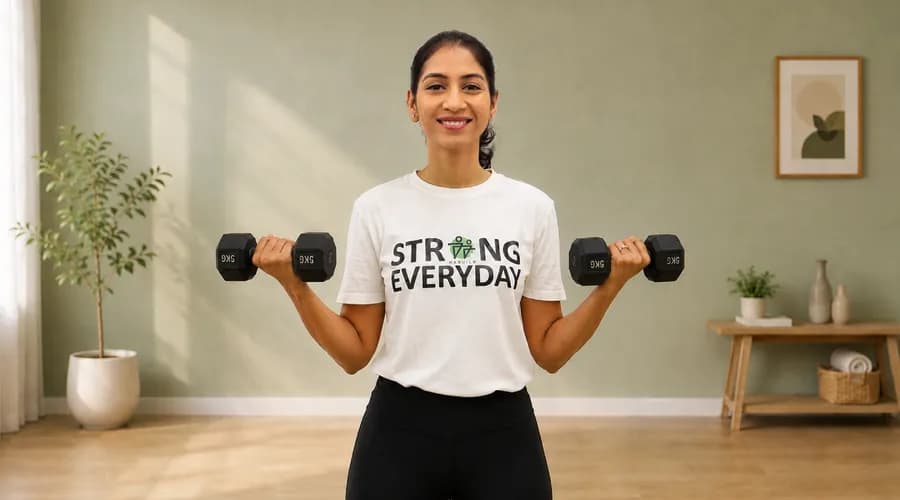
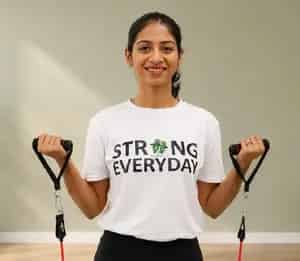
Trishala Bothra
COO & Co-Founder, Habuild
Trishala's online strength training sessions combine practical coaching with progressive programming — her methods have helped thousands build sustainable strength.
Choose Your Membership Plan
Continue after the trial with membership options designed for long-term consistency support.
Continue your habit on the Habuild app
Use the Habuild app for reminders, live access, progress support, and habit tracking.