Ashtanga Yoga
Join live yoga classes from home with beginner-friendly guidance and expert coaching.
Key Takeaways
- Covers Patanjali's classical eight-limbed path
- Also covers the modern Ashtanga Vinyasa system
- Systematised by K. Pattabhi Jois of Mysore
- A dynamic, breath-synchronised asana sequence
- Explains both the philosophical and physical traditions
What is Ashtanga Yoga (Sanskrit: eight limbs)?
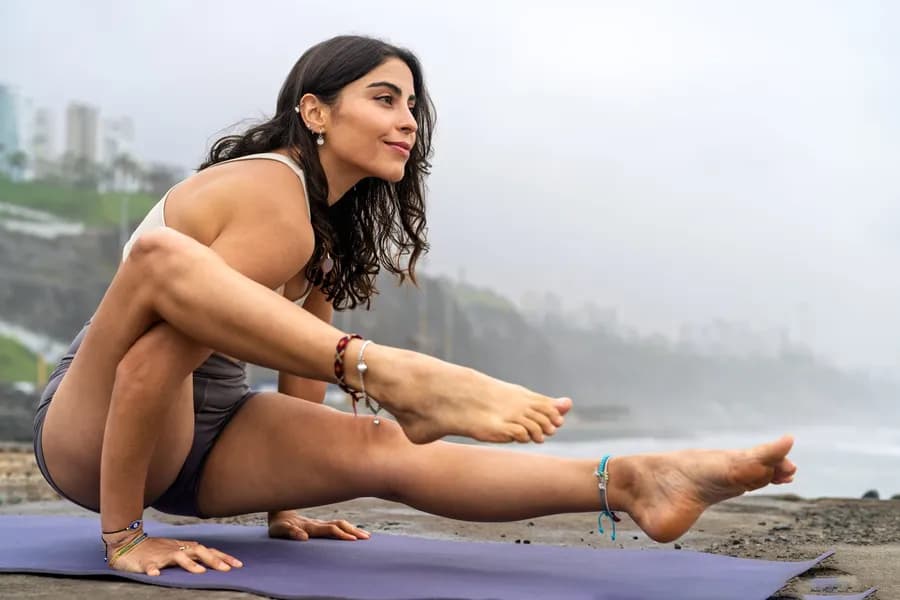
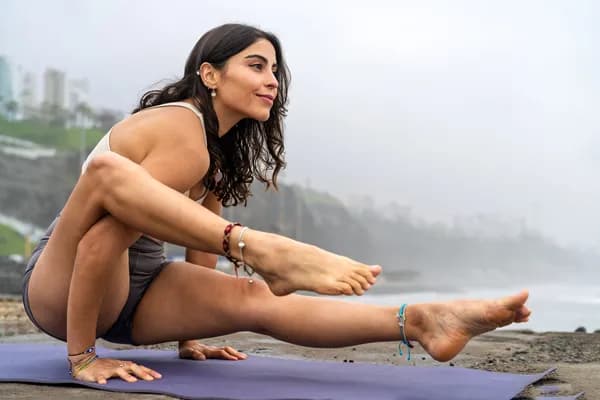
Ashtanga yoga (Sanskrit: अष्टाङ्ग, meaning "eight limbs") refers to two distinct but related traditions. The first — and more ancient — is Patanjali's Ashtanga, described in the Yoga Sutras (circa 400 CE): the eight-limbed path of Yama, Niyama, Asana, Pranayama, Pratyahara, Dharana, Dhyana, and Samadhi. The second — and more widely practised in the modern West — is Ashtanga Vinyasa Yoga, systematised by K. Pattabhi Jois of Mysore in the 20th century: a dynamic, breath-synchronised sequence of asanas organised into Primary, Intermediate, and Advanced series. In Ashtanga Vinyasa, each movement is linked to a specific breath — vinyasa krama — producing a moving meditation that combines cardiovascular conditioning, strength, flexibility, and mental focus in a single practice. The Primary Series (Yoga Chikitsa) consists of approximately 75 poses performed in a specific, unwavering sequence. Habuild's Ashtanga yoga programme integrates both traditions: the philosophical framework of Patanjali's eight limbs alongside the physical rigour of the Vinyasa practice.
Ashtanga Yoga Benefits
Physical: Builds Strength, Flexibility, and Cardiovascular Fitness Simultaneously
A 60-minute Primary Series session produces equivalent cardiovascular benefit to a 5km run while also building the flexibility and strength that running cannot provide.
Physical: Detoxification Through Breath and Heat
The vigorous practice generates significant internal heat (tapas) which combined with ujjayi pranayama produces a sweating detoxification effect and stimulates the lymphatic system.
Physical: Improves Posture and Spinal Health
Systematically develops the anterior and posterior spinal musculature through forward folds, backbends, twists, and inversions.
Mental: Builds Discipline, Focus, and Mental Resilience
The repetitive, sequential nature of Ashtanga develops mental discipline that transfers directly to all areas of life.
Mental: Reduces Anxiety and Improves Sleep
The breath-movement synchronisation produces a deeply meditative state that reduces anxiety, lowers cortisol, and improves sleep quality.
Research: regular Ashtanga yoga practice reduced anxiety scores by 35%, improved sleep quality by 28%, and produced measurable improvements in cardiovascular health markers — International Journal of Yoga, 2021.
How to Do Ashtanga Yoga — Step-by-Step
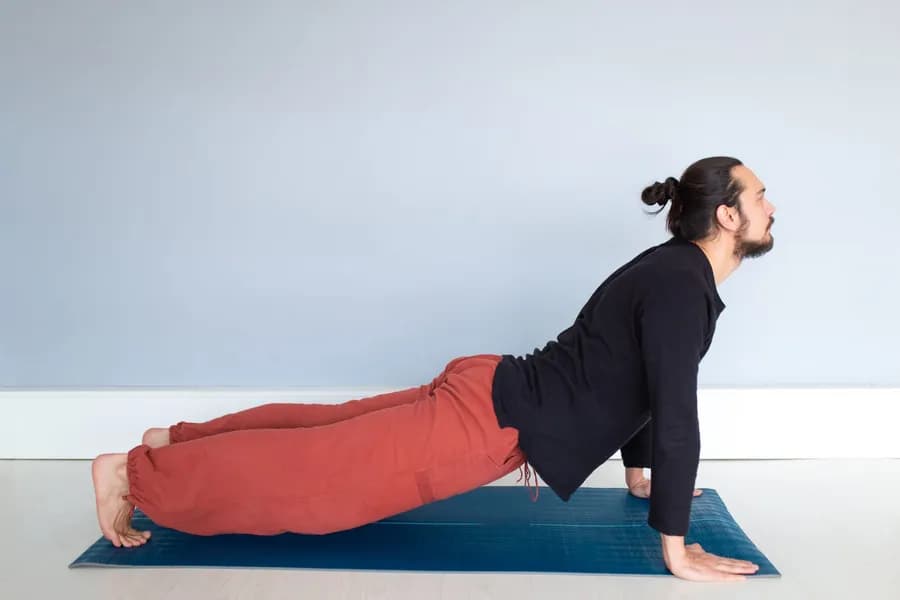
Key Principles: The Tristhana Method
Ashtanga is practised through three simultaneous foci: Asana (the pose), Pranayama (Ujjayi breath), and Drishti (gaze direction).
Step 1: Opening Invocation
Begin in Samasthiti (Mountain Pose). Establish Ujjayi breathing. Set the Drishti at the nose tip.
Step 2: Surya Namaskara A (5 rounds)
9 vinyasas linked by breath — Samasthiti, Urdhva Hastasana, Uttanasana, Ardha Uttanasana, Chaturanga Dandasana, Urdhva Mukha Svanasana, Adho Mukha Svanasana, and return.
Step 3: Surya Namaskara B (3 rounds)
Extends Surya A with Utkatasana (Chair Pose) and Virabhadrasana I (Warrior I).
Step 4: Standing Sequence
The 13 standing poses of the Primary Series, each held for 5 breaths, transitions performed through vinyasa.
Step 5: Seated Sequence and Closing
Forward folds, twists, inversions, each held 5–8 breaths. Closing sequence: Shoulderstand, Plough, Fish, Headstand, Lotus, and Shavasana.
Step 6: Shavasana
Lie completely flat for minimum 10 minutes — considered as important as the preceding asana practice.
Preparatory Poses for Ashtanga Yoga
Surya Namaskar (basic) — master the flow before adding Ujjayi and Drishti. Downward Dog (Adho Mukha Svanasana) — builds shoulder and posterior chain strength for Chaturanga. Plank (Dandasana) — develops core strength for a safe Chaturanga vinyasa. Seated Forward Fold (Paschimottanasana) — prepares hamstring flexibility for the seated sequence.
Variations of Ashtanga Yoga
Ashtanga for Beginners (Beginner) — Abbreviated Primary Series covering Sun Salutations, selected standing poses, and closing sequence, with knees-down Chaturanga and blocks in forward folds.
Mysore Style (Intermediate) — Students practise independently at their own pace while a teacher provides individual adjustments — the traditional teaching method.
Full Primary Series — Yoga Chikitsa (Intermediate–Advanced) — All 75 poses of the Primary Series in traditional sequence, 90 minutes, designed to purify and restructure the physical body.
Common Mistakes in Ashtanga Yoga
Skipping the Breath Synchronisation — moving faster than the breath turns Ashtanga into aerobic exercise. Fix: slow down to match movement to breath precisely.
Collapsing in Chaturanga Dandasana — the most common injury source. Fix: use knees-down Chaturanga until 15 consecutive strong Chaturangas with full plank alignment are achievable.
Forcing Advanced Poses Before the Foundation is Established — produces injuries that set practice back by months. Fix: follow the traditional progression.
Inconsistent Daily Practice — Ashtanga is a six-day-per-week practice by tradition. Fix: 30 minutes of abbreviated practice daily consistently outperforms 90-minute sessions twice weekly.
Who Should Practise Ashtanga Yoga?
Those seeking physical and mental transformation together — Ashtanga uniquely develops physical fitness and mental discipline simultaneously. Beginners — with modifications (knees-down Chaturanga, blocks, abbreviated series), Ashtanga is genuinely accessible from day one. Working professionals with stress and posture issues — the daily practice structure and meditative quality build discipline and mental clarity. Those who have plateaued with other exercise modalities — Ashtanga challenges the body in ways gym work and running cannot.
Flexible Batch Timing
Choose morning or evening classes and join the slot that suits your day.
Morning
6:30 am - 7:15 am
7:30 am - 8:15 am
8:30 am - 9:15 am

Evening
5pm - 5:45pm
6pm - 6:45pm
7pm - 7:45pm

Choose Your Membership Plan
Continue after the trial with membership options designed for long-term consistency support.
Continue your habit on the Habuild app
Use the Habuild app for reminders, live access, progress support, and habit tracking.