
Strength Training for Women at Home: The Complete Guide
With three structured sessions a week, most women notice measurable gains in strength and posture within four to six weeks — using only bodyweight, dumbbells, or bands. See the complete guide.
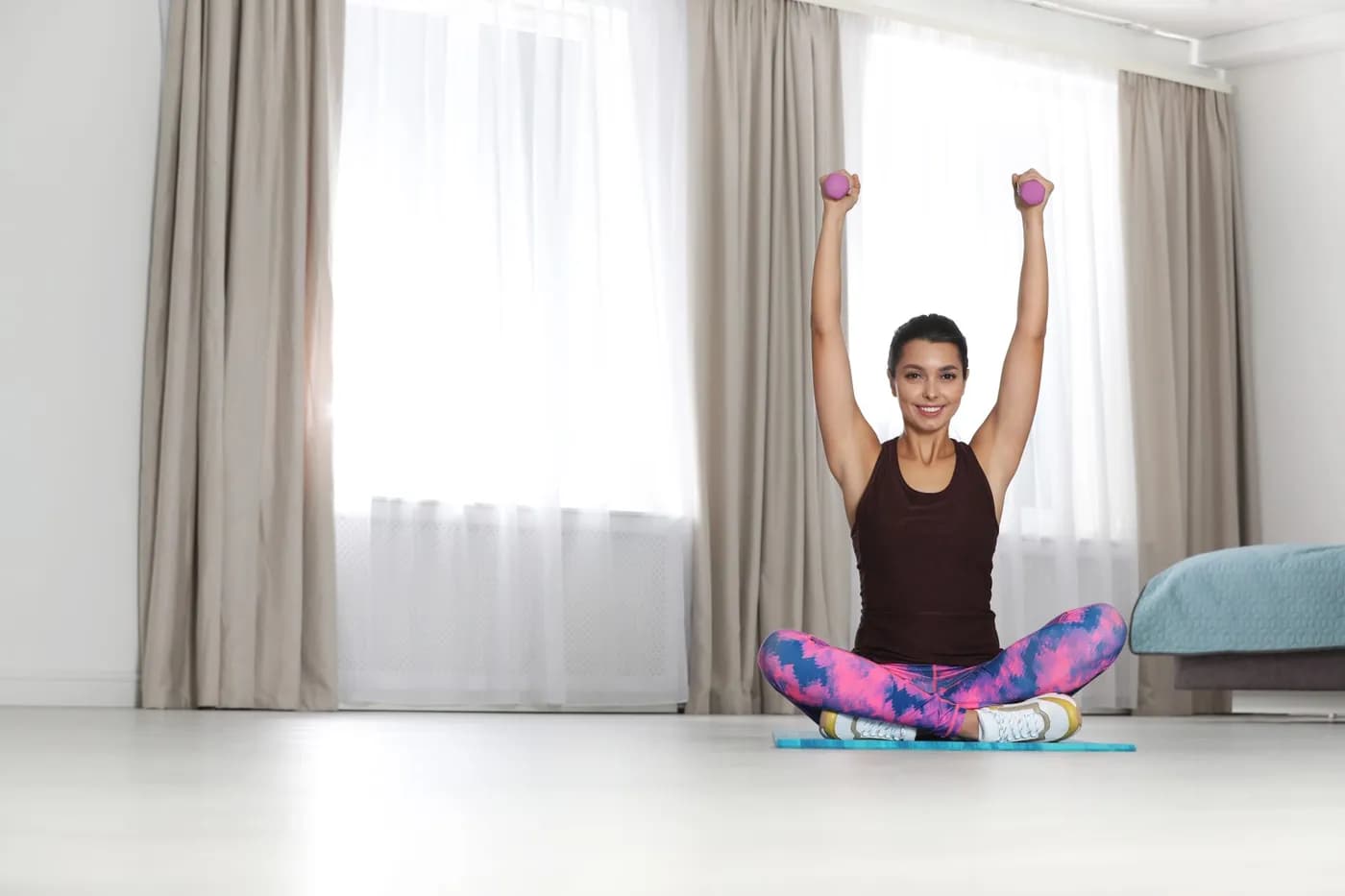
Key Takeaways
- Three structured sessions a week can show measurable gains within four to six weeks.
- Lower testosterone levels mean training builds lean, toned muscle rather than size.
- Women face higher osteoporosis risk with age, making weight-bearing exercise more relevant.
- Uses only bodyweight, dumbbells, or resistance bands – no gym required.
- Helps the body use stored fat as fuel more efficiently, especially with a reasonable diet.
Strength training for women at home is one of the most effective ways to build lean muscle, support bone density, and improve energy — using only bodyweight, dumbbells, or resistance bands. With three structured sessions per week, most women notice measurable gains in strength and posture within four to six weeks of consistent practice.
The biggest barrier most women face is not a lack of motivation — it is not knowing where to start. Whether you are a complete beginner, returning after a break, or looking for a sustainable routine after 40, this guide removes that barrier entirely.
8 Benefits of Strength Training for Women
- Builds Lean Muscle Without Bulk Women have significantly lower testosterone levels than men, which means strength training builds lean, toned muscle — not size. The result is a firmer, more defined physique that develops gradually with consistent training.
- Boosts Metabolism at Rest Muscle tissue burns more calories than fat even at rest. As you build lean muscle through regular training, your resting metabolic rate improves — supporting better energy balance throughout the day without extreme dieting.
- Improves Bone Density Weight-bearing exercises place healthy stress on bones, stimulating them to become denser and stronger. This is especially important for women, who face higher risk of osteoporosis with age. Consistent strength training supports long-term skeletal health. Consult your doctor before beginning if you have an existing bone condition.
- Enhances Functional Strength Everyday tasks — carrying groceries, climbing stairs, lifting children — become noticeably easier as you build functional strength. Movements like squats, lunges, and rows mirror real-life motion patterns. Exploring functional strength training approaches can complement your home routine well.
- Supports Fat Loss Strength training helps your body use stored fat more efficiently as fuel, particularly when combined with a reasonable diet. It is a sustainable approach to body composition change — one that does not rely on extreme calorie restriction or hours of cardio.
- Balances Hormones Regular strength training supports hormonal regulation. Many women report gradual improvements in mood, sleep quality, and energy levels as their routine becomes consistent. Habitual exercise may help manage some symptoms linked to hormonal fluctuations, though it complements — and does not replace — medical care.
- Reduces Injury Risk Strong muscles protect joints. When the muscles around your knees, hips, and spine are well-conditioned, the risk of strain and common injuries drops considerably — particularly for women who run, practise yoga, or sit at a desk for long hours.
- Builds Confidence Through Consistency There is a quiet confidence that comes from showing up for yourself regularly. Most women who build a consistent strength practice report that the mental shift — feeling capable and disciplined — is as rewarding as the physical changes.
How to Get Started with Strength Training at Home
What You Need to Begin
You need very little to start. A yoga mat or a flat, non-slip surface is sufficient for most beginner workouts. As you progress, a pair of light dumbbells (2–5 kg) or a resistance band can add challenge. Many effective routines use only bodyweight, making home training genuinely barrier-free.
Setting Realistic Goals
Avoid overcommitting in week one and burning out by week three. A realistic beginner goal is three sessions per week, each 20–30 minutes long — focusing on learning movement patterns correctly rather than pushing intensity. Strength rewards consistency, not occasional heroic effort.
Women over 40 should allow slightly longer recovery between sessions and pay extra attention to joint-friendly form. Progress is entirely achievable at any age with patience and appropriate load management.
Start with the Basics
Begin with compound movements that work multiple muscle groups: squats, push-ups, lunges, hip hinges, and plank holds. Master these with bodyweight before adding resistance. Good form is always more valuable than heavier load.
If you are unsure where to begin structurally, strength training for beginners walks through foundational programming step by step.
Best Exercises for Strength Training at Home
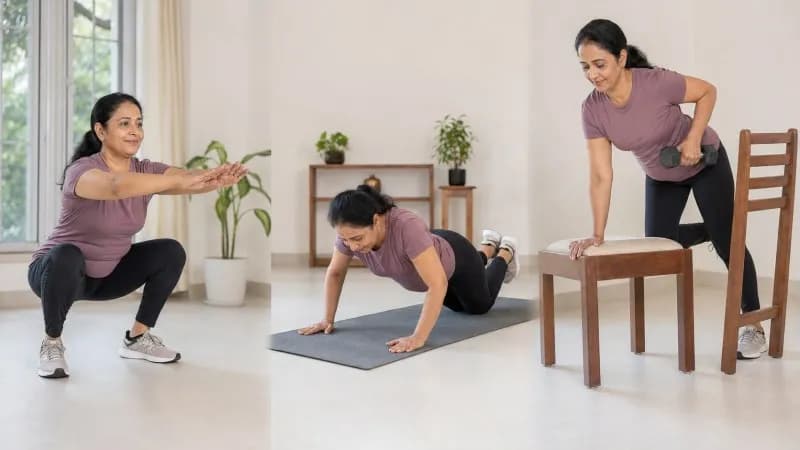
Squats
Stand feet shoulder-width apart, push hips back, and lower until thighs are roughly parallel to the floor. Keep your chest tall and knees tracking over your toes. Aim for 3 sets of 12–15 reps. Progress by adding a pause at the bottom or holding dumbbells.
Push-Ups
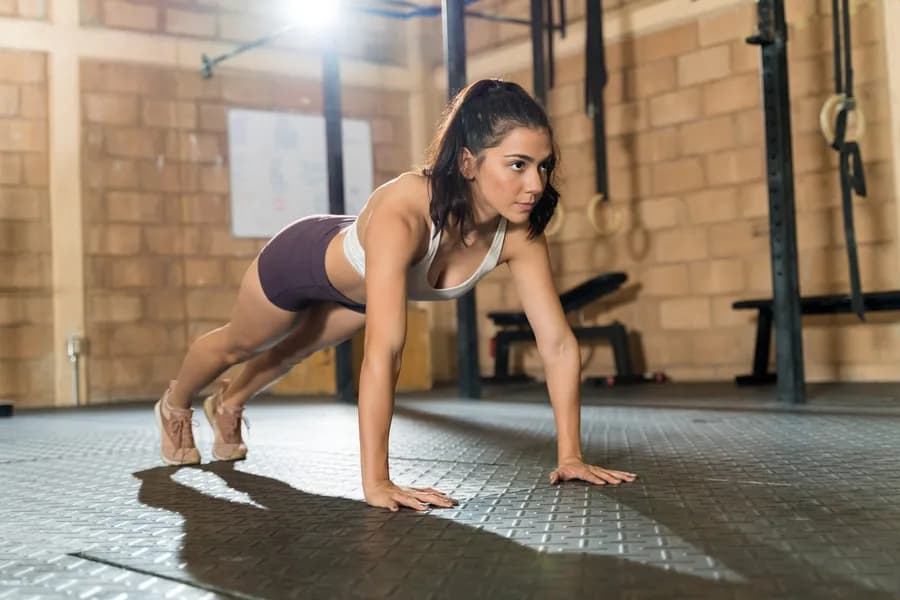
Push-ups build upper body and core strength simultaneously. Start with knee push-ups if needed and progress to full push-ups. Hands slightly wider than shoulder-width, body in a straight line, elbows at roughly 45 degrees. Aim for 3 sets of 8–12 reps.
Reverse Lunges
Reverse lunges are easier on the knees than forward lunges and highly effective for glutes, quads, and balance. Step one foot back, lower the back knee toward the floor, then return to standing. Alternate legs for 3 sets of 10 reps per side. Add dumbbells when you are ready to progress.
Glute Bridge
Lie on your back with knees bent and feet flat. Press through your heels to lift your hips until your body forms a straight line from knees to shoulders. Squeeze your glutes at the top and lower slowly. Targets the posterior chain — glutes, hamstrings, and lower back. Perform 3 sets of 15 reps.
Plank Hold
Hold a forearm plank — elbows under shoulders, body straight, core braced — for 20–45 seconds, building duration over time. It strengthens the deep stabilising muscles of the abdomen, spine, and shoulders simultaneously.
Dumbbell Row (or Resistance Band Row)
Hinge forward at the hips with a flat back, hold a dumbbell or band, and pull your elbow back toward your hip. This trains the upper and mid back — muscles chronically underworked in people who sit at desks. Strong back muscles also support better posture. Perform 3 sets of 12 reps per arm.
Hip Hinge / Romanian Deadlift
Hold light dumbbells in front of your thighs, push hips back with a flat back, and lower the weights along your legs until you feel a hamstring stretch. Drive your hips forward to return to standing. This foundational movement is particularly valuable for women over 40 who want to protect their lower back. Do 3 sets of 10–12 reps.
Common Mistakes to Avoid
- Poor Form Rushing through reps with compromised form is the fastest route to injury and the slowest route to results. Always prioritise control over speed. If you cannot maintain a neutral spine in a squat or a straight line in a push-up, reduce range of motion or use a modified variation until your strength catches up.
- Skipping the Warm-Up Cold muscles and stiff joints do not respond well to sudden loading. Spend five minutes warming up with dynamic movements — leg swings, arm circles, hip circles, and light bodyweight squats. A proper warm-up improves performance and significantly reduces injury risk.
- Overtraining Muscles grow during rest, not during the workout itself. Doing intense sessions every day without adequate recovery leads to fatigue, soreness, and plateau. Three to four well-structured sessions per week with rest days between is more effective than daily grinding. Women over 40 should be especially mindful of recovery.
- Inconsistency The biggest obstacle to results is not finding the perfect programme — it is showing up regularly enough for adaptations to occur. A simple routine done three times a week for three months will outperform any complex programme done sporadically. Habit and structure matter far more than perfection.
Who Should Try Strength Training at Home?
- Beginners Home training is ideal for beginners because it removes the intimidation of a gym floor. You learn at your own pace, build confidence in a comfortable environment, and progress without external pressure. A mat, some space, and a structured plan are all you need to begin.
- Women Strength training is one of the most beneficial forms of exercise for women across all life stages. It does not produce a bulky physique — that outcome requires years of high-volume training and caloric surplus. What it produces is improved body composition, stronger bones, hormonal support, and genuine functional capacity. Strength training for women deserves a central place in any fitness routine, not a secondary one.
- Older Adults and Women Over 40 After 40, women begin to lose muscle mass at an accelerating rate (sarcopenia) and bone density starts to decline more rapidly. Resistance training directly counteracts both processes, supporting independence, balance, and metabolic health. Start conservatively, prioritise form, and increase load gradually. Always consult your doctor if you have an existing musculoskeletal condition.
- Working Professionals A 25–30 minute home session requires no commute and no scheduling around gym hours. For professionals who spend hours at a desk, strength training directly addresses downstream effects — weak glutes, tight hip flexors, rounded shoulders, and a stiff lower back. Even two to three sessions a week produces measurable improvements within a few weeks.
Build Strength with a Routine That Actually Works
Building strength is not about doing random workouts whenever you feel like it. It is about following a structured plan, getting consistent guidance, and showing up often enough for real adaptation to happen. With the right support, training effectively at home is entirely achievable — and sustainable.
What you get with Habuild’s Strong Everyday programme:
- Daily live guided strength and yoga sessions
- Beginner-to-advanced progression built in
- No-equipment and home-friendly workouts
- Expert guidance to ensure correct form throughout
- A community that helps you stay accountable and consistent
Related reads: Strength Training Exercises at Home for Women · Benefits of Squats for Women — 7 Real Results from Daily Practice and What to Expect Honestly
Three structured sessions a week is the detail that makes this approach work — strength and posture gains follow a schedule, not a mood. Sticking to that schedule alone, without any guidance on pacing or progression, is where most home routines fall apart. Habuild’s Strong Everyday program provides that structure, guiding your sessions so the gains this routine promises keep building.
Frequently Asked Questions
Related Articles
Strength Training Exercises at Home for Women
Building lean muscle and improving metabolism doesn't require a gym — just a routine that accounts for real life and actually sticks. See the benefits, best exercises, and common mistakes to avoid.
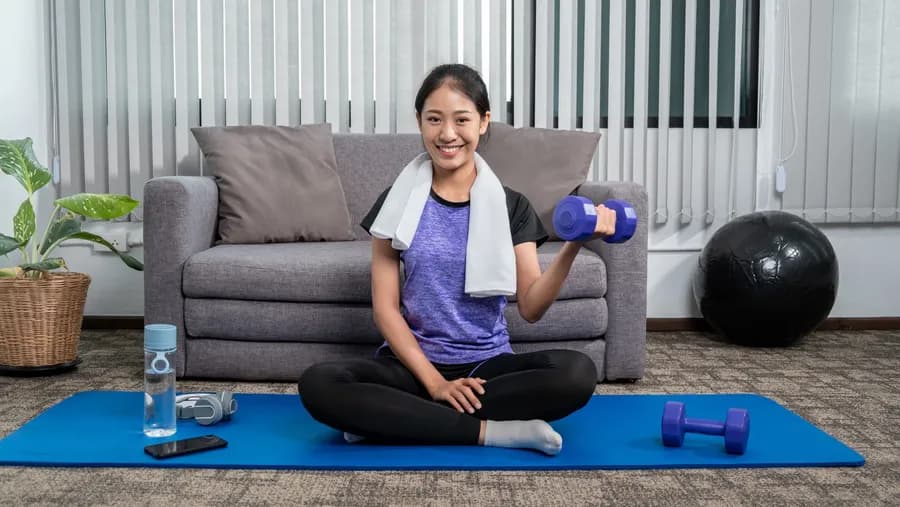
Strength Training Exercises for Women: The Complete Beginner’s Guide
Strength training builds lean muscle, improves metabolism, and supports bone health — consistency, not intensity, is the variable that actually matters. See 10 benefits and how to start.
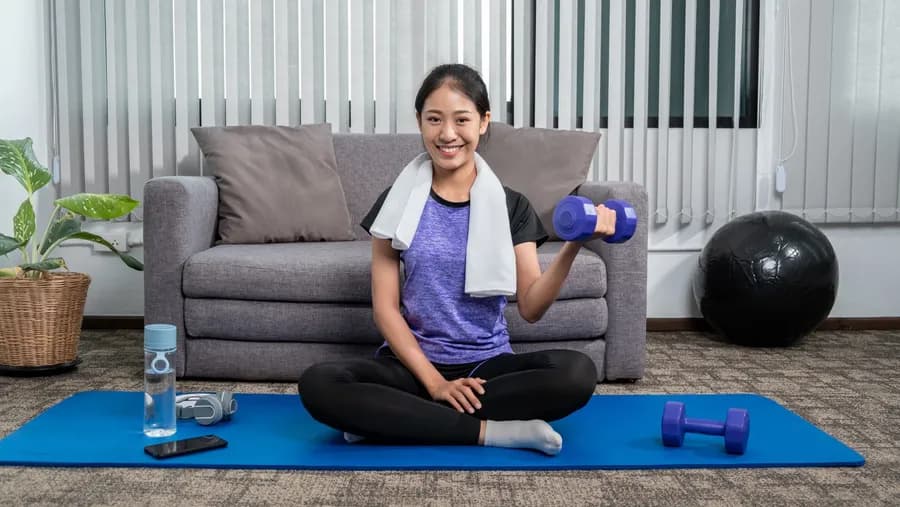
10 Benefits of Strength Training That Go Beyond the Gym
Strength training raises your resting metabolism, improves bone density, supports fat loss, and benefits mental wellbeing — gradually changing how your body feels and performs. See all 10 benefits.
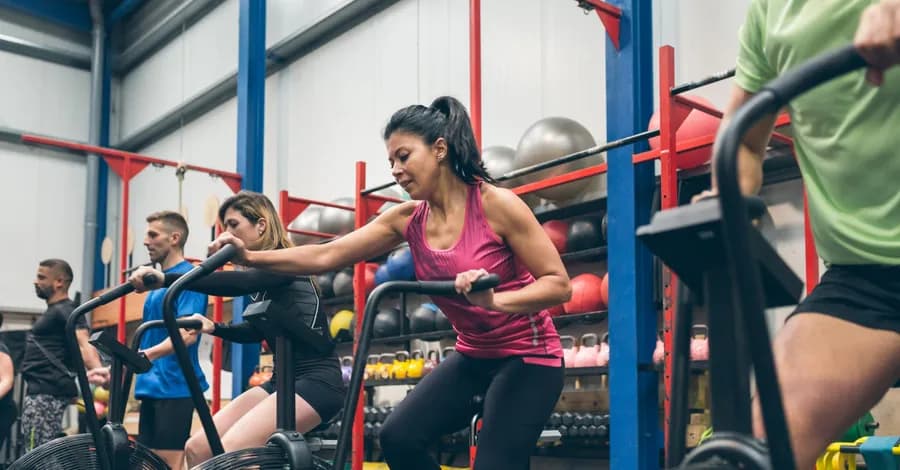
What Is Strength Training? Benefits, Exercises & How to Get Started
Strength training uses resistance — bodyweight, dumbbells, or bands — to challenge muscles and stimulate growth, building lean muscle and raising metabolism for all ages and experience levels. See the benefits and how to start.
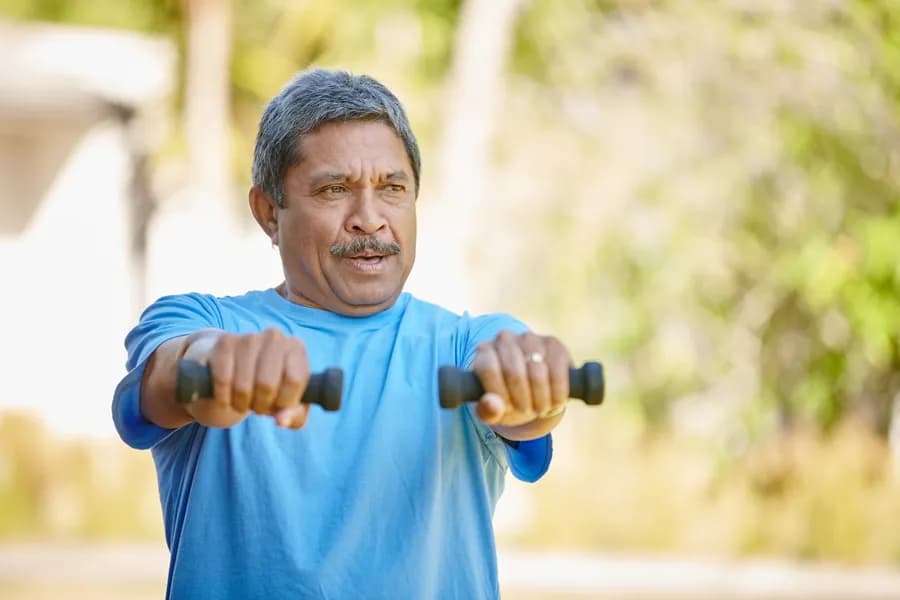
Strength Training for Older Adults: Benefits, Exercises & How to Start
Resistance exercise two to three times a week helps preserve muscle mass, support bone density, and maintain the functional strength needed for everyday independence, at any age from 50 onwards. See the key benefits and best exercises.
Beginner Bodyweight Exercises: Build Strength at Home Without Equipment
Bodyweight exercises are the most accessible way to start building real strength — no gym membership, no equipment, no experience required. See 8 key benefits and how to begin.