
20 Different Types of Exercises at Home
Discover 20 different types of exercises at home — from strength to yoga. Build consistency and real results. Start your 14-day free trial trial with Habuild today.
Key Takeaways
- Covers five categories: bodyweight strength, core work, cardio, flexibility, and yoga.
- A 5-day-a-week routine shows measurable strength and posture gains within 4-8 weeks.
- Planks, dead bugs, and hollow holds build the deep spinal stability behind daily movements.
- Jumping jacks, skipping, and mountain climbers strengthen heart and lungs without equipment.
- Multi-joint moves like hinges and carries mimic real-life lifting, bending, and climbing.
- Weight-bearing bodyweight exercises place gentle stress on bones to keep them dense.
Home exercise covers a wide range of categories — bodyweight strength, core work, cardio, flexibility, and yoga. A well-structured routine that draws from all five categories, practised consistently 5 days a week, delivers measurable improvements in strength, posture, and energy within 4–8 weeks, with no gym or equipment required.
If you’ve been wondering where to start with home fitness, you’re not alone. The sheer number of options can feel overwhelming — but the truth is, the best workout is the one you can actually stick to. This guide covers 20 different types of exercises at home across every major fitness category, so whether you want to build strength, improve flexibility, or simply move more each day, you’ll find exactly what works for your body and schedule.
20 Benefits of Doing Different Types of Exercises at Home
- Builds Lean Muscle and Bone Density Bodyweight and resistance-based movements like push-ups, squats, and lunges progressively challenge your muscles — building visible lean muscle over time without needing any machines.
- Boosts Metabolism and Supports Gradual Fat Loss Strength and high-intensity movements increase your resting metabolic rate, meaning your body continues to burn energy for hours after the workout ends. Consistent home exercise, especially when it draws from a variety of movement types, helps manage body composition over time.
- Enhances Functional Strength and Core Stability Exercises that mimic real-life movements — hinges, carries, and multi-joint patterns — improve how your body performs everyday tasks like lifting, bending, and climbing stairs. Core-focused movements like planks, dead bugs, and hollow holds build deep spinal stability that supports every other movement you make.
- Improves Cardiovascular Health and Flexibility Cardio-based home exercises like jumping jacks, skipping, and mountain climbers strengthen your heart and lungs, improving endurance and reducing fatigue during daily activities. At the other end of the spectrum, stretching routines, yoga flows, and mobility drills lengthen tight muscles and free up restricted joints.
- Reduces Stress, Improves Sleep and Mood Physical exercise releases endorphins that naturally lift your mood and measurably reduce anxiety. Even a 20-minute home session can shift how you feel by the end of the day. Regular physical activity also regulates your sleep-wake cycle — people who exercise consistently at home tend to fall asleep faster and report deeper, more restful sleep.
Alongside muscle growth, weight-bearing exercises place gentle stress on bones, encouraging them to stay strong and dense. This combination is especially important as you age and natural muscle and bone mass begin to decline. A consistent home routine is one of the most accessible ways to support both.
Pairing strength sessions with cardio-based movements compounds this effect without requiring any additional equipment.
Back exercises at home that combine mobility work with strengthening movements are particularly effective for people who sit for most of the day. Balancing cardiovascular and flexibility training in your weekly routine delivers benefits that neither approach achieves alone.
How to Get Started with Different Types of Home Exercises
What You Need to Begin
The good news: almost nothing. A yoga mat or soft rug, comfortable clothing, and enough floor space to lie down with arms extended is all you truly need. Resistance bands, dumbbells, or a chair can add variety later — but they’re entirely optional at the beginning.
Setting Realistic Goals
Focus on frequency first, not intensity. Committing to 20–30 minutes five days a week is far more effective than pushing hard once or twice and burning out. Set a simple target — like completing three full weeks of daily movement — before adding complexity or increasing load. Avoid overtraining in the early weeks; muscles need rest to adapt and grow stronger.
Start with the Basics
For your first two weeks, rotate between three categories: bodyweight strength (squats, push-ups, lunges), core work (planks, dead bugs), and flexibility (forward folds, hip openers, spinal twists). You can learn how to structure strength training at home with proper form from guided resources before adding intensity or volume.
Best Exercises for a Complete Home Workout Routine
Squats
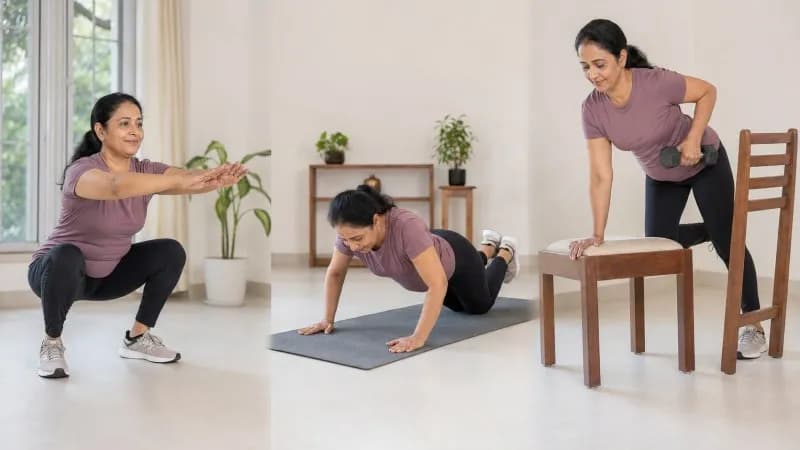
The squat is the foundation of lower-body strength. Stand with feet shoulder-width apart, lower until thighs are parallel to the floor, then drive back up through your heels. Aim for 3 sets of 12–15 reps. No equipment needed.
Push-Ups
Push-ups build chest, shoulder, and tricep strength simultaneously. Keep your body in a straight line from head to heels throughout the movement. Beginners can start on their knees. Try 3 sets of 8–12 reps.
Reverse Lunges
Step backward rather than forward to reduce knee stress while still targeting the glutes, quads, and hamstrings. Perform 10 reps each leg for 3 sets. Hold light weights to progress over time.
Plank Hold
The plank is the most efficient core exercise available at home. Forearms on the floor, body straight, hips level — hold for 20–60 seconds per set. Focus on breathing steadily rather than just enduring the time.
Bird-Dog
On all fours, extend your opposite arm and leg simultaneously while keeping your lower back flat. This builds deep spinal stability and is especially effective for back health. Perform 10 reps per side, 3 sets.
Improving balance and coordination through movements like this also reduces your risk of injury during other exercises.
Glute Bridge
Lie on your back, feet flat, and drive your hips toward the ceiling by squeezing your glutes. This strengthens the posterior chain — glutes, hamstrings, and lower back — with zero impact on joints. 3 sets of 15 reps.
Mountain Climbers
Start in a plank position and alternate driving your knees toward your chest rapidly. This combines core work with cardiovascular conditioning in a single movement. Perform for 30–45 seconds per set, 3 sets.
Common Mistakes to Avoid When Exercising at Home
- Poor Form The most common home training mistake is prioritising reps over technique. A single well-executed squat does more than five sloppy ones. Record yourself occasionally, or use a guided program, to ensure you’re moving correctly before increasing difficulty.
- Skipping the Warm-Up Jumping straight into intense exercise without warming up significantly increases injury risk. Spend 5–7 minutes on light movement — leg swings, shoulder circles, gentle torso rotations — to prepare your joints and elevate your heart rate gradually.
- Overtraining Without Recovery More is not always better. Muscles grow during rest, not during the workout itself. Build at least one full rest day per week into your schedule and pay attention to signs of persistent fatigue, soreness, or declining performance.
- Inconsistency The single biggest obstacle to home fitness progress is inconsistency. Sporadic bursts of intense effort followed by long gaps produce very little. A structured daily routine — even a lighter one — consistently outperforms irregular hard sessions over any meaningful time period.
Understanding what strength training exercises are best suited to your level helps you stay on track without overdoing it.
Who Should Try Different Types of Home Exercises?
- Beginners Home exercise is the lowest-barrier entry point into fitness. No intimidating gym environment, no complex machines, and no pressure to keep pace with experienced athletes. Modified versions of every exercise exist, and progress comes quickly when you start with simple movements and build gradually.
- Women There is a persistent myth that strength-based home exercise will make women look bulky. This is simply not true. Resistance training at home builds lean, functional muscle and supports long-term bone health — particularly important for women in their 30s and beyond. The results are improved tone, strength, and energy — not bulk.
- Older Adults Home exercise is highly suitable for adults over 50, with appropriate modifications. Bodyweight movements, resistance bands, and yoga all help maintain muscle mass, bone density, and joint mobility. If you have existing health conditions, consult your doctor before beginning a new exercise routine.
- Working Professionals For people with desk jobs and packed schedules, home exercise eliminates the commute barrier entirely. A 25-minute morning session before work improves posture, reduces lower back tightness from sitting, and sets a focused, productive tone for the day.
Build Strength with a Routine That Actually Works
Building real fitness at home isn’t about doing random workouts — it’s about consistency, correct guidance, and following a structured plan that progresses with you. With the right support, you can train effectively from home and see genuine progress over time.
What You Get with Habuild’s Strong Everyday Program:
- Daily live guided strength and yoga sessions
- Beginner to advanced progression — no experience needed
- No-equipment and home-friendly workouts throughout
- Expert guidance to ensure you move with correct form
- A supportive community to keep you consistent day after day
Start Your Home Exercise Journey
Related reads: 10 Different Types of Plank Exercise for Every Level · Muscle Strengthening Exercises at Home
Knowing twenty different exercises is only useful once you turn a handful of them into a routine you actually repeat — variety helps prevent boredom, but it’s repetition that builds real strength. Picking a few and sticking with them inside a structured plan will get you further than trying to fit them all in sporadically. Habuild’s Strong Everyday program turns that variety into a guided daily routine you can follow without having to plan it yourself.
Frequently Asked Questions
Related Articles
List of Cardio Exercises at Home
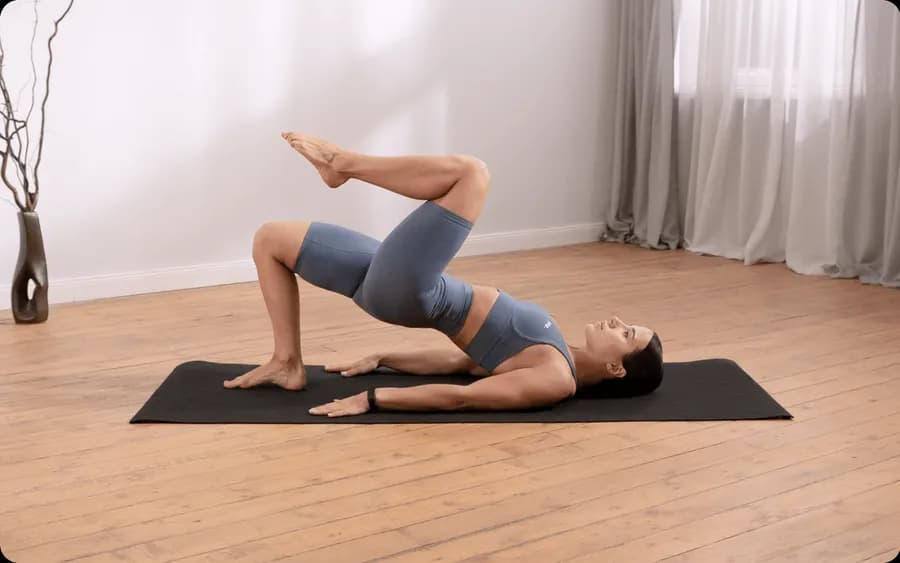
Jumping jacks, high knees, burpees, mountain climbers, and squat jumps need only bodyweight and a small patch of floor. See the full list and how to build a routine.

Best Exercises for Power: Build Strength, Speed, and Explosive Force
Jump squats, plyometric push-ups, broad jumps, burpees, and tuck jumps combine force and speed to build the kind of strength that improves everyday movement and athletic performance. See the full list, most needing zero equipment.

Best Workout Split for Muscle Gain
The right split — Push/Pull/Legs, Upper/Lower, or full-body — is whichever one you can execute consistently, week after week, with progressive overload built in. See what actually drives muscle growth.
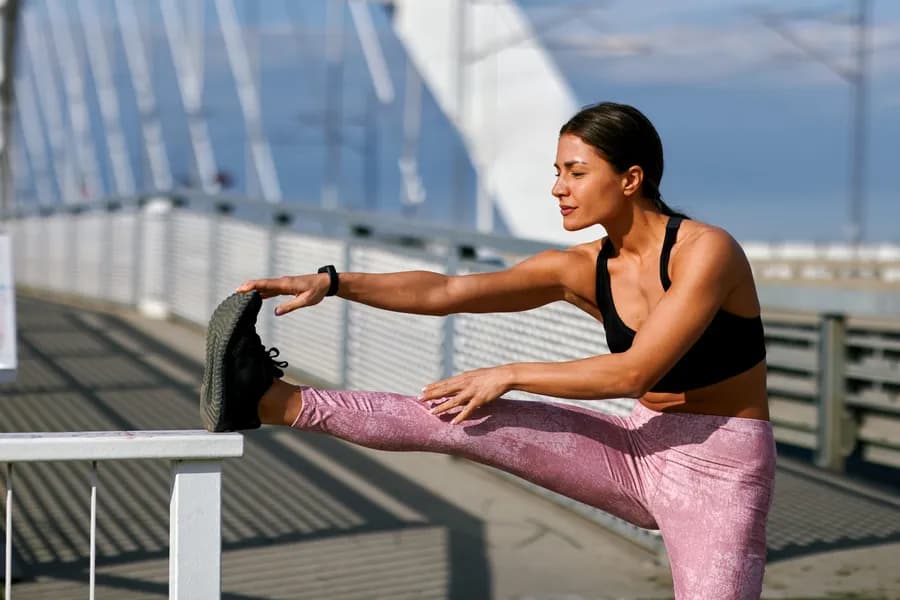
Dynamic Stretching Exercises: Benefits, Poses & How to Get Started
Controlled, flowing movements take muscles and joints through their full range of motion before activity, reducing injury risk. See the poses and how to build them into your warm-up.
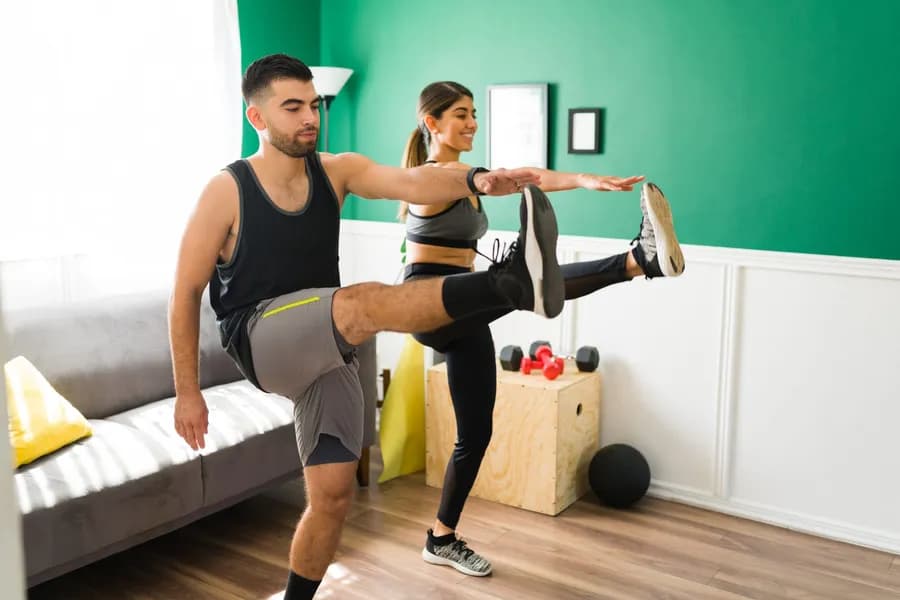
Active Recovery Workout: Benefits, Best Exercises & How to Get Started
Discover the best active recovery workout routines for full body relief. Learn exercises, mistakes to avoid, and how to stay consistent. Start for ₹1 today.