
Strength Training Back Workout: Benefits, Exercises & Tips
Discover the best strength training back workout to build muscle, improve posture, and boost power. Start your structured routine today — try Habuild for 14-day free trial.

Key Takeaways
- Targets the lats, rhomboids, traps, erector spinae, and lower back for functional power.
- Most people see posture improvements within three to four weeks of consistent training.
- Visible muscle development typically appears within eight to twelve weeks of progressive training.
- Weak back muscles are a leading contributor to rounded shoulders and a hunched spine.
- Rows, pull-ups, and lat pulldowns recruit the biceps heavily as a secondary benefit.
- Training only chest and shoulders creates asymmetry that dedicated back work corrects.
A strength training back workout is a structured set of resistance exercises targeting the lats, rhomboids, traps, erector spinae, and lower back to build functional power, improve posture, and develop real-world strength. Most people see posture improvements within three to four weeks and visible muscle development within eight to twelve weeks of consistent, progressive training.
Whether you are brand new to training or simply looking for a more structured approach, this guide covers the benefits, the best exercises, common mistakes, and exactly who should be doing this. Strength training for back muscles forms the foundation of any complete fitness program — and this page will show you how to build it the right way.
10 Benefits of Strength Training Back Workouts
- Builds Lean Muscle Mass in the Back — Consistently training your back muscles — lats, rhomboids, traps, and erector spinae — stimulates muscle fibre growth over time. You gradually develop a stronger, more defined upper and lower back that supports both athletic performance and daily movement.
- Boosts Overall Metabolism — Muscle tissue burns more calories at rest than fat tissue. By adding lean back muscle through regular strength sessions, you support a more active metabolism throughout the day — not just during your workout.
- Improves Posture Significantly — Weak back muscles are one of the leading contributors to rounded shoulders and a hunched spine. Strengthening the posterior chain actively supports better alignment, helping you sit, stand, and move with far less strain.
- Supports the Spine and Reduces Discomfort — A strong back creates a natural brace for the spine. Regular training may gradually ease the tension and fatigue many people feel from prolonged sitting — complementing, not replacing, medical guidance if you have a diagnosed condition.
- Enhances Functional Strength for Daily Life — Pulling, carrying, bending, and rotating are movements you do every single day. Back training builds the real-world strength to do all of them with more ease and less risk of strain.
- Reduces Injury Risk — Imbalanced training that focuses only on the chest and shoulders creates muscular asymmetry. Dedicated back training balances opposing muscle groups, reducing the likelihood of overuse injuries and joint stress.
- Develops Biceps as a Secondary Benefit — Most back exercises — rows, pull-ups, lat pulldowns — recruit the biceps heavily as synergist muscles. A strong back training program naturally contributes to building the best back and bicep strength simultaneously, without needing a separate arm day.
- Improves Athletic Performance — Whether you swim, cycle, play cricket, or run, a powerful back is central to almost every sport. It transfers force between the upper and lower body and provides the stability needed for explosive movements.
- Supports Stronger Hamstrings and the Posterior Chain — The back is part of the larger posterior chain that includes the glutes and hamstrings. Exercises like deadlifts and Romanian deadlifts double as one of the best back-of-thigh workouts available, reinforcing the entire backside of your body.
- Builds Sustainable Consistency — Because back training is lower-impact compared to high-intensity cardio, it is easier to maintain week after week. Consistency — not intensity — is what drives real progress over months and years.
How to Get Started with Strength Training Back Workouts
What You Need to Begin
You do not need a fully equipped gym to start. Bodyweight rows using a sturdy table, resistance bands, or a basic pull-up bar are enough for the first few weeks. As you progress, dumbbells and a barbell open up a wider range of exercises — but they are not prerequisites for starting today.
If you are training at home, clear a space of roughly 2 metres by 1.5 metres. A yoga mat for floor work is the only other essential.
Setting Realistic Goals
A common mistake is expecting visible results in two weeks. Back muscles are large and respond well to training, but meaningful strength and muscle development takes eight to twelve weeks of consistent effort. Set a goal around showing up three to four times per week rather than around a specific body measurement — the results follow the behaviour.
Avoid overtraining in the early weeks. Two to three dedicated back sessions per week with adequate rest between them is more productive than daily training that leads to fatigue and drop-off.
Start with the Basics
Begin with compound movements — exercises that work multiple muscle groups at once. Bent-over rows, pull-ups (or assisted variations), and deadlifts give you the most return for time invested. Once your form is solid on these, you can layer in isolation work for the upper and lower back separately.
For the first two weeks, focus purely on controlled movement and feeling the right muscles activate. Weight is secondary to form.
Best Exercises for a Strength Training Back Workout
These seven exercises collectively target the entire back — upper, mid, and lower — while also recruiting the hamstrings and biceps as important secondary movers. Together, they represent a complete full body strength training approach anchored around the posterior chain.

Bent-Over Barbell Row
The single most effective mass-builder for the mid and upper back. Hinge at the hips, keep a neutral spine, and pull the bar to your lower chest. Aim for 3 sets of 8–10 reps. This is the cornerstone of any serious back workout for strength.
Pull-Ups or Assisted Pull-Ups
One of the best compound exercises for the lats and upper back, with significant bicep involvement — making it a natural best back and bicep movement combined. Start with three sets of as many clean reps as possible, using a band for assistance if needed. Progress to unassisted over four to six weeks.
Deadlift
The deadlift targets the entire posterior chain — lower back, erector spinae, glutes, and hamstrings — making it one of the best back-of-thigh workouts available alongside being a supreme back-strength builder. Use 3 sets of 5–6 reps with a weight that challenges you while maintaining a flat back throughout.
Single-Arm Dumbbell Row
Performed with one hand and knee braced on a bench, this unilateral exercise corrects left-right imbalances and builds the mid-back and lats with excellent range of motion. Do 3 sets of 10–12 reps each side. Squeeze the shoulder blade at the top of each rep.
Face Pulls with Resistance Band
Often overlooked, face pulls specifically target the rear deltoids and upper traps — muscles responsible for pulling the shoulders back and keeping posture upright. Use a resistance band anchored at face height. 3 sets of 15 reps. Slow and controlled beats heavy and sloppy here.
Romanian Deadlift
A hip-hinge movement that heavily loads the hamstrings and lower back simultaneously. It serves as one of the most effective back-of-thigh workouts while also reinforcing the erector spinae. Use a controlled 3-second lowering phase for maximum muscle engagement. 3 sets of 10 reps.
Seated Cable Row or Resistance Band Row
Ideal for training the mid-back with constant tension throughout the movement. If you do not have a cable machine, a looped resistance band around a fixed point works just as well. Pull to your lower sternum, hold for a count, then slowly return. 3 sets of 12 reps.
Common Mistakes to Avoid in Back Training
- Poor Form — Using too much weight and allowing the lower back to round is the number one cause of training-related back injuries. Every set should prioritise a neutral spine. If you cannot maintain form for the full rep range, reduce the weight. No personal record is worth a slipped disc.
- Skipping the Warm-Up — Cold muscles and connective tissue are far more vulnerable to strains. Spend five to eight minutes on dynamic warm-up movements — cat-cow stretches, arm circles, and light bodyweight rows — before loading any barbell or dumbbell. This applies every single session, not just the first few weeks.
- Overtraining the Back Without Rest — Strength training creates micro-tears in muscle tissue that require 48–72 hours to repair and grow stronger. Training the same muscle group daily will stall progress and increase injury risk. Two to three back-focused sessions per week is the sweet spot for most people.
- Inconsistency — Sporadic intense sessions are far less effective than moderate sessions done consistently week after week. The body adapts to repeated, progressive stimulus — not to occasional effort. Building the habit matters more than any single workout.
If you find it difficult to stay consistent on your own, understanding how to do strength training at home with a structured daily program and live guidance can make all the difference.
Who Should Try Strength Training Back Workouts?
- Beginners — Back training is one of the most beginner-friendly areas of strength work because most exercises can be modified or done with bodyweight. Starting with resistance bands and bodyweight rows removes the intimidation of a gym while still delivering real results. There is no minimum fitness level required — just a willingness to show up consistently.
- Women — One of the most persistent myths is that back training will make women look bulky. Women have lower testosterone levels and a different hormonal profile that makes extreme muscle hypertrophy very unlikely without deliberate, prolonged effort. What back training does do is create a toned, defined appearance, improve posture dramatically, and support long-term joint health. Strength training for women is every bit as beneficial as it is for men — and often more transformative.
- Older Adults — As we age, muscle mass and bone density naturally decline. Back strength training helps slow this process, supports mobility, and reduces the risk of falls and fractures. If you are over 60 or have existing conditions, please consult a doctor before starting a new training program. Modified exercises with lighter loads or resistance bands are highly effective and carry lower risk.
- Working Professionals — Desk workers are particularly vulnerable to upper back tension, rounded shoulders, and lower back fatigue. A back-focused strength routine supports all three. Even three 30-minute sessions per week can produce noticeable improvements in how you feel during a long workday.
Build Strength with a Routine That Actually Works
Building a stronger back is not about doing the most exercises or lifting the heaviest weights. It is about following a structured plan, learning correct form, and showing up day after day with the right support around you.
With Habuild's Strong Everyday program, you get exactly that — daily live guided strength sessions designed to build you from wherever you are right now, with expert coaching to ensure every rep counts.
- Daily live guided strength sessions — not pre-recorded, not one-size-fits-all
- Beginner to advanced progression — your plan grows as you do
- No-equipment and home-friendly workouts — no gym required
- Expert guidance on form — the single biggest differentiator from solo training
- Community accountability — hundreds of members training alongside you every morning
Related reads: Strength Training and Endurance: Benefits, Exercises & Tips · What Is Functional Strength Training? Benefits, Exercises & Tips
A stronger back rarely comes from a random mix of pulls and rows done whenever you remember — it comes from targeting the right muscles in the right order, week after week. Posture and power both depend on that repetition adding up over time. Strong Everyday gives your back training that structure, so each session builds on the last instead of starting from scratch.
Frequently Asked Questions
Related Articles

Strength Training Routine for Beginners
Start your strength training routine for beginners today. Learn the best exercises, avoid common mistakes, and build real consistency from day one.
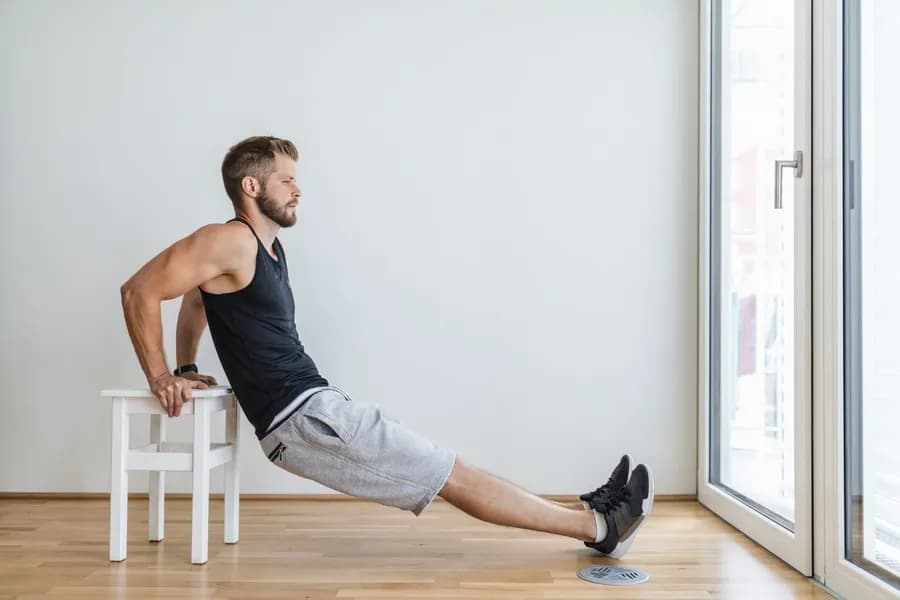
No Equipment Strength Workout: Build Real Strength at Home
Discover the best no equipment strength workout routines to build muscle and improve fitness at home. Start your 14-day free trial trial with Habuild today.

How to Do Bench Press Correctly: the Complete Form Guide
A stable base, controlled bar path, full range of motion, and the right shoulder position prevent impingement and build pressing strength safely. See the complete form guide.

What Is Functional Strength Training? Benefits, Exercises & Tips
Discover what is functional strength training, its top benefits, best exercises, and how to get started. Try Habuild's guided program with a 14-day free trial.
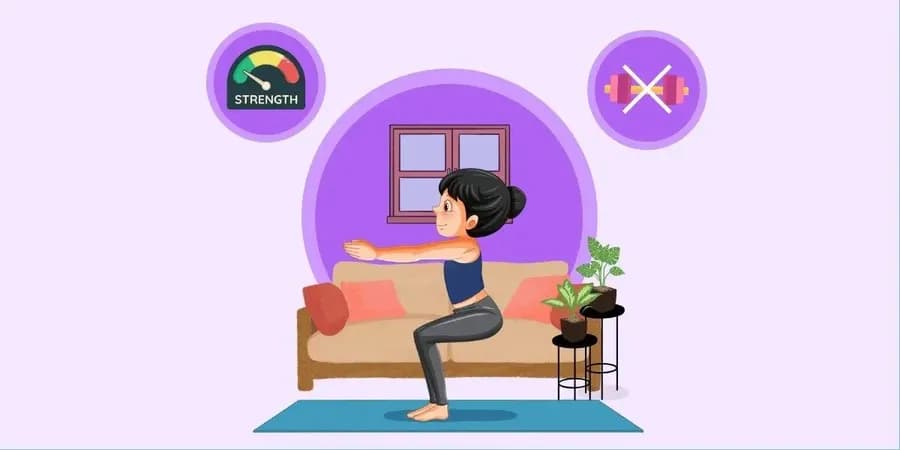
Strength Training at Home Without Equipment
Discover how to do strength training at home without equipment. Beginner-friendly exercises, common mistakes, and a structured plan to build real strength daily.