
How to Do Knee Push Ups Correctly: the Complete Beginner Guide
Reducing the body weight load by about 30% develops the same pectoral, triceps, and shoulder activation pattern as full push-ups while building movement quality first. See the complete beginner guide.
Key Takeaways
- Reduces bodyweight load by roughly 30% while training the identical muscle activation pattern.
- Research confirms near-failure knee reps match full push-up muscle stimulus at the same intensity.
- Ten challenging reps near failure build more muscle than twenty-five easy repetitions.
- Poor form here – flared elbows, sagging hips – becomes the limitation at the full push-up stage.
- The knee push-up stage typically lasts just 4-8 weeks, not a permanent plateau.
- Adding a 4-second lowering phase is the specific progression that builds toward full push-ups.
Knee push-ups are the most important foundation for anyone beginning upper body strength training — the modified push-up that reduces the body weight load by approximately 30%, making it accessible from day one while developing the exact same pectoral, triceps and anterior deltoid activation pattern as full push-ups. Knowing how to do knee push-ups correctly is not a compromise but a deliberate training stage: practitioners who build movement quality here first develop the genuine upper body strength and motor pattern that full push-ups require, while those who rush ahead carry compensatory habits that limit long-term progress. Whether you are learning how to do knee push-ups for beginners or figuring out how many knee push-ups a day to see results, this guide covers everything you need.
Does the Knee Push-Up Build Real Strength? Here is How
Near-Failure Reps Produce the Same Hypertrophy as Full Push-Ups
Research confirms that knee push-ups performed at equivalent relative intensities — working within 2-3 repetitions of failure — produce comparable pectoral and triceps EMG activation to full push-ups at higher repetition ranges. The key variable is not the load but the proximity to failure: 10 challenging knee push-ups near the limit produce more muscle stimulus than 25 easy ones.
Correct Form Prevents the Habits That Limit Full Push-Up Progress
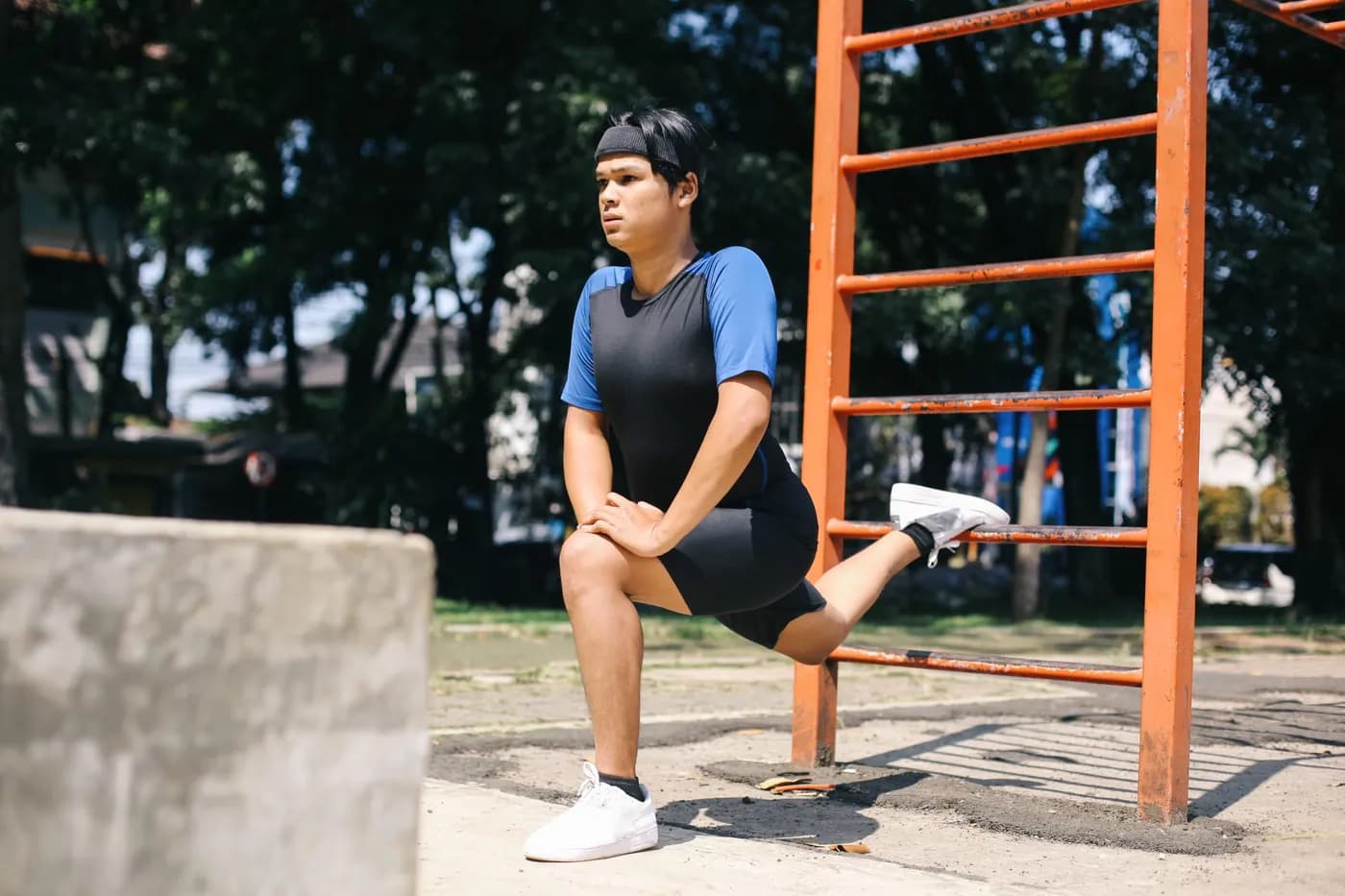
How to do knee push-ups correctly means establishing the shoulder alignment, core engagement and full range of motion that transfer directly to full push-ups. Flaring elbows, partial range of motion and sagging hips learned here become the exact limitations that halt progress at the full push-up stage.
Research confirms knee push-ups at near-failure intensity produce comparable pectoral and triceps muscle activation to full push-ups — establishing correct, challenging knee push-ups as a genuinely effective strength-building exercise, not merely a beginner accommodation.
Progressive Overload Within Knee Push-Ups Builds Toward the Full Version
How many knee push-ups a day to progress toward full push-ups: 3 sets of 12-15 near-failure repetitions, with a 4-second lowering phase added as a progression. This systematic approach builds the genuine chest and triceps strength that makes the transition to full push-ups a natural next step rather than an abrupt leap within 4-8 weeks for most beginners.
How to Get Started with Knee Push-Ups
What You Need to Begin
Only a yoga mat to protect the knees during the kneeling position — the complete equipment requirement for how to do knee push-ups at home. No resistance bands, no weights, no equipment of any kind beyond the mat.
Setting Realistic Goals
Week 1-2: 3 x 10 with correct form and 2-second lowering. Week 3-4: 3 x 15 near failure. Week 5-8: Add the 4-second slow eccentric. Month 2-3: Transition to incline push-ups and first full push-up attempts. The knee push-up stage is 4-8 weeks — not a lifetime position.
Start with the Basics
Begin with 3 sets of 8-10 repetitions with a 2-second lowering phase. Rest 60 seconds between sets. Practise daily or every other day. Focus entirely on the four form points — elbow tracking, full range, rigid body line and shoulder engagement — before increasing repetitions.
Best Exercises to Build Toward and Beyond the Knee Push-Up
Standard Knee Push-Up — the Foundation
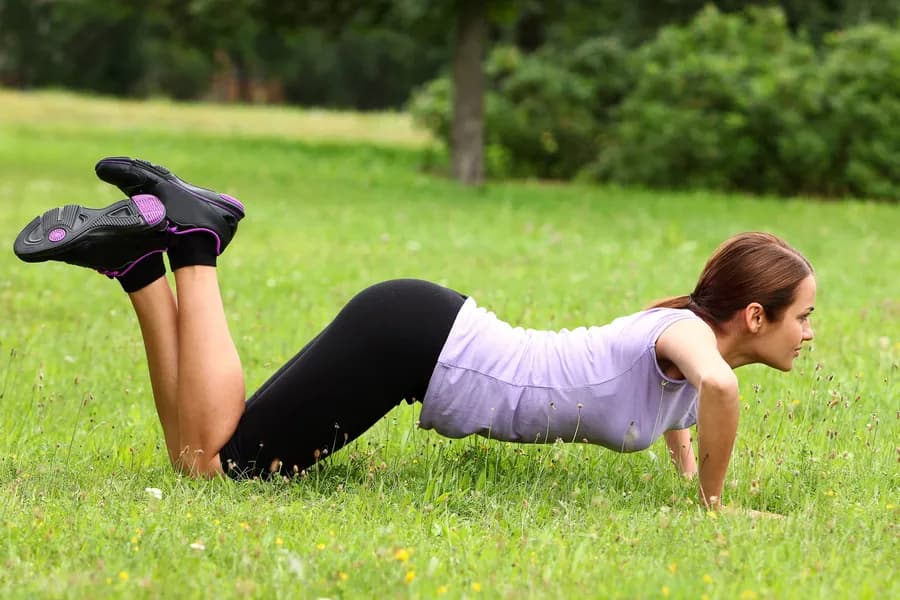
Kneel on the mat with knees hip-width apart. Walk the hands forward until the body forms a straight line from knees to crown. Lower the chest toward the floor over 2-3 seconds — elbows tracking back at 45 degrees from the body, not pointing straight outward. Press back up fully. Full range: the chest touches or nearly touches the floor each repetition. Sets: 3 x 10-15. See also: how-to-build-muscle-at-home
Slow Eccentric Knee Push-Up — Best for Strength Development
Identical to the standard knee push-up with a 4-5 second lowering phase — the eccentric overload that produces 2-3x greater muscle damage and hypertrophic stimulus per repetition. How many knee push-ups a day for muscle building: 3 x 8 slow eccentrics provide more strength stimulus than 3 x 20 standard-tempo reps. Progress here before moving to incline push-ups. See also: how-many-push-ups-per-day-to-build-muscle
Incline Push-Up — the Bridge to Full Push-Ups
Hands elevated on a desk or chair with feet on the floor — the natural progression from knee push-ups, loading approximately 30-40% of body weight. Once 3 x 12 incline push-ups are achievable, the first full floor push-ups become accessible. Sets: 3 x 10-12. See also: chest-workout-at-home-without-equipment
Plank Hold — Core Foundation for Push-Up Progression
The push-up top position held statically — developing the shoulder girdle stability and core anti-extension strength that sustained push-up performance requires. Hold 3 x 20-30 seconds between push-up sets. Also accelerates the shoulder conditioning that prevents the wrist and shoulder fatigue most beginners encounter at full push-up stage. See also: kumbhakasana
Diamond Knee Push-Up — Triceps Development
The standard knee push-up with hands forming a diamond shape beneath the sternum — shifts the primary load from the pectorals to the triceps, producing the highest available triceps EMG activation in a bodyweight pressing exercise. Add once 3 x 12 standard knee push-ups are comfortable. Sets: 3 x 8-10. See also: how-to-do-diamond-push-ups
Common Mistakes to Avoid
- Elbows Flaring at 90 Degrees — The single most common error in how to do knee push-ups for beginners — elbows pointing directly outward rather than tracking back at 45 degrees. This creates shoulder impingement, significantly reduces pectoral activation and builds the exact compensation pattern that makes full push-ups feel wrong. Consciously bring the elbows back toward the ribs on every repetition until the 45-degree tracking becomes automatic.
- Partial Range of Motion — Stopping the lowering phase 10-15 cm from the floor misses the bottom-range pectoral stretch that produces the greatest available hypertrophic stimulus. The chest must touch or nearly touch the floor on every repetition for the knee push-up to deliver its full strength-building benefit. If this is currently impossible, continue with the range available while progressing.
- Hips Raised or Dropped — The body must form a straight line from knees to crown throughout the movement. Raised hips (piking) reduces chest loading; dropped hips (sagging) loads the lower back. Engage the core before each repetition and maintain the body line through the full movement to maximise the training benefit and protect the lumbar spine.
- Rushing to Full Push-Ups Before the Form Foundation is Solid — How to do knee push-ups correctly first is the specific prerequisite for effective full push-ups. Practitioners who move to the floor before achieving consistent 3 x 15 near-failure knee push-ups with correct form carry the elbow flare, partial range and hip sag that limit chest development and increase injury risk indefinitely. Earn the progression by mastering the foundation.
Who Should Do Knee Push-Ups?
- Complete Beginners to Upper Body Strength Training — Knee push-ups are the universal starting point for upper body pressing strength — the correct accessible entry for anyone who cannot perform 5 consecutive full push-ups with correct form. Habuild's daily sessions progress systematically from knee through incline to full push-ups and beyond.
- Women Building Upper Body Strength at Home — How to do knee push-ups for beginners female practitioners: the knee modification is equally appropriate for all practitioners. Women typically develop from correct knee push-ups to full push-ups within 4-8 weeks of consistent daily near-failure training — producing the lean arm and chest definition that bodyweight training specifically creates without bulk.
- Older Adults Maintaining Upper Body Function — Knee push-ups provide the reduced-load upper body pressing stimulus that maintains the shoulder girdle strength, chest muscle mass and wrist conditioning that daily functional activities require — accessible for all ages with joint-appropriate loading. Always consult a physician before beginning strength training if any upper limb or cardiovascular conditions are present.
- Those Returning from Upper Body Injury — The knee modification allows upper body training to continue at appropriate reduced intensity during shoulder, elbow or wrist rehabilitation — maintaining the movement pattern and baseline strength while the injury heals and load tolerance progressively rebuilds.
Build Strength with a Routine That Actually Works
Building upper body pushing strength requires consistent daily practice with expert guidance — not random workouts. Habuild's structured programme builds you from knee push-ups to full push-ups and beyond within weeks.
- Daily live guided strength and yoga sessions — 45 minutes, 6 days a week
- Beginner to advanced progression built in
- No equipment required — practice from home
- Expert live guidance for correct technique every session
- Community of 1.5 Crore+ members for daily accountability
Knee push-ups do their job best as one step in a longer plan, rather than an exercise repeated in isolation with no clear next stage. The upper-body strength this movement builds compounds fastest with consistent, progressive training behind it. Strong Everyday offers exactly that kind of guided progression, from your first knee push-up onward.
Frequently Asked Questions
Related Articles
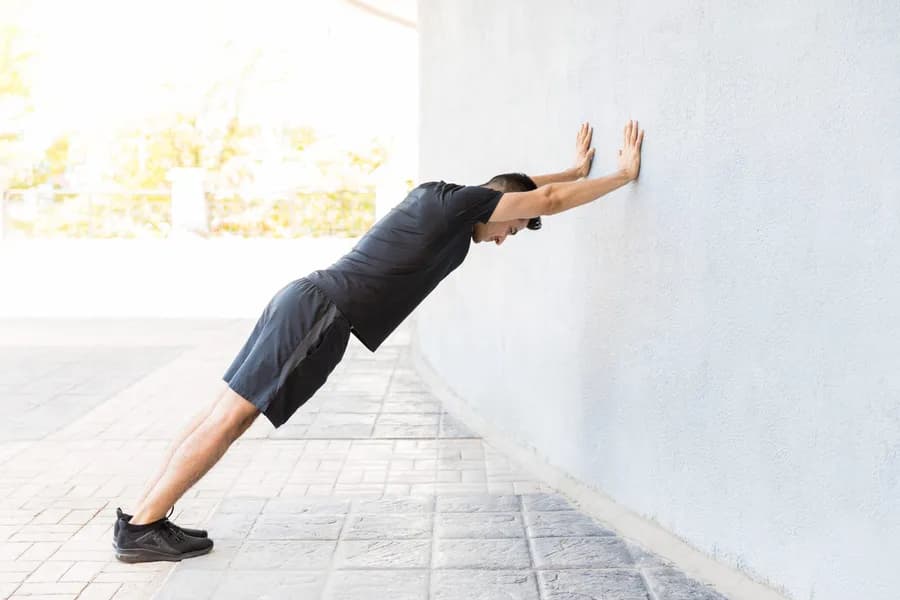
How to Do Wall Push-Ups Correctly: the Entry-Level Push-Up Guide
Reducing the body weight load by roughly 60-70% compared to floor push-ups makes this the lowest-barrier entry point for beginners and anyone returning from injury. See the entry-level push-up guide.
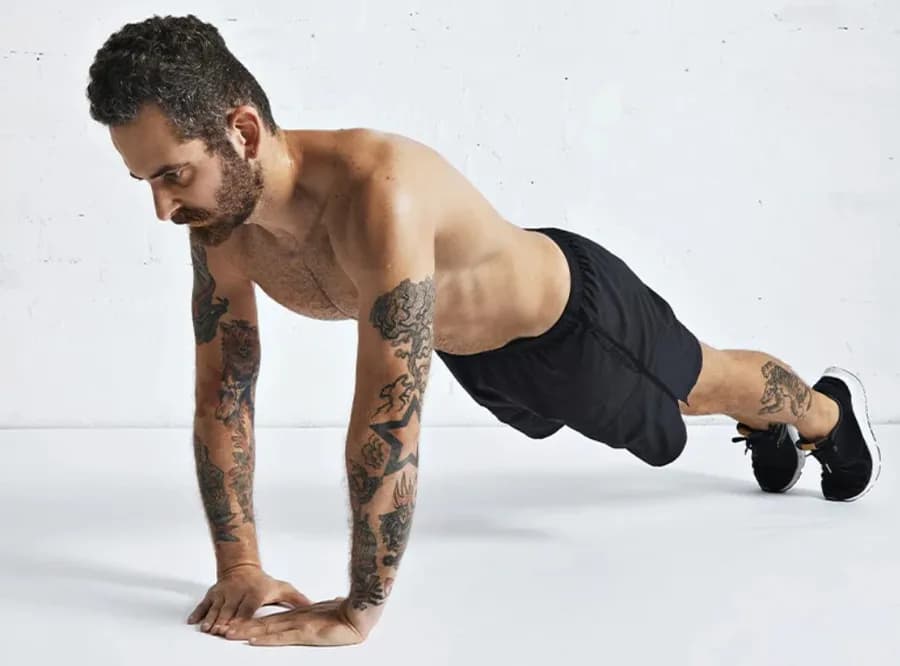
How to Do Diamond Push Ups: Triceps and Inner Chest Guide
The narrow-grip hand position shifts primary loading from the pectorals to the triceps and the inner chest, unlocking the most effective no-equipment triceps exercise. See the full technique guide.

How to Do Push Ups: Step-by-Step Guide for All Levels
Done correctly, the push-up builds chest, shoulder, tricep, and core strength at once with no equipment — done incorrectly, it strains the wrists and neck. See every variation with precise form cues.
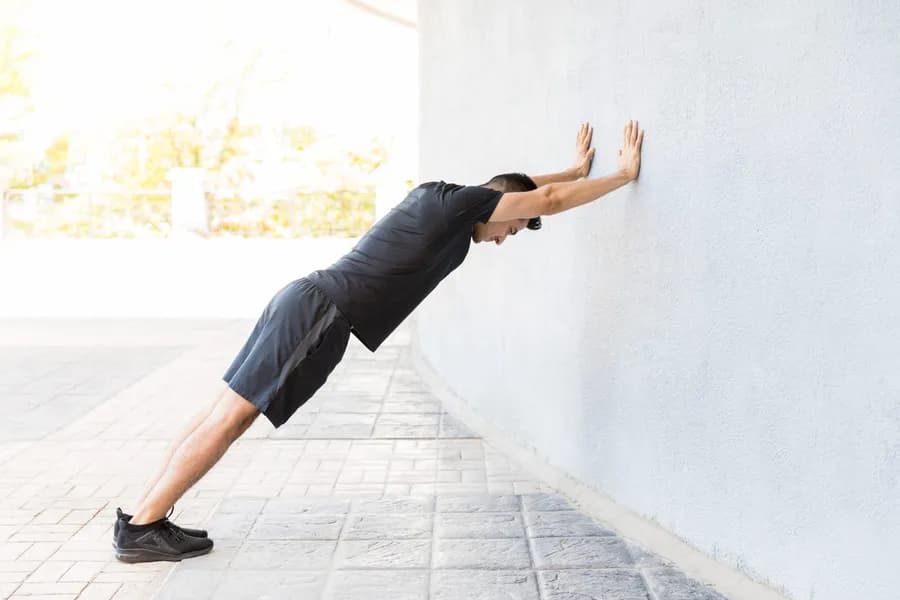
How to Do Push Ups for Beginners: Step-by-Step from Zero to 20 Reps
The correct progression runs wall push-ups to incline to knee to standard, taking most beginners from zero to 20 consecutive reps in 6-8 weeks. See the step-by-step guide.

How Many Push-Ups per Day to Build Muscle: the Honest Answer
Push-up volume for real muscle growth depends on training age, current strength, rep range, and whether progressive overload is actually being applied — not a round number. See the evidence-based answer.