
How to Do Push Ups for Beginners: Step-by-Step from Zero to 20 Reps
The correct progression runs wall push-ups to incline to knee to standard, taking most beginners from zero to 20 consecutive reps in 6-8 weeks. See the step-by-step guide.
Key Takeaways
- The correct progression runs wall push-ups, then incline, then knee, then standard push-ups.
- Harvard Health found 40+ push-ups linked to 96% lower cardiovascular event risk over 10 years.
- A simple plank-hold test determines exactly which stage of the progression to start at.
- Every variation, even wall push-ups, requires active core engagement throughout the movement.
- The full progression from day one to elite level needs zero equipment, only body position.
- Most beginners reach 15-20 consecutive full push-ups by week 12 of daily practice.
Most beginners fail at push-ups because they start with the wrong variation — attempting a full standard push-up before building the foundational strength and form. The correct progression is wall push-ups → incline push-ups → knee push-ups → standard push-ups. This guide walks you through each stage with precise form cues and the exact progression timeline most beginners need to go from zero to 20 consecutive push-ups in 6–8 weeks.
Benefits of Push-Ups for Beginners
- Builds Foundational Upper Body Strength — Push-ups build chest, shoulder, and tricep strength that directly improves performance in all pushing activities — from getting up off the floor to lifting overhead. For beginners, even the modified versions produce rapid strength gains in the first 4–6 weeks due to high neuromuscular adaptation.
- Requires Zero Equipment or Space — A 2-metre flat surface is all you need. No gym, no weights, no investment — push-ups are the most accessible upper body exercise available. This makes them the ideal starting exercise for anyone beginning a fitness journey from home.
- Builds Core Strength Simultaneously — Every push-up variation — including wall push-ups and knee push-ups — requires active core engagement throughout the movement. This means each push-up session simultaneously strengthens the abdomen, lower back, and spinal stabilisers alongside the upper body.
- Scales Infinitely Without Equipment — Wall push-ups → incline push-ups → knee push-ups → standard → diamond → decline → archer push-ups: the progression from day one to elite-level training requires no equipment change — only body position. This makes push-ups the complete single-exercise training system for upper body development.
Harvard Health: The ability to perform 40+ push-ups is associated with a 96% lower risk of cardiovascular disease events over 10 years compared to those unable to complete 10.
How to Get Started with Push-Ups for Beginners
What You Need to Begin
A yoga mat or non-slip surface for floor exercises. Optional: wrist guards if wrist discomfort is a concern. No other equipment required. The decision of where to start on the progression depends on your current strength level — assessed by the simple test below.
Beginner Strength Assessment
- Cannot hold a plank for 10 seconds: Start with wall push-ups
- Can plank but cannot lower to the floor with control: Start with incline push-ups
- Can lower with control but cannot push back up: Start with knee push-ups
- Can do 1–3 full push-ups: Start with standard push-up progression
Setting Realistic Goals
Week 4: 10 consecutive knee push-ups with perfect form. Week 8: First 5 consecutive full push-ups. Week 12: 15–20 consecutive full push-ups. These timelines assume daily practice for 5–7 days per week. Progress requires consistency far more than any single training technique.
Push-Up Beginner Progressions — Step-by-Step
Stage 1: Wall Push-Ups Complete Beginners · Day 1
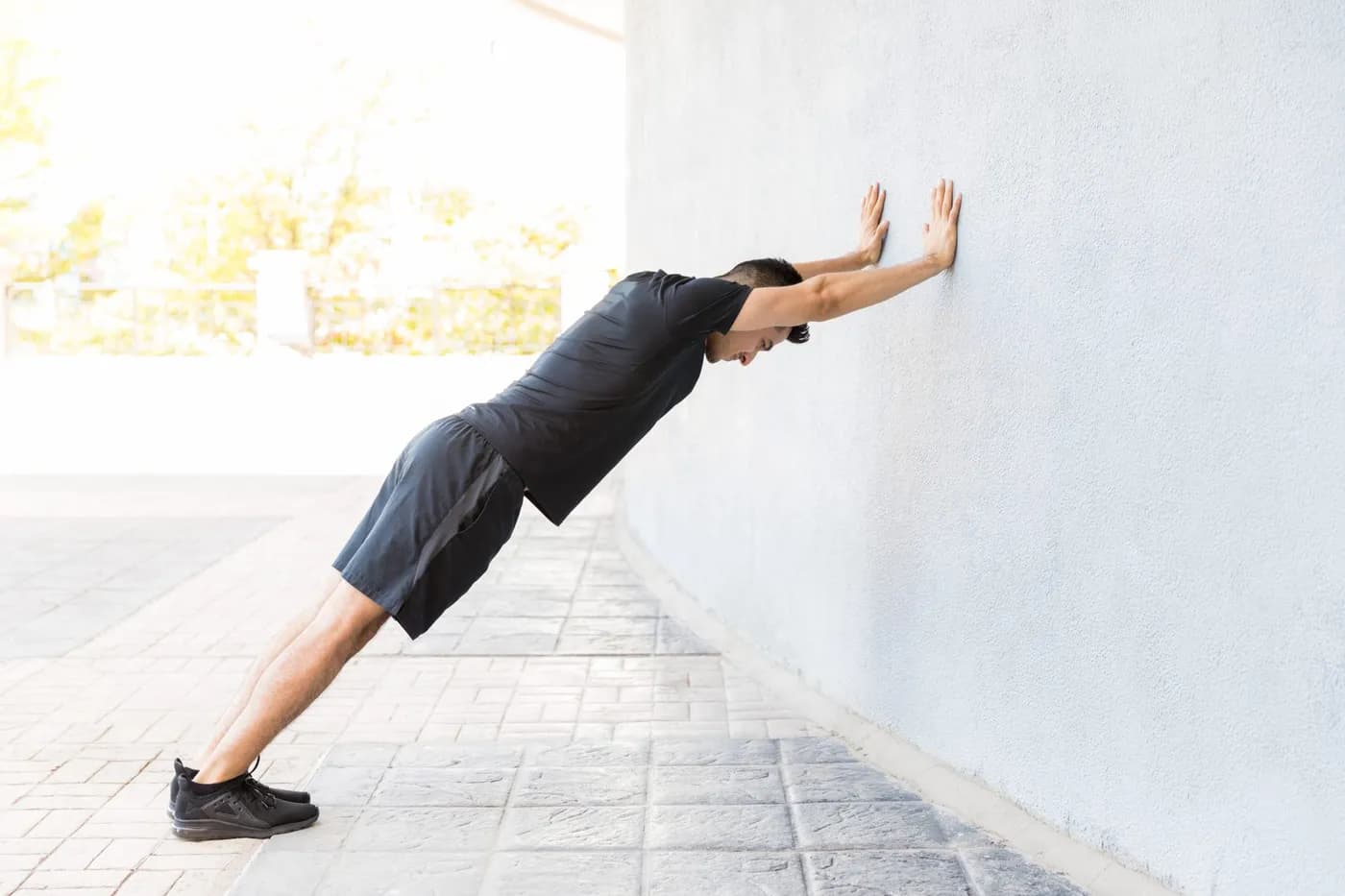
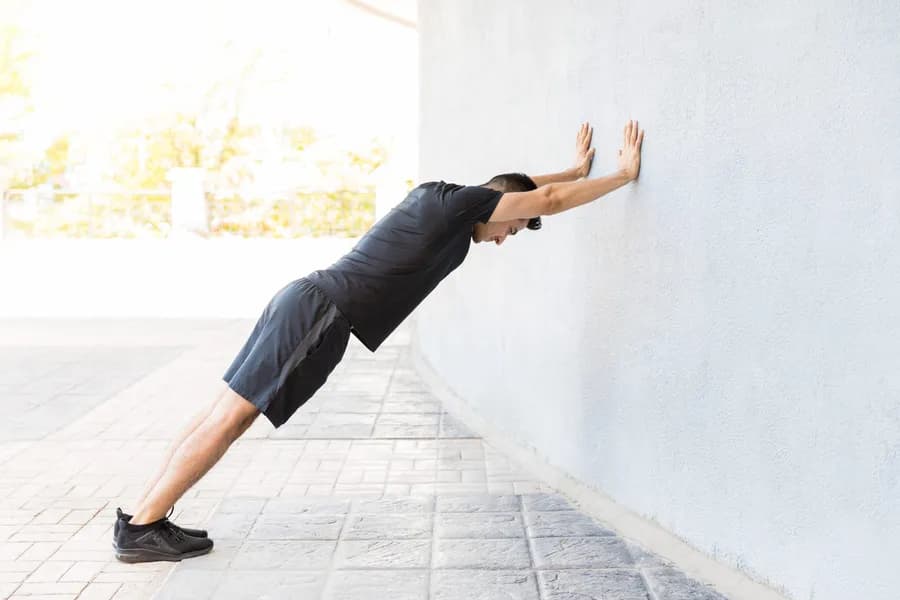
Stand facing a wall at arm's length. Place both hands flat against the wall at shoulder height and width. Lean toward the wall, bending elbows to 45 degrees, then press back. This is a genuine upper body pressing exercise with the smallest possible loading — suitable for day one of any fitness journey. 3 sets × 10–15 reps. Progress to the next stage when 3 sets × 15 is easy.
Stage 2: Incline Push-Ups Early Beginner · Week 2–3
Hands elevated on a bed, chair seat, or table (higher surface = easier). Body in a straight plank line from feet to head. Elbows at 45-degree angle on descent. Lower until chest is 3–5 cm from the surface, press back up. 3 sets × 10–12 reps.
Stage 3: Knee Push-Ups Developing Beginner · Week 3–5
Knees on the floor, body in a straight line from knees to head. Hands shoulder-width apart, below the shoulder joint. Lower the chest to within 3 cm of the floor. Elbows at 45 degrees. This is not a lesser exercise — it is the same movement with reduced load, building the same form and strength that the full push-up requires. 3 sets × 10–15 reps. Progress when 3×15 is genuinely comfortable.
Stage 4: Standard Push-Ups Progressing Beginner · Week 6–8
Full push-up: hands shoulder-width apart, toes on floor, body in a straight plank line from heels to head. Lower until chest is 3–5 cm from the floor — elbows at 45 degrees. Start with 1–3 consecutive reps. 5 sets × 3 reps with rest is more effective than forcing poor form for more reps. Build from 3 to 5, 5 to 8, 8 to 10, 10 to 15 over subsequent weeks.
Breathing for All Stages: Inhale on the way down (2 counts), exhale on the way up (1 count). Never hold the breath. Consistent breathing rhythm is more important than any specific count.
Common Beginner Mistakes in Push-Ups
- Jumping Straight to Full Push-Ups — Starting with the most demanding variation before foundational strength is built produces immediate form breakdown — poor alignment, wrist pain, neck compression — and reinforces incorrect movement patterns from the first session. Fix: take the beginner strength test and start at the appropriate stage — there is no shame in wall push-ups, it is the correct starting point for many adults beginning fitness training, not a marker of weakness.
- Doing Partial Reps — Lowering only halfway and pressing back up counts neither as a full repetition nor as a genuinely beneficial movement pattern. Half-range push-ups are common in beginners trying to do more reps than their strength currently supports. Fix: do fewer reps through full range of motion — 5 perfect push-ups produce more development than 15 half-reps, touch or nearly touch the chest to the floor on every repetition.
- Not Progressing When Ready — Staying at the knee push-up stage for months when the full push-up is within reach prevents the continued strength development that progression produces. Fix: test full push-ups every 2 weeks, and add the full push-up even if you can only do 2 consecutive — these 2 are the beginning of the progression to 20.
- Flaring Elbows Wide — Elbows pointed outward at 90 degrees to the body is the most common form error — shifting load to the shoulder joint in an unstable position and increasing injury risk significantly. Fix: 45-degree elbow angle from the body — the "arrow" position; if unsure, film yourself from the side to check alignment.
Who is This Push-Up Guide For?
- Complete Beginners — Start at Stage 1 (wall push-ups) if you have never trained. The progression to 20 full push-ups typically takes 8–12 weeks of consistent daily practice from zero.
- Women Beginning Strength Training — The knee push-up is the ideal starting point for most women — building the chest, shoulder, and tricep strength that produces the toned upper body result without the wrist or shoulder strain that jumping straight to full push-ups causes.
- Older Adults — Wall and incline push-ups are appropriate at all ages — they maintain upper body pushing strength that is critical for functional independence. Medical clearance recommended if shoulder or wrist conditions are present.
- Those Who Have Tried and Failed Before — Most previous failures with push-ups come from starting at the wrong stage. Starting at Stage 1 or 2 and building correctly produces a completely different — successful — outcome.
Build Your Push-Up Foundation with Habuild
Building from zero to 20 push-ups isn't about willpower — it's about starting at the right stage, progressing correctly, and maintaining daily consistency. Habuild's live sessions provide real-time form correction at every stage of the progression.
- Stage-by-stage push-up progression
- Daily live form correction
- Beginner-specific programming
- No equipment needed
- Community for daily consistency
- Habuild home-friendly workouts
Going from zero to twenty push-ups happens through a progression, not a single motivated week, and the wall-to-incline-to-knee-to-standard sequence in this guide works best as part of a larger plan rather than attempted alone. Consistency matters here more than intensity ever will. Strong Everyday is designed to carry you through exactly that kind of guided, step-by-step push-up progression.
Frequently Asked Questions
Related Articles
How to Do Push Ups: Step-by-Step Guide for All Levels
Done correctly, the push-up builds chest, shoulder, tricep, and core strength at once with no equipment — done incorrectly, it strains the wrists and neck. See every variation with precise form cues.
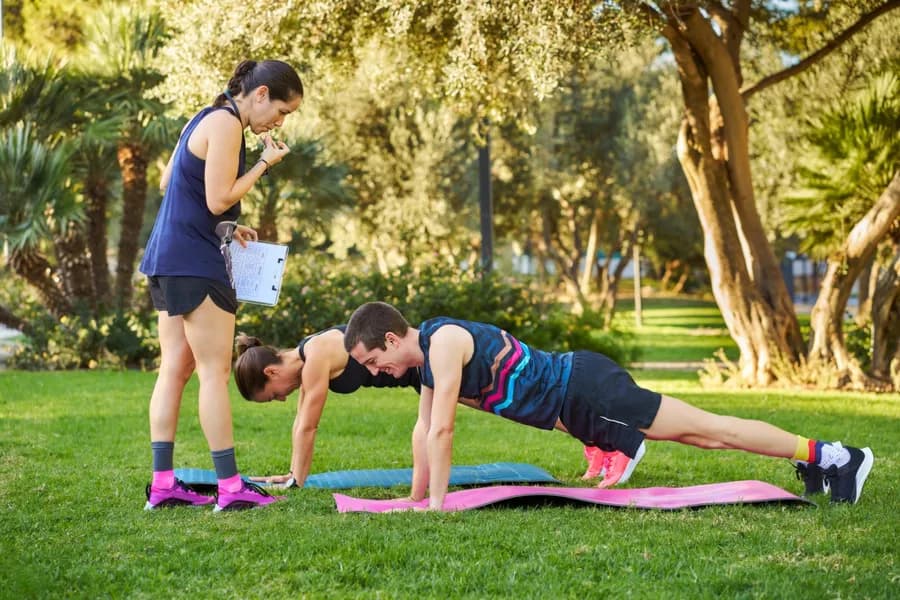
How to Do a Plank Properly: Step-by-Step Guide for Beginners
A correctly done plank activates the core, shoulders, glutes, and back muscles at once, but most people make form errors that eliminate the benefit entirely. See the step-by-step guide.

How Many Push-Ups per Day to Build Muscle: the Honest Answer
Push-up volume for real muscle growth depends on training age, current strength, rep range, and whether progressive overload is actually being applied — not a round number. See the evidence-based answer.
How Many Jumping Jacks to Burn 500 Calories: the Honest Calculation
The number depends on body weight, exercise intensity, and metabolic efficiency in ways most online calculators ignore. See the weight-adjusted calculation.
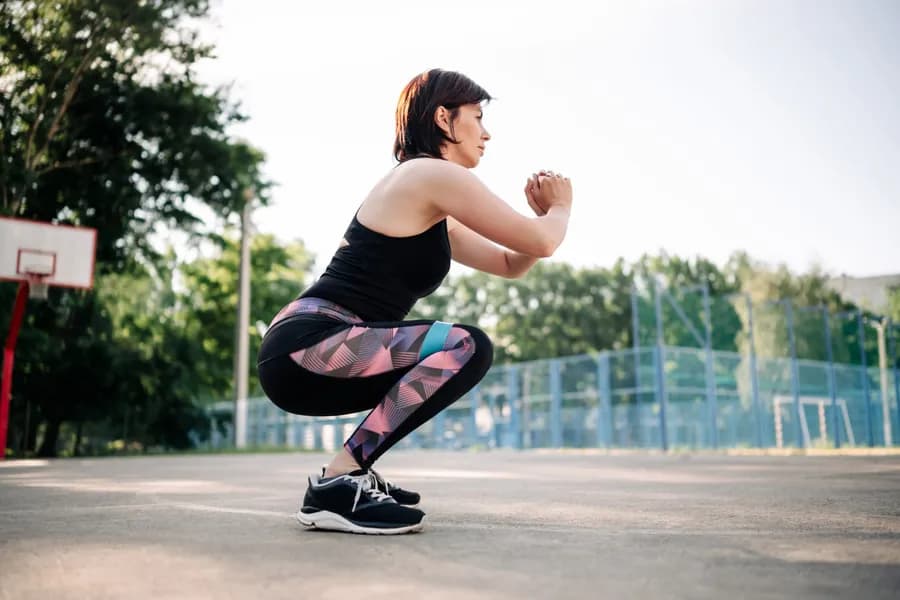
How to Do a Squat: Proper Form, Variations, and a Daily Squat Workout That Works
Done right, the squat builds quad, glute, hamstring, and core strength in one movement — done wrong, it produces knee pain and back pain. See the proper form, variations, and daily workout.