
Best Exercises for Core Strength
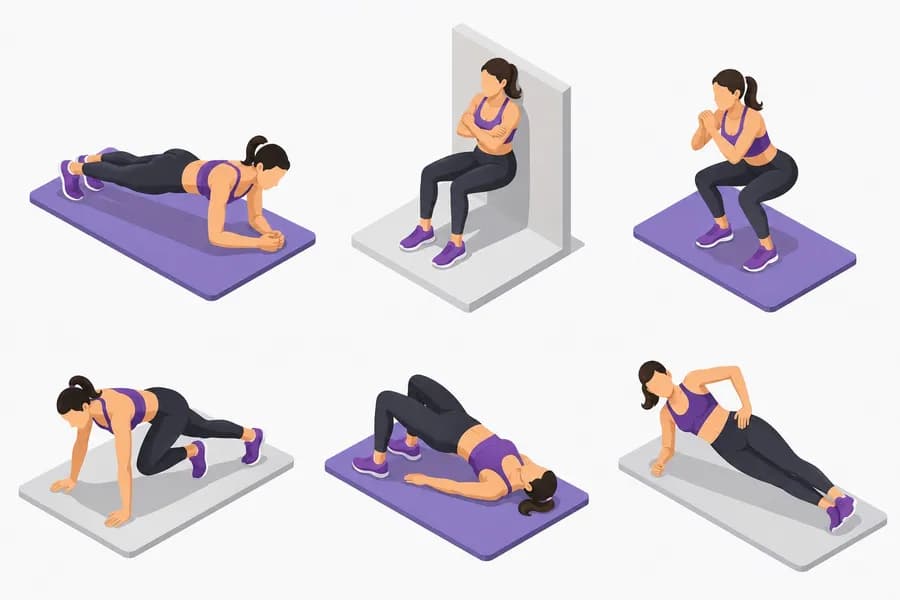
The plank, dead bug, hollow body hold, glute bridge, bird dog, mountain climbers, and side plank train the deep stabilisers and posterior chain — no equipment needed. See the full list.
Key Takeaways
- Plank, dead bug, hollow body hold, glute bridge, bird dog, and side plank top the list.
- The diaphragm and deep abdominal muscles are part of the core system tied to breathing.
- A strong core acts as a natural brace, distributing load away from knees, hips, and shoulders.
- Certain core exercises involving gentle compression may support digestive function.
- Builds the kind of strength that matters for carrying groceries and getting up off the floor.
The best exercises for core strength include the plank, dead bug, hollow body hold, glute bridge, bird dog, mountain climbers, and side plank. These bodyweight movements train the deep stabilizers, obliques, and posterior chain — building functional strength that supports posture, balance, and everyday movement without any gym equipment.
If you want a stronger, more stable body, training your core is non-negotiable. The best exercises for core strength don’t require a gym membership or fancy equipment — just consistent effort and the right movements. Whether you’re dealing with back discomfort, poor posture from desk work, or simply want to move better in daily life, a strong core is the foundation everything else is built on.
10 Benefits of Core Strength Training
- Reduces Lower Back Discomfort A weak core often contributes to lower back strain. Strengthening the muscles around your spine — including the deep stabilizers — may gradually ease the stress on your lumbar region when practiced regularly. Pairing core work with targeted movement is a great place to start, and you can explore more through Yoga For Lower Backpain.
- Improves Posture Your core muscles hold your spine upright throughout the day. When they’re strong, you naturally sit and stand taller. This is especially noticeable for people who spend long hours at a desk or in front of a screen.
- Enhances Balance and Stability Every movement — walking, lifting, reaching — relies on core stability. Training this area builds the kind of functional strength that helps you stay balanced in everyday life and during other workouts.
- Boosts Athletic Performance Whether you run, swim, cycle, or play a sport, power starts at the core. A stable midsection allows your limbs to work more efficiently, making every movement more effective.
- Supports Better Breathing Your diaphragm and deep abdominal muscles are part of your core system. Strengthening them supports more controlled, efficient breathing — both during exercise and at rest.
- Reduces Injury Risk A strong core acts as a natural brace for your spine and joints. It absorbs impact and distributes load, helping protect your knees, hips, and shoulders during physical activity.
- Improves Flexibility and Mobility Core training often involves controlled rotations and stretches that increase spinal mobility. Over time, this translates to a greater range of motion throughout the body.
- Supports Digestion and Gut Health Certain core exercises — particularly those involving gentle abdominal compression and breathing — may support digestive function when practiced consistently as part of a regular routine.
- Builds Functional Day-to-Day Strength Carrying groceries, lifting children, getting up from the floor — all of these tasks become easier when your core is strong. This is the kind of fitness that matters beyond the workout mat.
- Builds Consistency and Body Awareness Core training teaches you to connect with your body — to notice how you breathe, how you hold tension, and how different muscles work together. That awareness is one of the most underrated benefits of a regular practice.
How to Get Started with Core Strength Training
What You Need to Begin
Almost nothing. A yoga mat or a soft surface is all you need for the majority of effective core exercises. No machines, no weights, no gym. Bodyweight movements done consistently and correctly will take you a long way. If you want to add resistance later, a resistance band or a light dumbbell can be useful — but they’re optional at the start.
Setting Realistic Goals
The biggest mistake people make is trying to do too much too soon. Start with 3 sessions per week, focusing on form over volume. Aim to build up to daily practice over the course of a few weeks. Core training is cumulative — small consistent sessions beat occasional intense ones every time.
Avoid training through sharp pain, especially in the lower back or hips. Rest is part of the process. Progress feels slow at first, but within 4–6 weeks of consistent work, the difference in stability and posture is usually noticeable.
Start with the Basics
Beginners should focus on three foundational movements: the plank (isometric hold), the dead bug (controlled breathing and limb movement), and the glute bridge (posterior chain and pelvic stability). Master these before moving to more dynamic exercises. Form and control matter far more than how long you hold or how many reps you complete.
For a structured beginner-friendly routine with expert guidance, Habuild’s Best Exercises For Strength At Home is a solid starting point.
Best Exercises for Core Strength

Plank
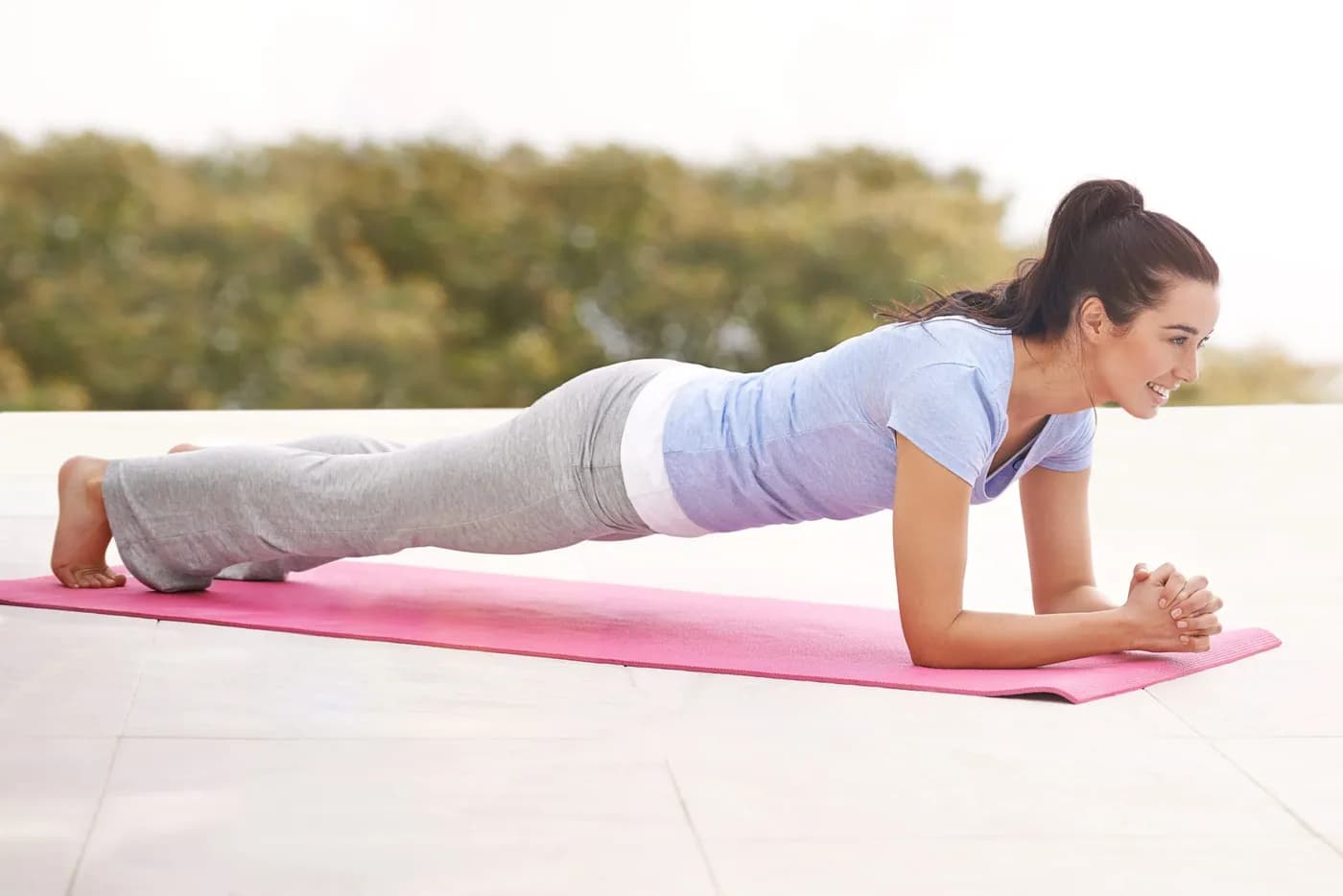
The plank is the most fundamental core exercise — and for good reason. It activates the deep transverse abdominis, obliques, and lower back simultaneously while keeping the spine neutral. Start with a 20–30 second hold, rest, and repeat 3 times. Progress by extending the hold or lifting one leg slightly.
Dead Bug
Lie on your back, arms pointing toward the ceiling, knees bent at 90 degrees. Slowly lower one arm and the opposite leg toward the floor while exhaling, then return. This movement trains spinal stability and coordination simultaneously — crucial for a functional core. Perform 8–10 reps per side for 3 sets.
Hollow Body Hold
Press your lower back into the floor, extend your legs and arms out long, and hold. This is one of the most effective core compression exercises available and is widely used in gymnastics conditioning. Start with 10–15 second holds and build over time. The key is keeping your lower back flat — not arched.
Glute Bridge
Lie on your back, feet flat, knees bent. Drive through your heels to lift your hips toward the ceiling, squeezing your glutes at the top. Hold for 2 seconds and lower. This targets the posterior chain — glutes, hamstrings, and lower back — which are critical parts of your overall core system. Do 3 sets of 12–15 reps.
Bird Dog
From a tabletop position, extend one arm forward and the opposite leg back simultaneously. Hold for 3 seconds, return, and switch sides. This movement trains anti-rotation stability — one of the most important functions of the core. Aim for 10 reps per side with slow, controlled movement.
Mountain Climbers
Start in a high plank position. Drive one knee toward your chest, then quickly switch legs. Mountain climbers combine core stability with cardio demand, making them highly effective for building both endurance and abdominal strength. Perform 20–30 seconds per round for 3 rounds.
Side Plank
Lie on your side, propped up on one forearm, hips stacked. Lift your hips off the floor to form a straight line from head to feet. This targets the obliques — the lateral muscles that support spinal rotation and lateral bending. Hold for 20–30 seconds per side, 3 sets. You can also find a detailed breakdown in Habuild’s Core Strength Plank guide.
Common Mistakes to Avoid
- Poor Form In exercises like the plank or dead bug, letting the lower back sag or arch is the most common error. This shifts the work away from your core and increases spinal stress. Always prioritize position over duration or reps. If your form breaks down, stop and reset.
- Skipping the Warm-Up Cold muscles and joints don’t move well. Spend 3–5 minutes before your core session doing light movement — hip circles, cat-cow stretches, and gentle spinal rotations. A warm-up primes the nervous system and reduces injury risk significantly.
- Overtraining Your core muscles, like any muscle group, need recovery time. Training them intensely every single day without rest can lead to fatigue and reduced performance. Three to five focused sessions per week is enough to see meaningful progress, especially for beginners.
- Inconsistency The core strength gap most people face isn’t a knowledge problem — it’s a consistency problem. Doing a 15-minute core routine three times a week for two months will outperform any sporadic intense session. Showing up regularly is the single most important variable.
Who Should Try Core Strength Training?
- Beginners Core training is one of the most accessible forms of exercise for people just starting out. The foundational movements — plank, bridge, bird dog — require no prior fitness experience. You can begin at whatever level you’re at and build from there. Progress is gradual but real.
- Women Core training is especially valuable for women — not to “tone” the stomach, but to build genuine functional strength. Strong core muscles support pelvic floor health, postural alignment, and can help manage discomfort associated with hormonal changes. It builds real strength without bulk — a common and completely unfounded concern. You can learn more about tailored approaches through Strength Training For Women.
- Older Adults Maintaining core strength as you age directly supports balance, reduces fall risk, and keeps you mobile and independent for longer. Low-impact movements like the dead bug, seated core work, and glute bridges are safe options for most older adults. Always check with your doctor before starting a new exercise program if you have an existing condition.
- Working Professionals Prolonged sitting is one of the leading causes of core weakness and postural dysfunction. Core training doesn’t need to take long — even a 10–15 minute routine in the morning can meaningfully counteract hours of sitting. It improves posture, reduces back fatigue, and can increase your energy across the day.
Build Core Strength with a Routine That Actually Works
Building core strength isn’t about doing random crunches every morning. It’s about following a structured, progressive plan — with the right guidance to ensure your form is correct and your effort compounds over time. Habuild’s Strong Everyday program is built around exactly that.
- Daily live guided strength sessions — show up and get it done
- Beginner to advanced progression built into the plan
- No equipment required — everything works from home
- Expert guidance on form so your work actually translates to strength
- A consistent community that keeps you accountable
You can explore what a complete plan looks like through Habuild’s Core Strength Routine before you begin.
Start Your Core Strength Journey
Related reads: What Are Core Exercises? Complete Guide for Strength · Exercises for Upper Crossed Syndrome: A Practical Guide to Correcting Posture and Rebuilding Strength
A strong core is built through variety as much as repetition — planks and dead bugs each train different stabilizers, and the payoff comes from cycling through them consistently rather than sticking to just one move. A structured program can rotate these exercises and progress their difficulty as your core strengthens over time. Habuild’s Strong Everyday program offers guided core and full-body strength training built around exactly that kind of steady progression.
Frequently Asked Questions
Related Articles
10 Benefits of Isometric Exercises for Strength and Daily Fitness
Isometric exercises hold a muscle contraction at a fixed angle, with no joint movement and no equipment, in sessions under 15 minutes. See all 10 benefits.
Exercise for Pelvic Floor Men: Best Moves, Benefits & How to Start
Kegel contractions and functional core work strengthen the muscles at the base of the pelvis, which respond to training just like any other muscle group. See the best moves and how to start.
Strength Training for Beginners at Home: The Complete Guide
Bodyweight or light resistance exercises, done consistently at home, progressively build muscle and improve posture — no gym membership or prior experience required. See the complete guide.
Strength Training for Beginners Women: Your Complete Guide
Building lean muscle and boosting metabolism doesn’t require a gym membership or expensive equipment — just a clear starting point. See the real benefits and how to build a consistent habit.

What Is the Best Exercise for Belly Fat?
There's no single magic move — planks, bicycle crunches, mountain climbers, squats, and burpees, done 4-5 times a week, are among the most effective. See the full approach.
10 Benefits of Deadlifts for Women
The deadlift trains the glutes, hamstrings, core, and upper back in a single lift — one of the most time-efficient exercises you can add to a weekly routine. See all 10 benefits.