
Virabhadrasana 1 (Warrior 1): Steps Benefits and Alignment Cues
Practice Virabhadrasana 1 with Habuild. Follow the Warrior I steps to strengthen your legs, open your hips, and build stamina and mental focus. Start today!
Key Takeaways
- The hip-squaring action is the detail that makes it therapeutically superior to a plain lunge.
- Reaches the deep psoas specifically, not just the superficial hip flexors an open-hip lunge hits.
- Names five common errors – knee collapse, back hip opening, torso lean, arm drop, hip loss.
- Both arms rise overhead while hips stay squared forward, embodying a warrior’s charge.
- Sustained holds and multi-round sequences raise heart rate for a compound metabolic effect.
- Counters the rounded-shoulder, forward-head posture that desk-dominated life produces.
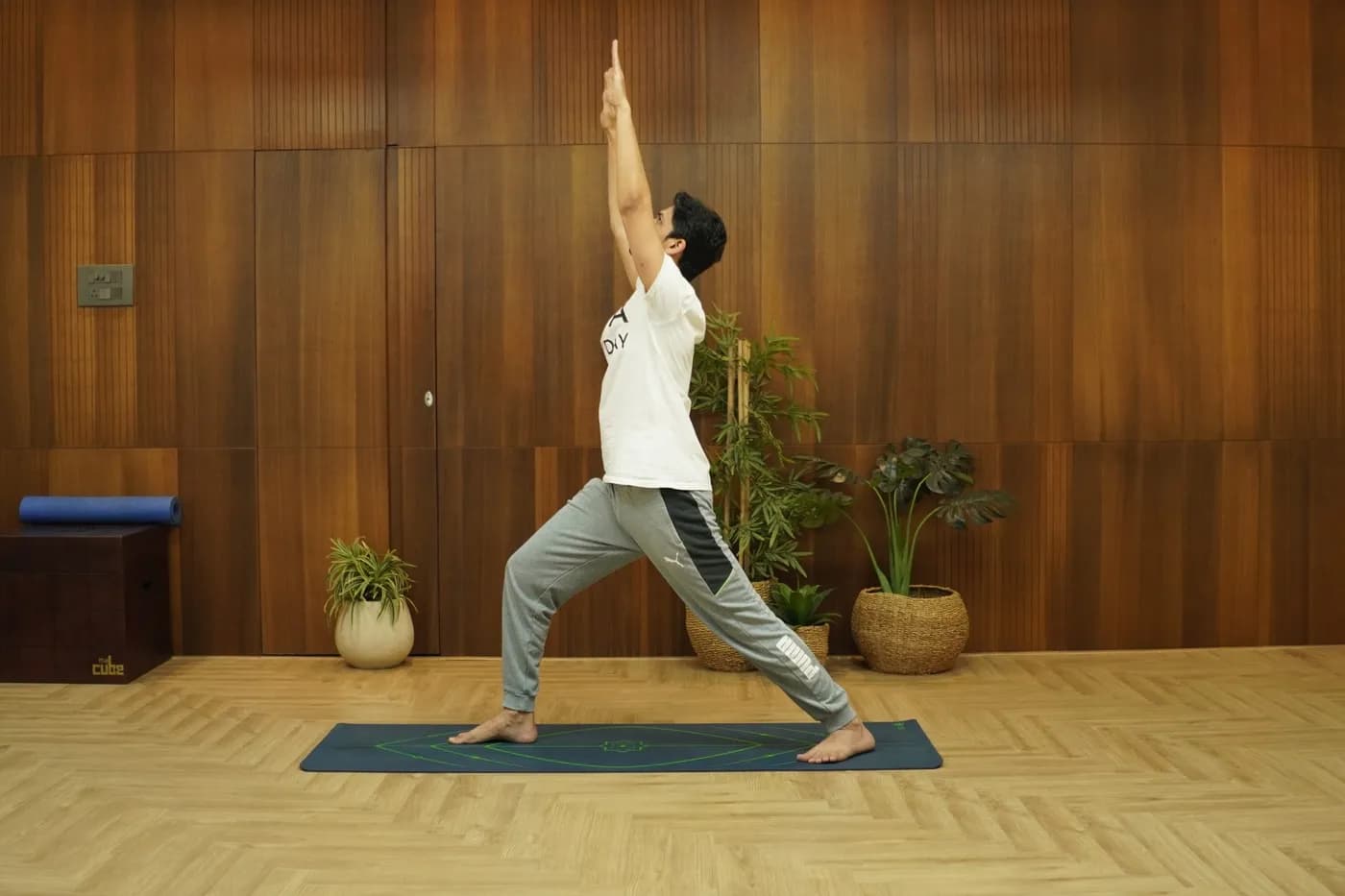
Virabhadrasana 1, or Warrior I, is a standing yoga posture where the front knee bends at 90 degrees, the hips square forward, and both arms rise overhead. It simultaneously builds lower body strength, opens the hip flexors and chest, develops core stability, and cultivates the focused warrior presence — one of yoga’s most therapeutically complete standing postures.
What is Virabhadrasana 1?
Virabhadrasana 1 — known in English as Warrior I Pose — is the first posture in the Virabhadrasana series. Its name derives from Sanskrit: Virabhadra (the legendary warrior created by Lord Shiva) and Asana (posture). The front knee bends to 90 degrees over the front ankle, the back leg extends straight with the heel grounded, the hips square forward, and both arms raise powerfully overhead — embodying the warrior’s powerful forward charge.
Virabhadrasana 1 is one of yoga’s most foundational and therapeutically complete standing postures. Its hip-squaring action — the back hip actively drawing toward the front — is the defining alignment detail that makes it therapeutically superior to a simple lunge: the hip square ensures the deep psoas stretch that is the posture’s primary differentiating benefit, opening the hip flexors in a way that the open-hip lunge cannot reach.
At Habuild, Virabhadrasana 1 is always taught with specific attention to the five most common alignment errors — front knee collapse, back hip opening, torso lean, arm drop, and hip square loss — that reduce its therapeutic value and accumulate joint stress.
Virabhadrasana 1 Benefits
Physical Benefits
- Builds Lower Body and Posterior Chain Strength The deep lunge position loads the quadriceps, glutes, hamstrings, and calves of the front leg under sustained isometric tension — building the functional lower body strength that supports the knee, stabilises the pelvis, and underpins all athletic activities including running, cycling, and stair climbing.
- Opens the Hip Flexors and Deep Psoas The back-leg extension combined with the hip-squared position of Virabhadrasana 1 provides the deepest standing psoas and hip flexor stretch in yoga — counteracting the chronic hip flexor shortening that desk work, driving, and sedentary lifestyles systematically produce. The hip square is the essential element that reaches the deep psoas rather than only the superficial hip flexors.
- Strengthens the Core and Improves Postural Alignment Maintaining the torso vertical and chest open — hips squared forward, ribcage lifting, crown extending toward the ceiling — requires sustained engagement of the core stabilisers, obliques, and spinal erectors. This postural demand directly counters the rounded-shoulder, forward-head posture of modern desk-dominated life.
- Supports Metabolic Health Through Compound Standing Demand The compound lower-body, core, and upper-body demand of Virabhadrasana 1 — particularly in sustained holds and multi-round sequences — elevates heart rate and metabolic demand, building lean muscle mass that supports long-term healthy body composition.
Mental and Emotional Benefits
- Cultivates Warrior Qualities — Focused Presence and Grounded Strength The gaze fixed on the horizon, arms reaching powerfully overhead, legs rooted strongly into the earth — these are not merely alignment instructions but the deliberate embodiment of the warrior qualities of focused attention, fearless forward momentum, and grounded strength that the pose is specifically designed to cultivate.
- Builds Mental Toughness Through Sustained Discomfort The burning in the front thigh, the fatigue of the raised arms, the demand of maintaining the hip square — these sustained discomforts are among yoga’s most direct training grounds for the mental resilience of staying present and composed when the impulse is to release.
How to Do Virabhadrasana 1 — Step-by-Step Instructions
Key Principles
Key Principles Four alignment principles define safe, effective Virabhadrasana 1: front knee tracks directly above the front ankle — never collapsing inward; hips square forward — the back hip actively draws toward the front hip; spine lifts tall — torso vertical, not leaning forward over the thigh; and arms reach actively — pressing upward with intention throughout.
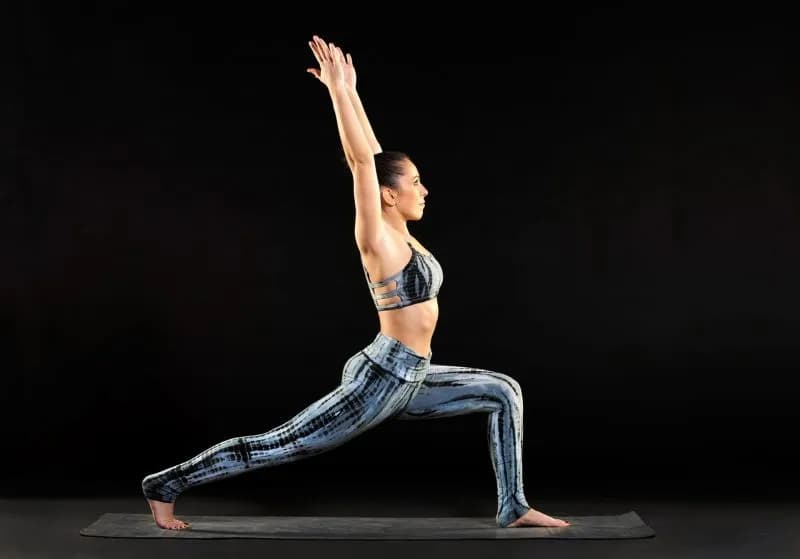
Virabhadrasana 1 — Step by Step Step 1: Step Back into the Wide Stance Begin in Tadasana. Step the left foot back three to three-and-a-half feet, turning it out to 45 degrees. Keep the right foot pointing directly forward. Both feet press firmly into the floor.
Step 2: Square the Hips Forward Draw the left hip actively toward the right — squaring the pelvis toward the direction of the front foot. This hip-squaring action is Warrior I’s defining and most important alignment element. Feel the left hip flexor and psoas beginning to open.
Step 3: Bend the Front Knee to 90 Degrees On an exhalation, bend the right knee until the thigh approaches parallel to the floor — knee directly above the right ankle. The knee must not collapse inward; press it actively over the third toe.
Step 4: Raise Both Arms Overhead Inhale and raise both arms overhead — palms facing each other or joined. Lift through the entire ribcage. The shoulder blades draw down the back; the arms reach from the core, not just from the shoulders.
Step 5: Set the Gaze and Hold Fix the gaze forward at the horizon or gently upward toward the hands. Keep the torso vertical — not leaning forward over the thigh. Hold for five to ten breath cycles, breathing to expand the chest on every inhale.
Step 6: Release and Repeat the Other Side On an inhalation, straighten the front knee and return to standing. Reverse the foot position and complete the same sequence on the left side. Always practise both sides equally.
Breathing in Virabhadrasana 1
Inhale to create length and lift — the torso rises, the chest expands, the arms reach more actively. Exhale to deepen the stance — the front knee bends fractionally more, the hips square further, the back leg presses more firmly into the floor. The breath is the mechanism of progressive deepening in Warrior I.
Preparatory Poses Before Virabhadrasana 1
These poses warm the hip flexors, lower body, and core before the hip-squaring demand of Warrior I.
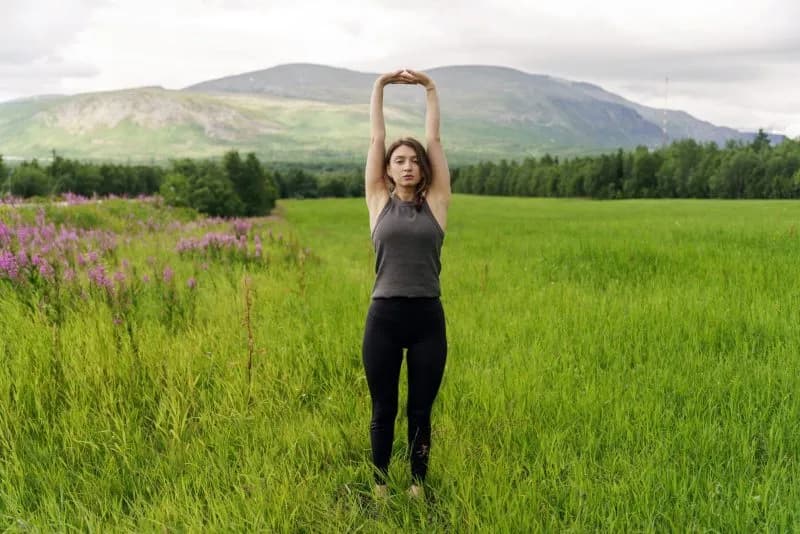
- Surya Namaskara (3 rounds) — Warms the complete lower body and hip flexors before the sustained Warrior I stance.
- Anjaneyasana (Low Lunge, 60 seconds each side) — Directly warms the hip flexors before the standing psoas stretch of Warrior I.
- Tadasana (Mountain Pose, 30 seconds) — Establishes the upright postural awareness that Warrior I extends into the wide-legged stance.
Variations of Virabhadrasana 1
- Variation 1: Crescent Lunge (Back Knee Down) — Beginner Foundation Back knee lowered to the floor — all Warrior I alignment principles in a more accessible base. The ideal starting form for beginners building hip flexor flexibility and leg strength before the full heel-grounded expression.
- Variation 2: Virabhadrasana 1 — Standard Full Expression Back leg straight with heel grounded, hips squared, arms overhead — the standard form described in the step-by-step instructions.
- Variation 3: Humble Warrior — Intermediate Variation Arms clasp behind the back and the torso folds forward inside the front leg — combining the hip flexor opening with a forward fold, shoulder opening, and deep hip crease stretch for practitioners with established Warrior I foundation.
Common Mistakes to Avoid in Virabhadrasana 1
- Back Hip Opening Outward — Losing the Hip Square The most therapeutically important and most commonly missed alignment element. When the back hip opens outward rather than drawing forward, the hip square is lost — and with it, the deep psoas stretch that is Warrior I’s primary differentiating benefit over a simple lunge. Actively draw the back hip forward in every repetition.
- Front Knee Collapsing Inward The front knee must track actively over the second or third toe throughout the hold. Inward collapse concentrates medial knee strain and reduces the hip abductor engagement that makes the posture strengthening for the complete lower extremity chain.
- Torso Leaning Forward Over the Front Thigh The torso must remain vertical — crown extending toward the ceiling — throughout the hold. Forward lean concentrates the hip flexor shortening rather than opening it and removes the postural benefit of the upright arm extension.
Who Should Practise Virabhadrasana 1?
- Beginners Building Their Yoga Foundation Virabhadrasana 1 is one of yoga’s most important foundational standing postures — combining lower body strength, hip flexor opening, core engagement, and focused warrior presence in an accessible and immediately rewarding form. It belongs in every beginner’s practice from the first month.
- Those with Chronic Hip Flexor Tightness from Desk Work The specific psoas and deep hip flexor stretch of Warrior I’s squared-hip position addresses the most common postural imbalance of contemporary desk workers — providing the hip flexor relief that general stretches often fail to reach.
- Is Virabhadrasana 1 Good for Beginners? Yes — with Crescent Lunge (back knee down) as the accessible starting modification. Beginners typically establish comfortable Crescent Lunge within two to three weeks before progressing to the full heel-grounded Warrior I expression.
Make Virabhadrasana 1 a Part of Your Daily Practice
Virabhadrasana 1 is yoga’s most complete standing posture — simultaneously building lower body strength, opening the deep psoas, engaging the core, and cultivating the warrior qualities of focused presence and grounded strength in a single powerful pose.
Whether you are stepping into your first Warrior I with a Crescent Lunge modification or refining the hip-squaring alignment that makes this posture genuinely transformative, consistent daily practice produces measurable lower body strength and hip flexibility improvements within weeks.
The most effective way to learn Virabhadrasana 1 correctly — with live hip-squaring guidance, knee-tracking instruction, and torso-alignment feedback — is under expert live instruction with Habuild.
Start your 14 day free yoga journey with Habuild, today!
Related reads: Virabhadrasana 2 (Warrior 2): Steps Benefits and Alignment Cues · Virabhadrasana (Warrior Poses): Complete Guide to Steps and Benefits
Warrior I asks the front hip to open while the back leg holds steady strength, and that combination of stability and openness takes repeated practice to develop rather than a single deep lunge. The stamina and focus it builds carry over noticeably once it’s a regular part of your standing sequence, not an occasional pose. Habuild’s Yoga Everyday program includes Warrior I in its daily standing-pose flow.
Frequently Asked Questions
Related Articles
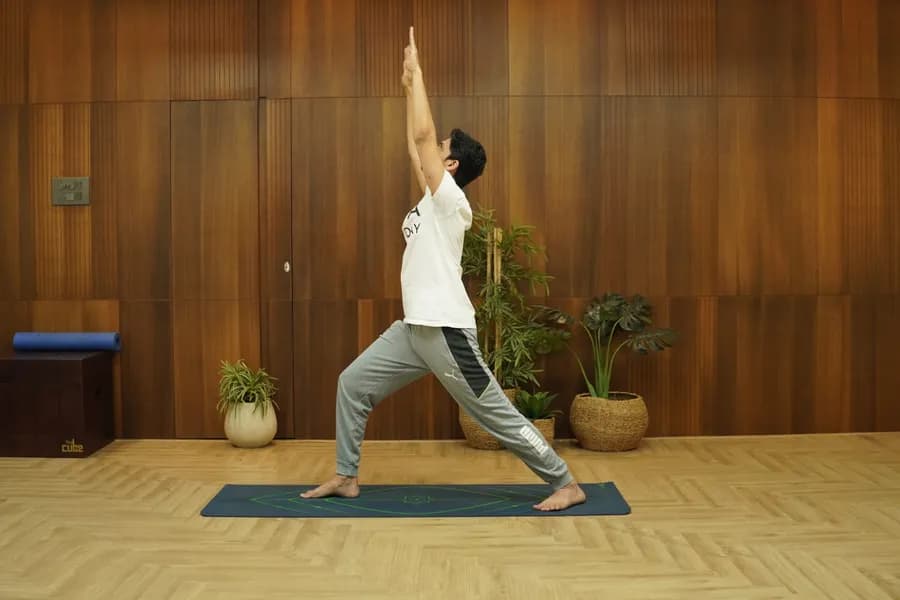
Virabhadrasana (Warrior Poses): Complete Guide to Steps and Benefits
Practice Virabhadrasana with Habuild. Follow the warrior pose steps to build leg strength, boost flexibility, and develop stamina and mental focus. Start today!
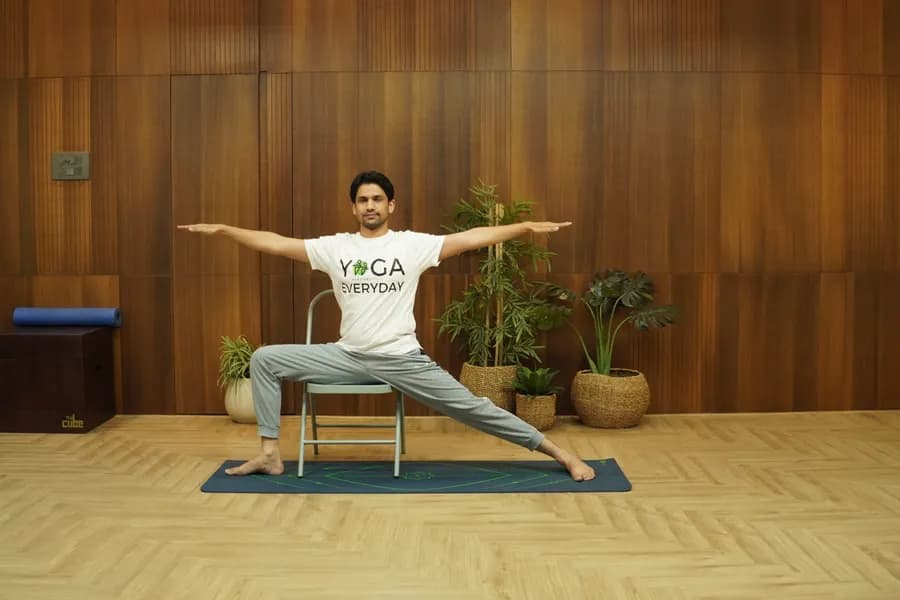
Virabhadrasana 2 (Warrior 2): Steps Benefits and Alignment Cues
Practice Virabhadrasana 2 with Habuild. Follow the Warrior II pose steps to strengthen your legs, open your hips, and build stamina and focus. Start today!
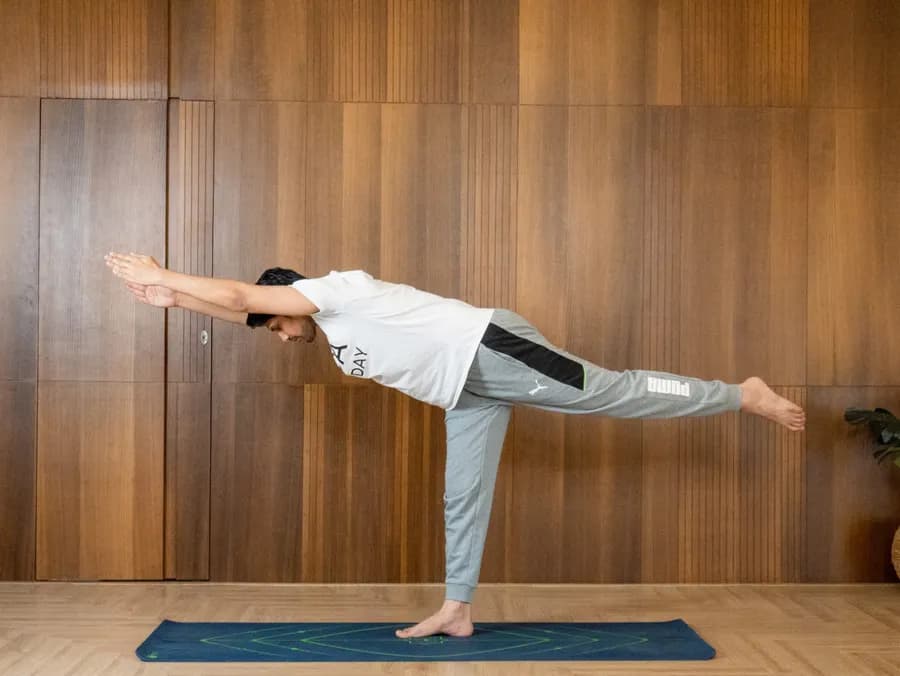
Virabhadrasana 3 (Warrior 3): Steps Balance and Core Benefits
Practice Virabhadrasana 3 with Habuild. Follow Warrior III steps to improve balance, build leg strength, and develop core stability and focus. Start today!
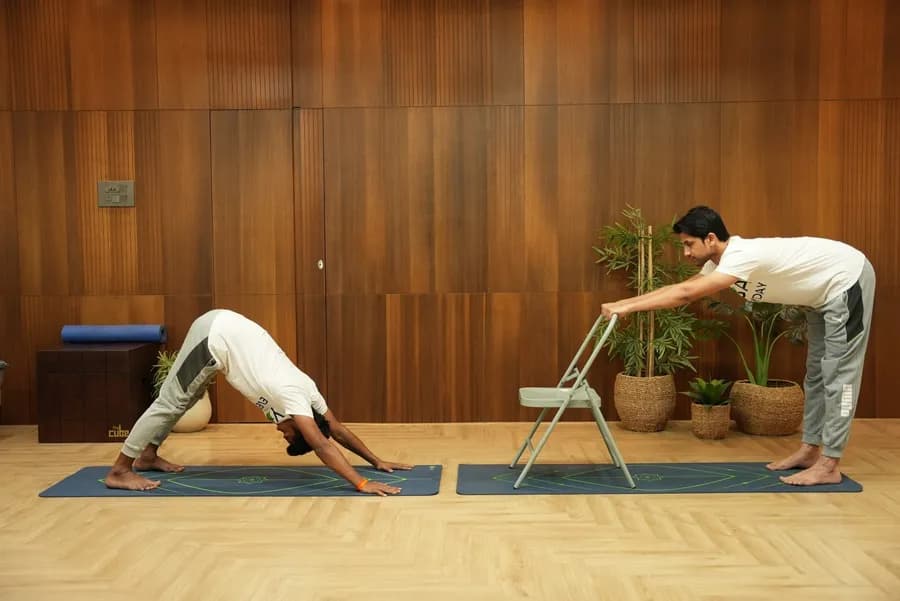
Adho Mukha Svanasana (Downward Dog): Steps Benefits and Alignment
Practice Adho Mukha Svanasana with Habuild. Follow downward facing dog steps to strengthen your arms, stretch your spine, and improve flexibility. Start today!
Ashtang Namaskar (Eight Limbed Pose): Steps and Sun Salutation Role
Practice Ashtang Namaskar with Habuild. Follow eight-limbed salutation steps to build upper body strength, improve posture, and advance your practice. Start!