
Adho Mukha Svanasana (Downward Dog): Steps Benefits and Alignment
Practice Adho Mukha Svanasana with Habuild. Follow downward facing dog steps to strengthen your arms, stretch your spine, and improve flexibility. Start today!
Key Takeaways
- Called the single most universally performed yoga posture in the world.
- Meaningful hamstring and calf flexibility gains typically appear within two to three weeks.
- The inverted-V’s gravitational hip pull produces gentle axial traction through the spine.
- Full-palm weight distribution is taught specifically to protect wrists across daily repetitions.
- As a mild inversion it reverses gravity’s pull, improving cerebral and scalp circulation.
- Functions simultaneously as forward bend, inversion, hamstring stretch, and shoulder opener.
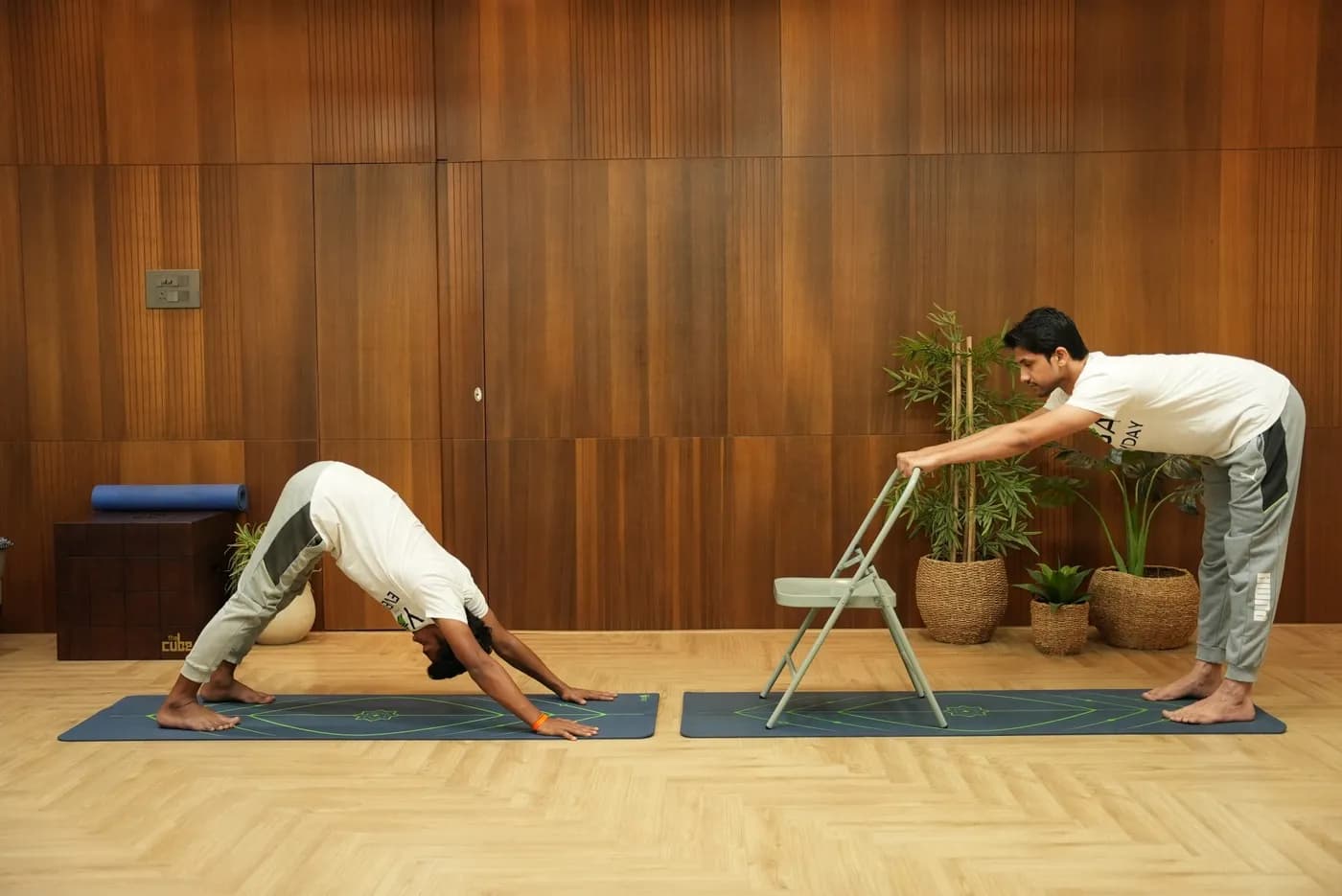
Adho Mukha Svanasana, or Downward-Facing Dog, is a foundational yoga pose forming an inverted V with the body. It simultaneously stretches the complete posterior chain, decompresses the spine, builds upper body strength, and improves circulation. Practised in every Surya Namaskara, it is the single most universally performed yoga posture in the world.
What is Adho Mukha Svanasana?
Adho Mukha Svanasana — known in English as Downward-Facing Dog — derives from Sanskrit: Adho (downward), Mukha (face), Svana (dog), and Asana (posture). The body forms an inverted V — hips pressing upward, hands and feet grounded, spine long, head hanging freely between the arms — mirroring a dog’s characteristic full-body downward stretch.
Adho Mukha Svanasana is the most universally practised yoga posture in the world — appearing in every Surya Namaskara, every Vinyasa flow, and as a standalone rest and stretch position. Its versatility — simultaneously a forward bend, mild inversion, hamstring stretch, shoulder opener, and spinal decompressor — makes it the single most comprehensive posture in yoga for whole-body wellbeing.
At Habuild, Adho Mukha Svanasana receives the alignment precision it deserves — particularly the spinal elongation priority over heel contact, and the full-palm weight distribution that protects the wrists across the thousands of repetitions this posture accumulates in daily practice.
Adho Mukha Svanasana Benefits
Physical Benefits
- Stretches the Complete Posterior Chain Adho Mukha Svanasana simultaneously stretches the hamstrings, calves, Achilles tendons, thoracic spine, and shoulder girdle — the complete posterior chain that chronic sitting progressively shortens. This full posterior chain opening is the foundational flexibility benefit of daily yoga practice, with meaningful improvement in hamstring and calf length typically appearing within two to three weeks of consistent daily practice.
- Decompresses the Spine and Relieves Back Pain The inverted V creates axial spinal decompression — gravitational pull of the hips upward producing gentle traction through the entire spinal column. This decompression relieves the intervertebral compression that sedentary and standing lifestyles accumulate, providing immediate back pain relief for postural and compressive origins.
- Builds Upper Body Strength Through Active Weight-Bearing Adho Mukha Svanasana is a significant upper body weight-bearing posture — arms, shoulders, and core actively supporting the body weight against gravity. The cumulative shoulder, wrist, and core strengthening across daily Surya Namaskara repetitions builds meaningful upper body functional strength over weeks.
- Improves Circulation Through Mild Inversion As a partial inversion, Adho Mukha Svanasana reverses the gravitational direction of blood flow — improving cerebral and scalp circulation and providing mild parasympathetic activation within each session.
Mental and Emotional Benefits
- Provides Active Rest Between Demanding Postures Within Surya Namaskara and Vinyasa flows, Adho Mukha Svanasana is the designated rest position — where the practitioner recovers breath and composure between the more demanding transitions. This built-in active recovery quality makes it one of yoga’s most important functional postures.
- Clears Mental Fatigue Through the Mild Inversion Effect The slight increase in cerebral blood flow and the physical reset of the full posterior chain stretch combine to produce a reliable clearing of mental fatigue. Practitioners consistently report emerging from Downward Dog feeling mentally refreshed and physically reset.
How to Do Adho Mukha Svanasana — Step-by-Step Instructions
Key Principles
Key Principles Three principles govern effective Adho Mukha Svanasana: prioritise spinal length over heel contact — a long flat spine with bent knees is always more therapeutically correct than a rounded spine with heels on the floor; press through the full palm, not just the wrists — weight distributed evenly with the index finger base grounded; and draw the shoulder blades away from the ears, not toward them — the upper trapezius releases, not shrugs.
Adho Mukha Svanasana — Step by Step Step 1: Tabletop Starting Position Begin in Tabletop — hands directly below shoulders, knees directly below hips, spine neutral. Spread the fingers wide, pressing all four corners of both palms into the floor.
Step 2: Tuck the Toes and Lift the Hips Tuck the toes under. Inhale. On the exhalation, lift the hips upward and backward — creating the inverted V shape. Bend the knees generously at first.
Step 3: Prioritise Spinal Length — Bent Knees Are Correct With knees bent, focus entirely on spinal elongation — draw the sitting bones upward, the crown of the head toward the floor. A long spine with bent knees is always more correct than a rounded spine with straight legs.
Step 4: Draw the Shoulder Blades Away from the Ears Draw the shoulder blades down the back and away from the ears — releasing the upper trapezius. Arms are straight but not locked; a micro-bend at the elbow protects the joint.
Step 5: Begin to Straighten the Legs Progressively Once the spine is long, begin gradually straightening the legs — pressing the heels toward the floor. The heels need not contact the floor; the degree of straightening is determined by hamstring and calf length.
Step 6: Hold and Breathe Into the Back Body Hold for five to ten breath cycles. Breathe into the posterior ribcage — the back body expanding on every inhale, the spine lengthening further on every exhale. Return to Tabletop or Child’s Pose on an exhalation.
Breathing in Adho Mukha Svanasana
Breathe into the back body — the posterior ribcage expanding on the inhale, the spine lengthening further on each exhale. Slow, full, back-body breathing is the marker of an integrated Downward Dog — laboured or held breath indicates excessive muscular effort and signals the need to return to the bent-knee modification.
Preparatory Poses Before Adho Mukha Svanasana
These poses warm the posterior chain and wrists before the Downward Dog hold.
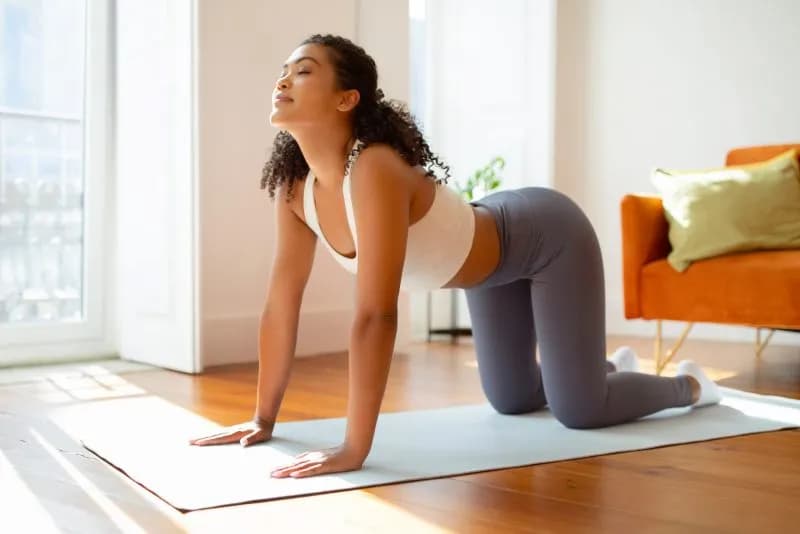
- Marjariasana-Bitilasana (Cat-Cow, 10 rounds) — Warms the complete spinal column before the extended-line demand of Downward Dog.
- Wrist warm-up (circles, prayer stretch, reverse prayer) — Essential before sustained wrist weight-bearing.
- Balasana (Child’s Pose, 60 seconds) — Provides the counter-stretch to Downward Dog and can be used as a rest between holds.
Variations of Adho Mukha Svanasana
- Variation 1: Bent-Knee Downward Dog — Beginner Foundation Knees generously bent, focus entirely on spinal elongation — the universally correct starting form for all beginners and the form all practitioners should return to when hamstring or calf tightness causes the spine to round.
- Variation 2: Full Adho Mukha Svanasana — Standard Legs progressively straightening, heels pressing toward the floor — the standard form that develops from consistent daily bent-knee practice over weeks as posterior chain length increases.
- Variation 3: Dolphin Pose (Forearm Downward Dog) — Shoulder Opener Forearms on the floor rather than hands — deepening the shoulder and thoracic opening while completely removing the wrist load. The primary shoulder-opening preparation for forearm stand.
Common Mistakes to Avoid in Adho Mukha Svanasana
- Concentrating Weight in the Wrists Rather Than the Full Palm Wrist-concentrated weight is the primary cause of wrist pain in yoga — and it accumulates to serious injury across thousands of Surya Namaskara repetitions. The weight must be distributed evenly across the full palm with active engagement of the index finger base. If wrists hurt, the weight distribution needs correction before the volume of daily practice makes it worse.
- Prioritising Heel Contact Over Spinal Length Forcing the heels toward the floor while the spine rounds eliminates the primary therapeutic benefit of the posture — spinal decompression — while adding hamstring and calf stretching strain. Always prioritise the long spine. The heels will descend naturally over weeks of consistent practice as the posterior chain lengthens.
- Shrugging the Shoulders Toward the Ears Upper trapezius shrugging is the most visible Downward Dog error. The shoulder blades must draw down the back and away from the ears throughout the hold — creating the space and length in the neck that the posture is designed to provide.
Who Should Practise Adho Mukha Svanasana?
- Everyone — A Universal Daily Practice Adho Mukha Svanasana is one of the very few yoga postures genuinely appropriate for every practitioner as a daily practice — providing posterior chain stretching, spinal decompression, and upper body strengthening that virtually every body benefits from regardless of age, flexibility, or experience level.
- Those with Tight Hamstrings and Back Stiffness Downward Dog is the most consistently effective single posture for progressive hamstring lengthening and daily spinal decompression — with meaningful improvements appearing within two to three weeks of daily bent-knee practice.
- Is Adho Mukha Svanasana Good for Beginners? Yes — the bent-knee version is immediately accessible to all beginners and provides the complete therapeutic benefit of the posture. Beginners should not feel any pressure to touch the heels to the floor — the long spine with bent knees is the correct and more beneficial position.
Make Adho Mukha Svanasana a Part of Your Daily Practice
Adho Mukha Svanasana is yoga’s most universally performed and broadly beneficial posture — its simultaneous posterior chain stretching, spinal decompression, upper body strengthening, and mild inversion benefits accumulating into profound cumulative wellbeing improvements with consistent daily practice.
Whether you are learning Downward Dog for the first time with generous knee bends and a focus on spine length, or refining the shoulder blade positioning and back-body breathing that make it a genuinely restorative daily practice, every correctly performed repetition delivers therapeutic value.
The most effective way to learn Adho Mukha Svanasana correctly — with palm-pressure guidance, spinal-length priority instruction, and shoulder blade positioning feedback — is under live expert guidance with Habuild.
Start your 14 day free yoga journey with Habuild, today!
Related reads: Adho Mukha Svanasana Benefits: Steps, Variations & Precautions · Urdhva Mukha Svanasana Benefits: Steps & Precautions
Downward Dog shows up in nearly every yoga sequence for a reason — it’s one of the few poses that builds arm strength and spinal length at the same time, and both improve the more often you return to the shape rather than through any single long hold. Over weeks of regular practice, the hamstrings lengthen and the shoulders stop feeling like the limiting factor. It’s repeated throughout the daily flows in Habuild’s Yoga Everyday program.
Frequently Asked Questions
Related Articles
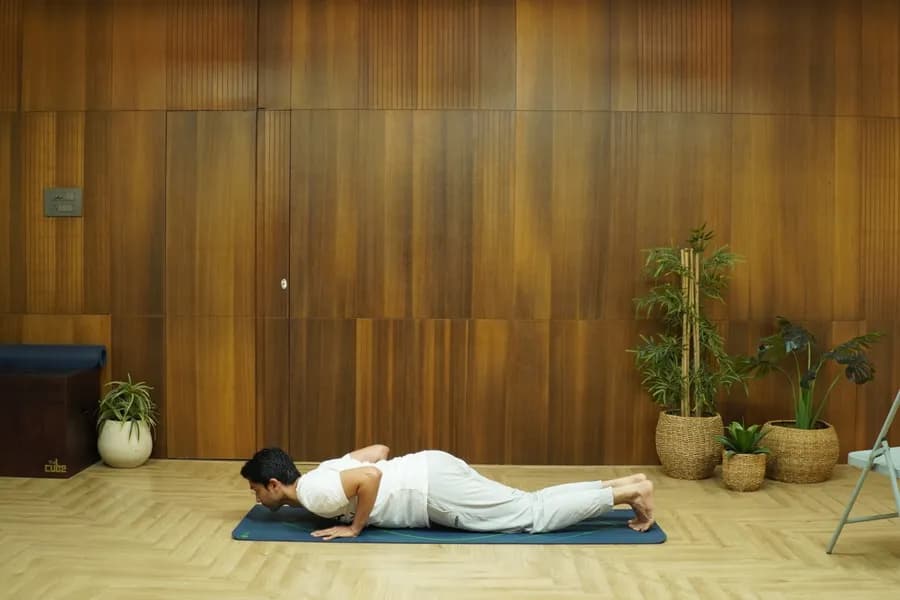
Ashtang Namaskar (Eight Limbed Pose): Steps and Sun Salutation Role
Practice Ashtang Namaskar with Habuild. Follow eight-limbed salutation steps to build upper body strength, improve posture, and advance your practice. Start!
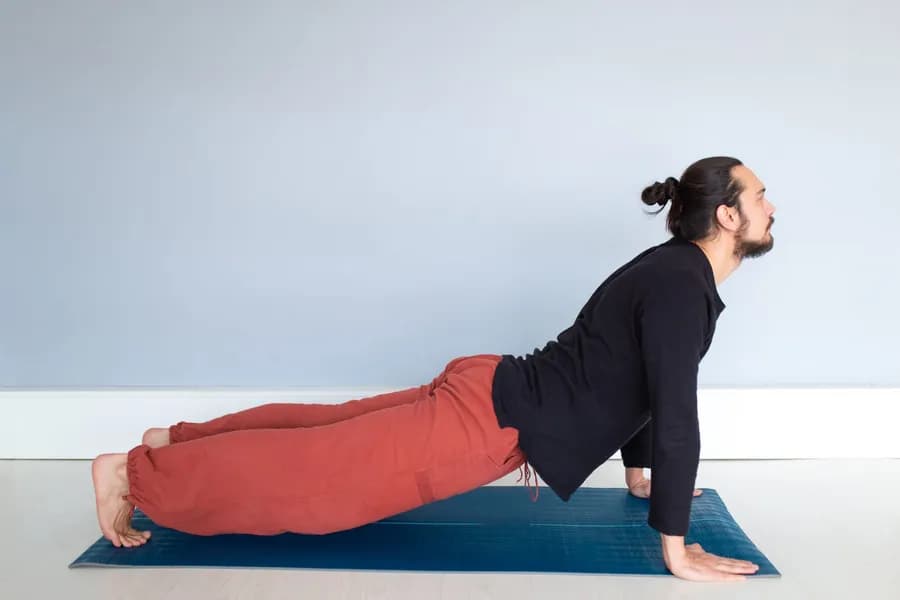
Chaturanga Asana: Steps Alignment Tips and Upper Body Benefits
Practice Chaturanga Asana with Habuild. Follow the four-limbed staff pose steps to build arm and core strength and develop full-body stability. Start today!
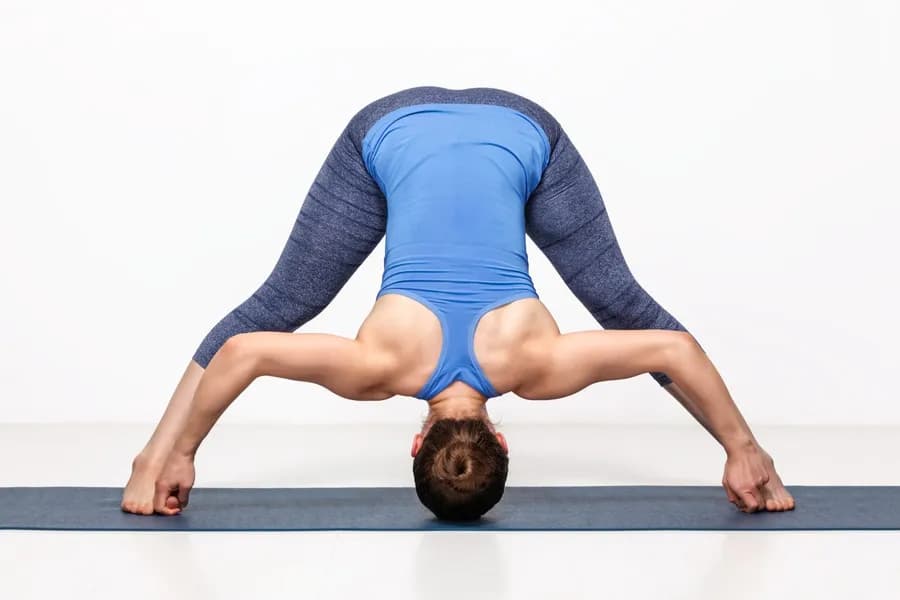
Prasarita Padottanasana: Steps Benefits and Flexibility Guide
Explore prasarita padottanasana with Habuild. Discover the benefits of prasarita padottanasana and its variations to improve flexibility and posture today!
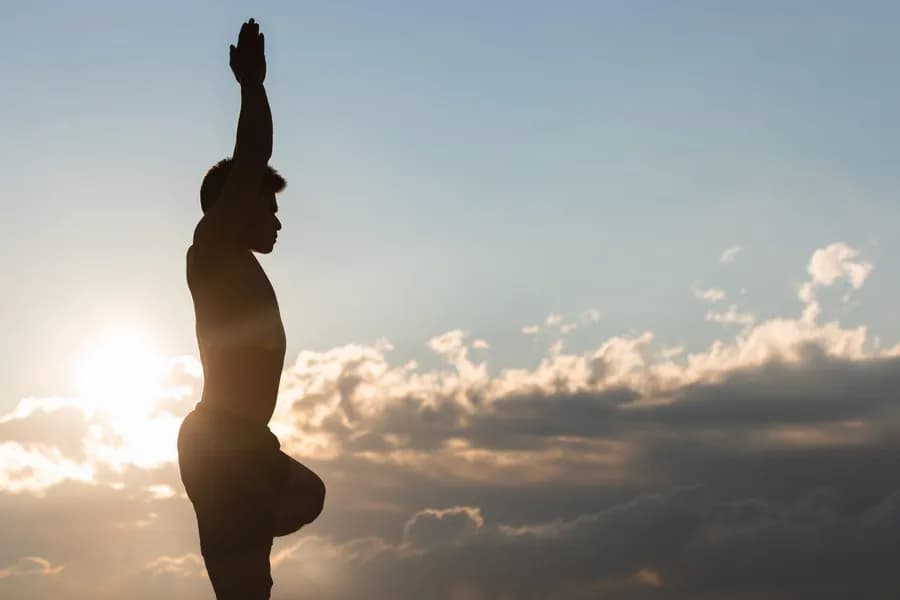
Surya Namaskara: Steps Benefits and Daily Practice Guide
Explore Surya Namaskara with Habuild. Discover the powerful benefits of Surya Namaskara to boost energy, improve flexibility, and transform your health today!

Tadasana — The Mountain Pose
Tadasana, or Mountain Pose, is the quiet foundation every standing yoga pose is built on — simple to look at, precise to get right.