
Utkatasana (Chair Pose): Steps Strength and Stamina Benefits
Practice utkatasana with Habuild. Try the utkatasana pose to strengthen your legs, build core power, and boost overall body endurance. Start your yoga session!
Key Takeaways
- Utkata means fierce, powerful, or unsteady, capturing the pose’s demanding sustained hold.
- One of the few yoga postures providing genuine cardiovascular conditioning alongside strength.
- Core engagement here specifically counters the forward pull that tight hip flexors create.
- The sustained hold’s metabolic demand is named among the highest of any standing posture.
- Dorsiflexed ankle loading strengthens ankle stabilisers and functional range of motion.
- Practised both within standing sequences and as an independent strength-building hold.
What is Utkatasana?
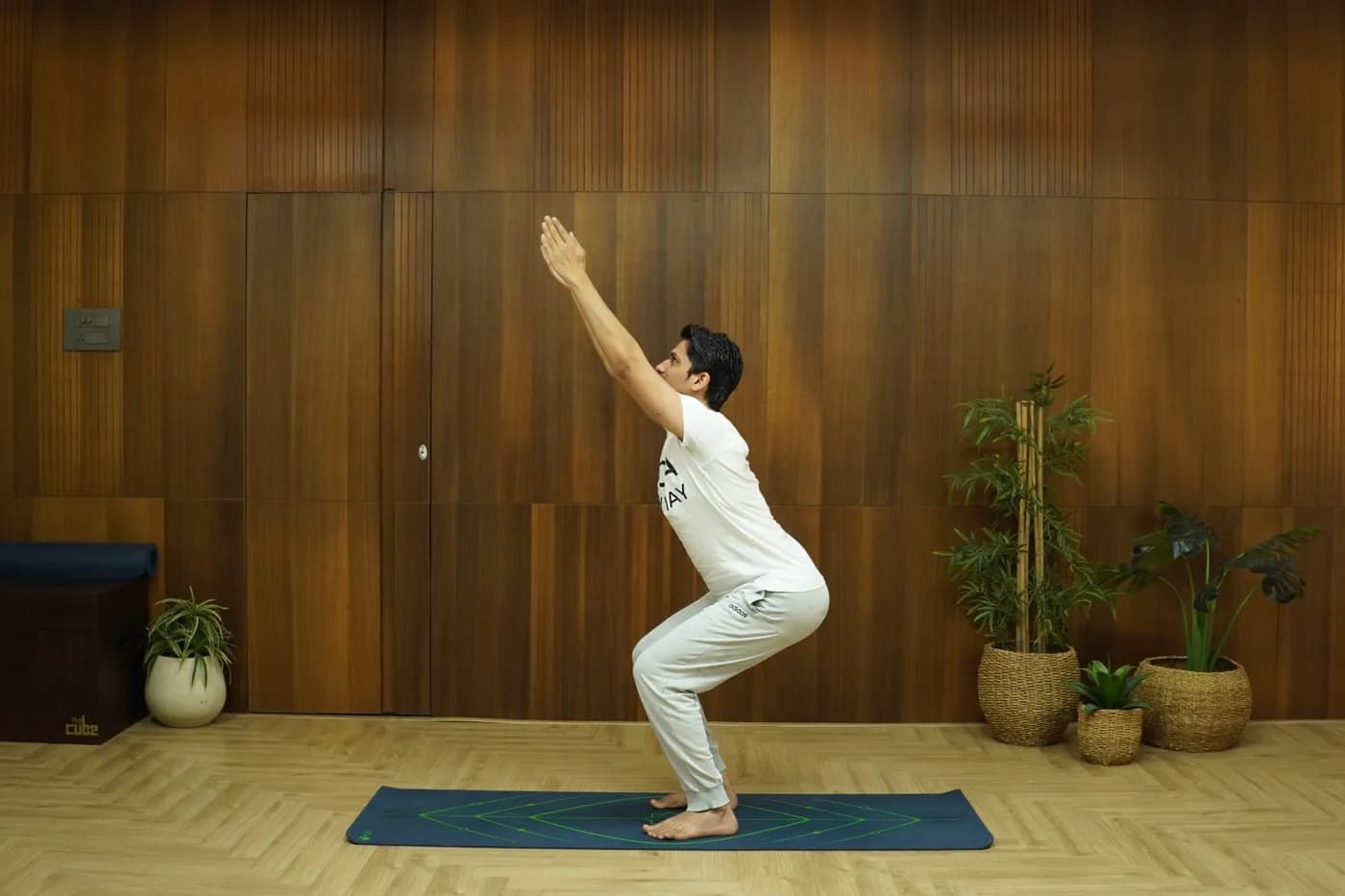
Utkatasana — known in English as Chair Pose or Fierce Pose — takes its name from Sanskrit: Utkata meaning fierce, powerful, or unsteady, and asana meaning posture. The name captures the dual nature of the pose: it resembles someone lowering into a chair, yet demands a fierce, sustained muscular engagement that challenges the legs, core, and cardiovascular system simultaneously.
Unlike many yoga postures that are primarily about flexibility or relaxation, Utkatasana is a standing strength and endurance posture. It loads the quadriceps, glutes, calves, and ankles under sustained isometric contraction — building the functional lower-body strength that daily activities, athletic performance, and spinal health depend upon. It also raises the heart rate meaningfully, making it one of the few yoga postures providing genuine cardiovascular conditioning alongside strength benefits.
At Habuild, Utkatasana features in our daily sessions as both a standing sequence posture and an independent strength-building hold — practised at a level appropriate to every member, with live guidance ensuring every student’s form protects the knees and spine throughout.
Utkatasana Benefits
Physical Benefits
- Builds Exceptional Lower-Body Strength Utkatasana is one of the most effective isometric lower-body strength exercises in yoga. The sustained hold under load targets the quadriceps, hamstrings, glutes, calves, and tibialis anterior simultaneously — building the functional strength that protects the knees, supports the spine, and underpins athletic performance. The metabolic demand of a sustained Chair Pose hold is among the highest of any standing posture.
- Strengthens the Core and Supports Spinal Health Maintaining the upright, lengthened torso in Utkatasana requires deep core engagement — the transverse abdominis, multifidus, and erector spinae all working to stabilise the lumbar spine against the forward pull of the hip flexors. This makes Utkatasana an excellent therapeutic posture for building the posterior chain strength that prevents and alleviates chronic lower back discomfort.
- Supports Cardiovascular Health and Metabolic Rate The elevated muscular demand raises the heart rate significantly — particularly in longer holds and multi-round sequences. This cardiovascular activation, combined with the lean muscle mass developed through regular Utkatasana practice, increases the resting metabolic rate and supports sustainable weight management.
- Improves Ankle Stability and Functional Range of Motion The sustained load on the ankles in a dorsiflexed position strengthens the ankle stabilisers and improves the range of motion in the ankle joint — a critical but often neglected area that functional movement quality depends upon.
Mental and Emotional Benefits
- Builds Mental Toughness and Discipline The discomfort of a sustained Chair Pose hold — the burning in the thighs, the urge to stand up — is one of yoga’s most direct training grounds for mental resilience. Staying in Utkatasana through discomfort while breathing steadily and maintaining form builds the psychological endurance that transfers to discipline in all demanding daily situations.
- Develops Present-Moment Focus and Grounded Awareness The physical challenge of the hold anchors awareness firmly in the body, quieting mental chatter and producing the focused, grounded state that distinguishes yoga from ordinary exercise.
How to Do Utkatasana — Step-by-Step Instructions
Key Principles
Key Principles Three principles govern safe Utkatasana: knee alignment — the knees track directly over the second and third toes throughout the hold, never collapsing inward; spinal neutrality — the spine maintains its natural curve, not rounded or hyperextended; and progressive depth — beginners start with a 30-45 degree bend and deepen the squat gradually over weeks as strength develops.
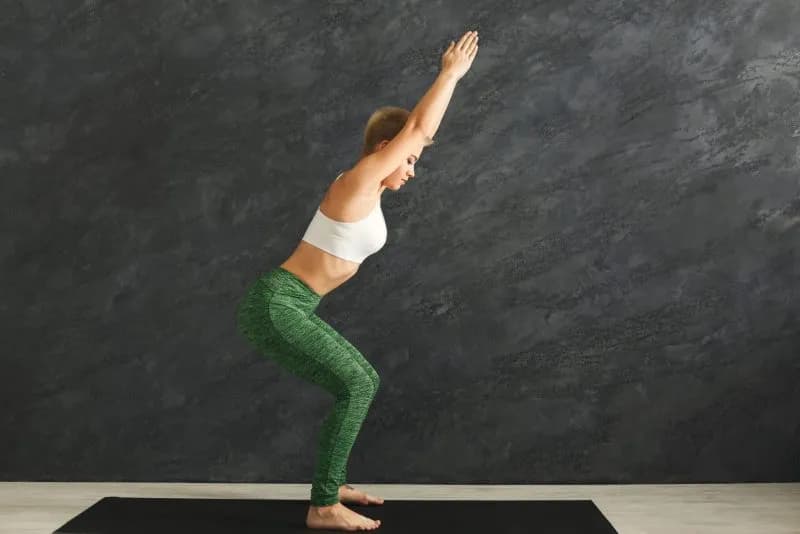
Utkatasana — Step by Step Step 1: Starting Position in Tadasana Stand with feet hip-width apart, toes pointing slightly outward. Distribute weight evenly across the entire foot — particularly the inner edges.
Step 2: Inhale and Lengthen the Spine Inhale to lengthen the spine upward. This inhalation creates the spinal length that must be maintained throughout the hold.
Step 3: Exhale and Bend the Knees On the exhale, bend the knees and lower the hips as if sitting into an invisible chair behind you. The tailbone draws down slightly to neutralise the lumbar curve.
Step 4: Raise the Arms Overhead Raise the arms overhead, parallel to each other with palms facing inward — or join the palms at the top. For shoulder sensitivity, keep arms at shoulder height or hands at the heart.
Step 5: Press the Feet and Check Knee Alignment Press the feet firmly into the floor — particularly the inner edges — to maintain knee alignment. Check that the knees track directly over the second and third toes, not collapsing inward.
Step 6: Hold and Release to Tadasana Hold for five to ten breath cycles, breathing steadily and maintaining all alignment points. To release: inhale, straighten the legs, lower the arms. Rest in Tadasana for two breaths before repeating.
Breathing in Utkatasana
Breath is the difference between a practitioner who sustains the hold with composure and one who struggles. Inhale to lengthen and create space; exhale to deepen the bend and stabilise the core. As the hold becomes uncomfortable, slow the breath further — this is the core mental training the pose provides.
Preparatory Poses Before Utkatasana
These poses warm the lower body and establish the strength base before the sustained Chair Pose hold.
- Surya Namaskara (3 rounds) — The essential full-body warm-up before the standing strength sequence.
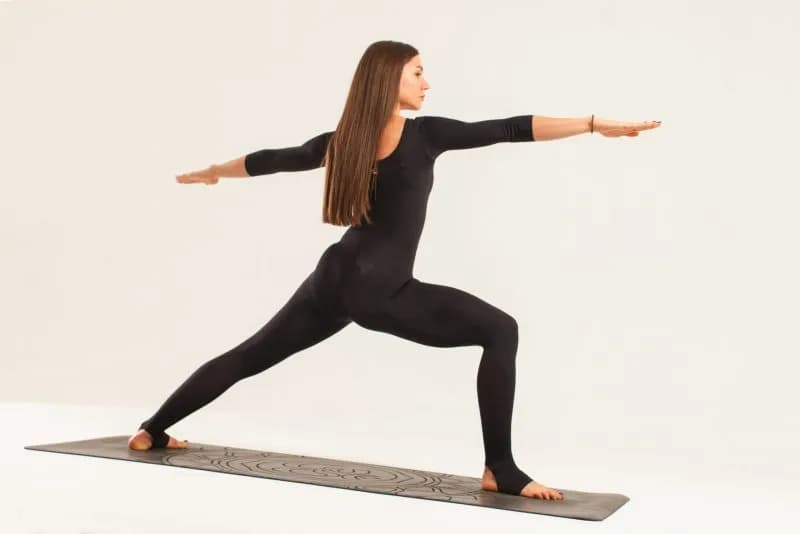
- Virabhadrasana I and II — Warm the quadriceps and glutes in standing positions before the deeper isometric demand.
- Malasana (deep squat, 30 seconds) — Warms the ankle dorsiflexion that Utkatasana requires.
Variations of Utkatasana
- Variation 1: Classical Utkatasana — Standard Feet hip-width, arms overhead, knees tracking over toes. The recommended starting point for all practitioners — hold for twenty to sixty seconds depending on current strength.
- Variation 2: Parivrtta Utkatasana — Twisted Chair From Chair Pose, bring the palms to the heart and rotate the torso — hooking the opposite elbow outside the opposite knee. This variation adds spinal rotation, oblique strength, and digestive organ stimulation to the lower-body challenge.
- Variation 3: Utkatasana on Tiptoe — Advanced Balance Rising onto the balls of the feet while maintaining the Chair Pose position increases the calf and ankle stability challenge significantly. Suitable for intermediate and advanced practitioners who have mastered the foundational form.
Common Mistakes to Avoid in Utkatasana
- Knees Collapsing Inward The most common and most consequential alignment error — knees falling inward concentrates medial knee strain and eliminates the glute and hip abductor engagement that makes Utkatasana therapeutically valuable. Press the knees outward actively — over the second and third toes — throughout the complete hold.
- Heels Lifting Off the Mat Heels lifting transfers the load from the posterior chain to the quadriceps alone and reduces the ankle dorsiflexion strengthening that makes Utkatasana so valuable. Actively press through the heels throughout — distributing weight toward the back of the foot.
- Rounding the Lower Back The natural lumbar curve must be maintained — not exaggerated into hyperextension and not flattened into rounding. The tailbone draws down slightly and the core engages to maintain neutral lumbar alignment throughout the hold.
Who Should Practise Utkatasana?
- Those Seeking Lower-Body Strength and Metabolic Benefits Utkatasana is the most directly strength-building and metabolically demanding single standing posture in yoga — making it essential for practitioners with weight management, athletic performance, or functional strength goals.
- Those with Lower Back Pain from Core and Posterior Chain Weakness The deep core activation and posterior chain strengthening of Utkatasana directly address the lumbar instability that causes the majority of chronic lower back pain in sedentary adults.
- Is Utkatasana Good for Beginners? Yes — the thirty-degree bend variation with arms at shoulder height is accessible from the first yoga session. Building depth and hold duration progressively over weeks is the correct approach for all beginners.
Make Utkatasana a Part of Your Daily Practice
Utkatasana is yoga’s most fierce and functional lower-body strength challenge — its sustained isometric squat building the quadriceps, glutes, and core simultaneously while raising the heart rate and training the mental toughness that staying present through discomfort develops.
Whether you are holding your first twenty-second bend or working toward the ninety-second hold of an advanced practitioner, every repetition builds functional strength that transfers directly to daily movement, athletic performance, and lower back health.
The most effective way to learn Utkatasana correctly — with knee tracking, heel grounding, and spinal neutrality guidance — is under live expert guidance with Habuild.
Start your 14 day free yoga journey with Habuild, today!
Related reads: Navasana (Boat Pose): Steps Core Strength and Digestive Benefits · Kukkutasana (Cockerel Pose): Steps Arm Balance and Strength Benefits
Holding Chair Pose once will burn for a minute; holding it as part of a recurring practice is what actually builds the leg strength and stamina Utkatasana is known for. Strength through yoga works the same way it does anywhere else — through repetition over time, not intensity in a single session. Habuild’s Yoga Everyday program includes strength-building poses like Utkatasana in a sequence designed to progressively build endurance.
Frequently Asked Questions
Related Articles
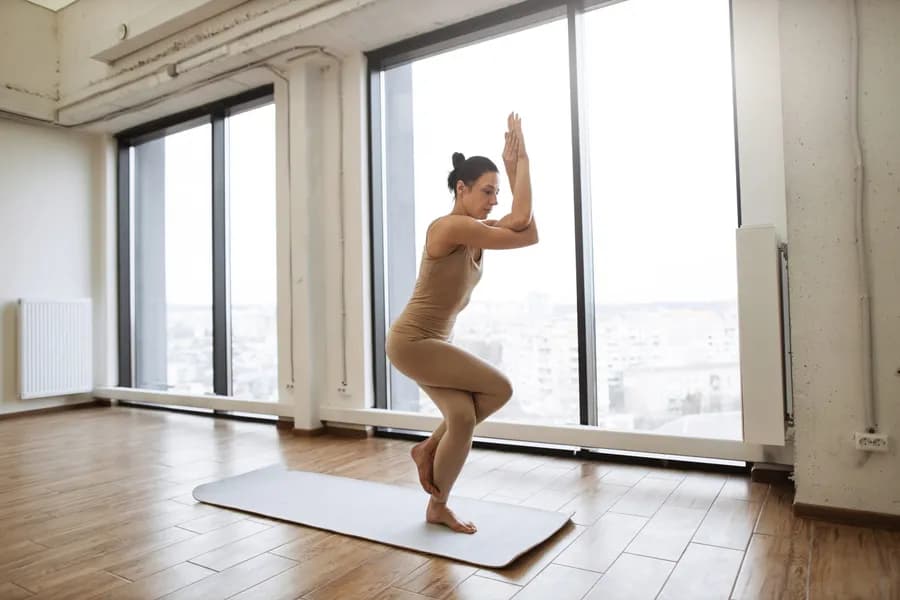
Garudasana (Eagle Pose): Steps Balance Benefits and Beginner Tips
Practice garudasana with Habuild. Try garudasana yoga to improve balance, strengthen your legs, open your shoulders, and develop sharp focus. Start today now!
Virabhadrasana 2 (Warrior 2): Steps Benefits and Alignment Cues
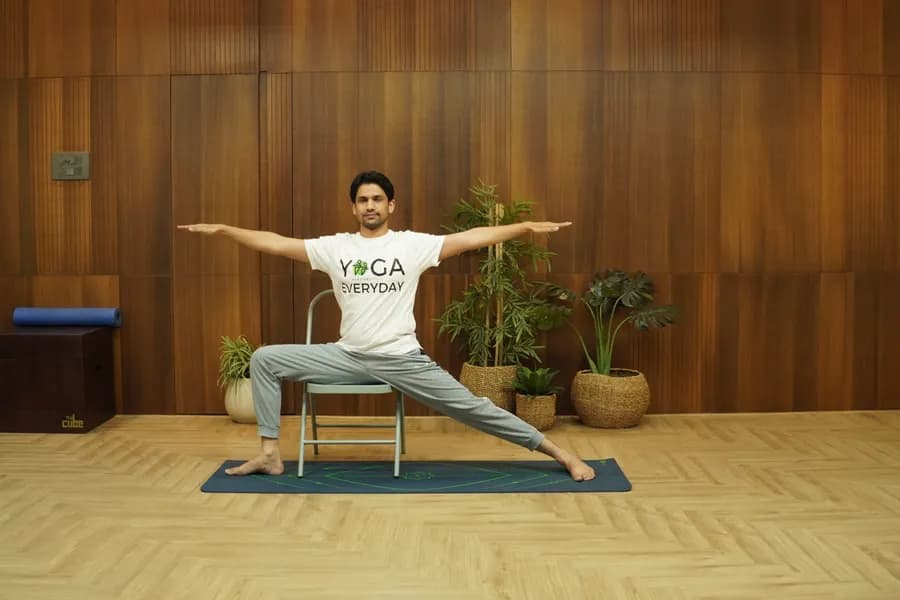
Practice Virabhadrasana 2 with Habuild. Follow the Warrior II pose steps to strengthen your legs, open your hips, and build stamina and focus. Start today!
Malasana (Garland Pose): Steps Hip and Digestive Health Benefits
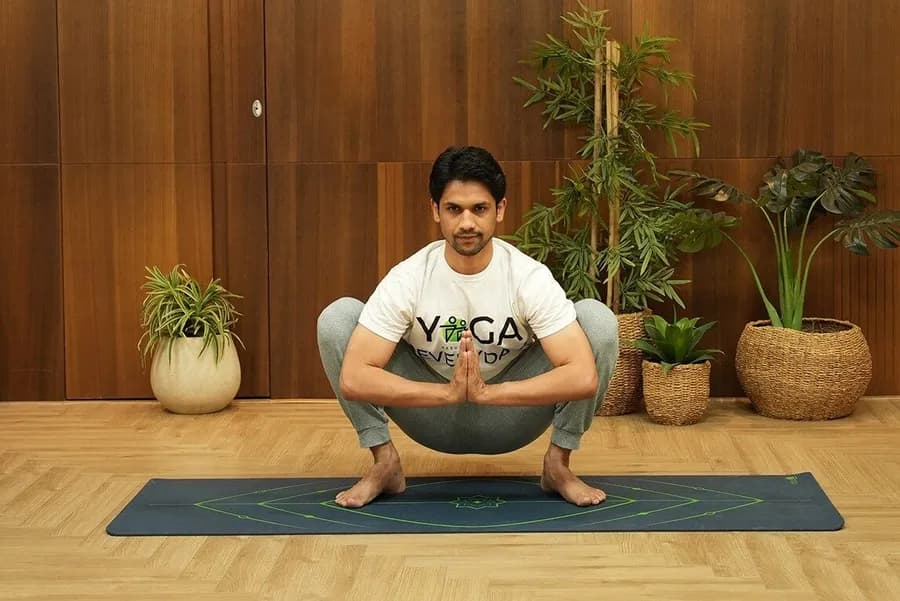
Practice malasana with Habuild. Try the malasana pose to open your hips, strengthen your ankles, and improve digestion. Perfect for beginners. Start today!
Setu Bandhasana (Bridge Pose): Steps Benefits and Modifications
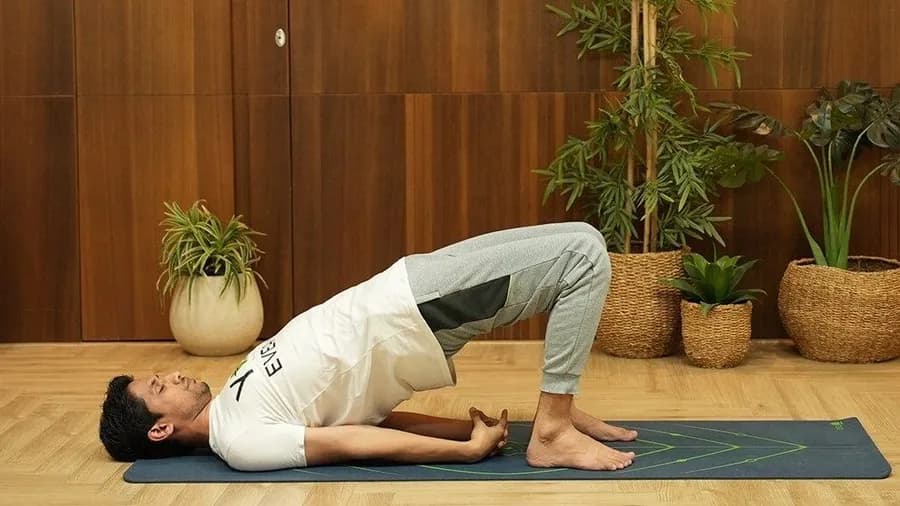
Try setu bandhasana with Habuild. Master the setu bandhasana bridge pose to strengthen your spine, open the chest, and reduce stress. Start your session now!
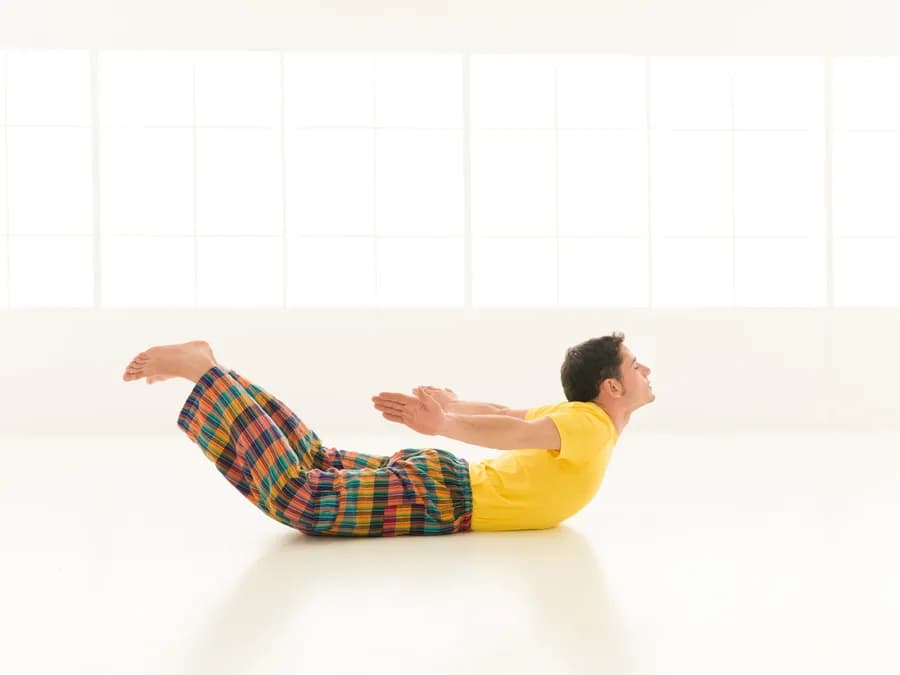
Shalabhasana (Locust Pose): Steps, Back Benefits and Precautions
Practice shalabhasana with Habuild. Try shalabhasana yoga to strengthen your back, improve posture, and boost core strength. Start your yoga session today!