
Setu Bandhasana (Bridge Pose): Steps Benefits and Modifications
Try setu bandhasana with Habuild. Master the setu bandhasana bridge pose to strengthen your spine, open the chest, and reduce stress. Start your session now!
Key Takeaways
- Practised actively for spinal strengthening or passively with block support for calming.
- Many practitioners feel immediate lower back relief simply entering and exiting the pose.
- Alternately compresses and decompresses intervertebral discs as the spine moves into the arch.
- Accessible to complete beginners while still serving as prep for deeper inversions and backbends.
- Directly counteracts the anterior-chain dominance that sedentary lifestyles create.
- One of the most consistently practised postures across nearly every yoga sequence style.
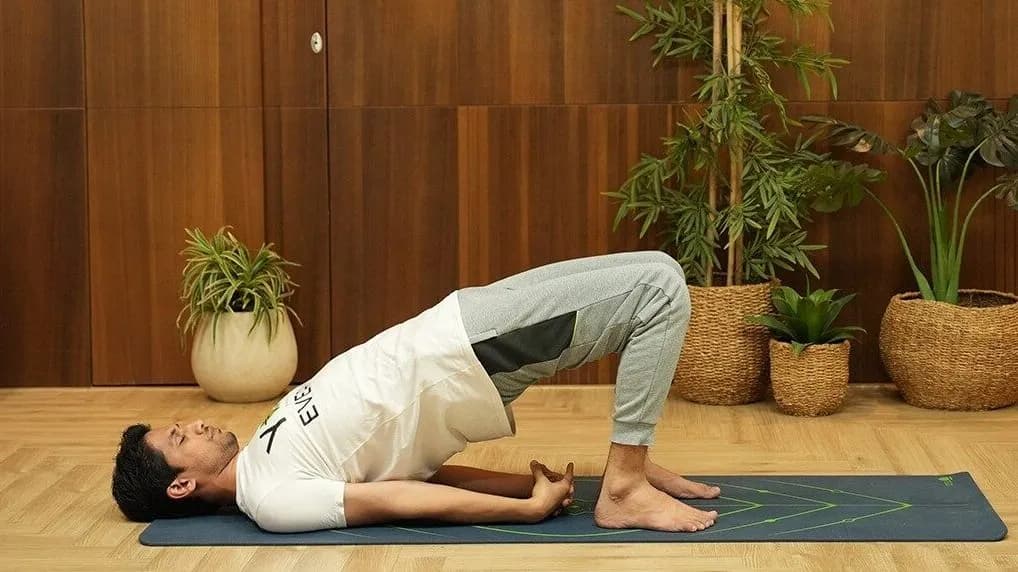
Setu Bandhasana, or Bridge Pose, strengthens the posterior chain, opens the chest, relieves lower back pain, and stimulates thyroid function through a supine backbend arch. It calms the nervous system and serves as both an active strengthening posture and a passive restorative posture depending on its application. Suitable for all fitness levels including complete beginners.
What is Setu Bandhasana?
Setu Bandhasana — known in English as Bridge Pose — is one of the most versatile and therapeutically valuable supine backbend postures in yoga. The name derives from Sanskrit: Setu meaning bridge, Bandha meaning lock or bind, and Asana meaning posture — reflecting the bridge-like arch of the body in the full expression. Bridge Pose involves lying on the back, pressing the feet into the mat, and lifting the hips and spine off the floor — creating a flowing arch from the shoulders to the knees.
Setu Bandhasana occupies a unique position in yoga practice: it is simultaneously a gentle backbend accessible to complete beginners, a powerful therapeutic posture for spinal health, a progressive preparation for deeper inversions and backbends, and a restorative posture that calms the nervous system when held with block support. This combination of accessibility and depth makes Bridge Pose one of the most consistently practised and broadly beneficial postures in any yoga sequence.
At Habuild, Setu Bandhasana is a core component of our daily sessions — practised both actively for spinal strengthening and passively with a block for restorative calming, depending on the session’s therapeutic focus.
Setu Bandhasana Benefits
Physical Benefits
- Strengthens the Spine, Glutes, and Hamstrings The active lifting of the hips in Setu Bandhasana engages the glutes, hamstrings, spinal erectors, and hip extensors in sustained isometric contraction — building the posterior chain strength that spinal health and postural integrity require. Bridge Pose is one of the most effective posterior chain strengthening exercises available in yoga, directly counteracting the anterior chain dominance and posterior weakness that sedentary lifestyles produce.
- Opens the Chest and Improves Thoracic Extension The bridge arch creates meaningful extension of the thoracic spine and opening of the anterior chest — stretching the pectorals, intercostals, and anterior shoulder capsule in a supported, safe position. This chest opening is particularly valuable for practitioners dealing with the thoracic kyphosis and forward shoulder rounding of desk-based work.
- Relieves Lower Back Pain Through Spinal Mobilisation Setu Bandhasana alternately compresses and decompresses the intervertebral discs as the spine extends into the bridge arch — creating a therapeutic spinal mobilisation that relieves the lumbar stiffness and disc compression of prolonged sitting. Many practitioners experience immediate lower back relief upon entering and exiting the bridge position.
- Supports Thyroid Function In the full Bridge Pose, the chin presses gently into the sternum — creating a mild jalandhara bandha (chin lock) that compresses and stimulates the thyroid gland. This contribution to thyroid health and metabolic support is a meaningful component of the posture’s comprehensive physiological effects.
Mental and Emotional Benefits
- Reduces Stress and Calms the Nervous System Setu Bandhasana activates the parasympathetic nervous system through the combination of spinal extension, chest opening, and the mild inversion of the elevated hip position. Practitioners consistently report a rapid reduction in stress and mental agitation within one to two minutes of the bridge position — making it one of the most effective quick-practice yoga postures for mid-day stress relief.
How to Do Setu Bandhasana — Step-by-Step Instructions
Key Principles
Key Principles Two principles: the feet press firmly and evenly into the mat throughout — the leg engagement is as important as the arm pressing; and the spine peels off the mat sequentially from the sacrum upward on entry and returns sequentially from the thoracic downward on exit — never lifting or landing as a rigid unit.
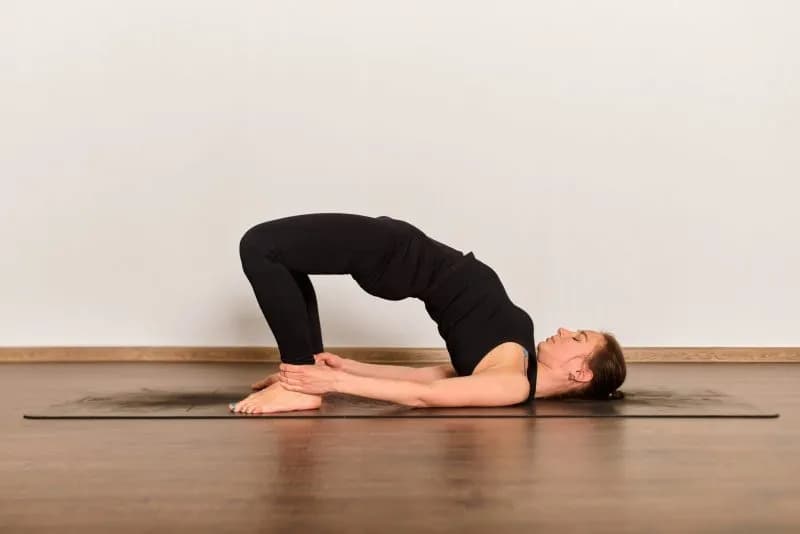
Setu Bandhasana — Step by Step Step 1: Starting Position Lie on the back with the knees bent and feet flat on the mat, hip-width apart. Place the feet close enough to the sitting bones that the fingertips just reach the heels when the arms are extended alongside the body.
Step 2: Press and Lift the Hips Press the arms flat into the mat, palms down. On an inhalation, press the feet firmly into the floor and lift the hips toward the ceiling — peeling the spine off the mat sequentially from the sacrum through the lumbar and thoracic vertebrae.
Step 3: Roll Shoulders and Interlace Hands Roll the shoulders underneath the body and interlace the fingers below the hips if shoulder flexibility allows. Press the arms into the mat to create a stable shoulder platform. The chin presses gently into the sternum.
Step 4: Final Position and Hold Hold for five to ten breaths, pressing the feet and arms actively into the mat and maintaining the hip height. Breathe fully into the expanded chest.
Step 5: How to Come Out of Setu Bandhasana On an exhalation, release the hands and slowly lower the spine to the mat sequentially — thoracic first, then lumbar, then sacrum. Rest for two breaths before repeating.
Breathing in Setu Bandhasana
Full chest breathing throughout the bridge hold — each inhalation expanding the chest into the arch, each exhalation maintaining the height without deflating. For the restorative block-supported variation, allow the breath to be completely natural and passive.
Preparatory Poses Before Setu Bandhasana
These poses warm the posterior chain and hip flexors before the bridge.
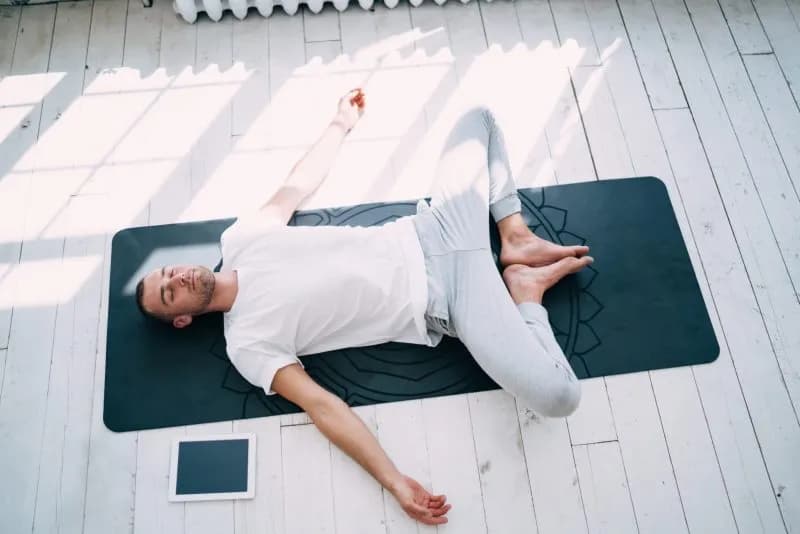
- Supta Baddha Konasana (Reclined Butterfly) — Opens the inner groin and hips before the hip-extending demands of Bridge Pose.
- Anjaneyasana (Low Lunge) — Warms the hip flexors that are stretched in the bridge position.
- Bhujangasana (Cobra) — Warms the spinal extensors before the supine extension of Bridge Pose.
Variations of Setu Bandhasana
- Variation 1: Supported Setu Bandhasana with Block — Restorative A block placed under the sacrum transforms the active bridge into a supported, passive restorative variation — the hips resting on the block, the posterior chain releasing completely, and the nervous system calming deeply without any muscular engagement. This variation is among the most effective restorative postures in yoga.
- Variation 2: Single-Leg Setu Bandhasana — Intermediate From the full bridge position, one leg extends toward the ceiling or forward — creating an asymmetric hip and core loading that significantly increases the stability and strength demands of the posture.
- Variation 3: Setu Bandhasana as Chakrasana Preparation — Advanced Path Bridge Pose practised daily is the most important preparatory posture for Chakrasana (Wheel Pose) — building the shoulder flexibility, hip extension, and posterior chain strength that the full Wheel requires. Practitioners consistently progressing in their Bridge Pose find Chakrasana becomes accessible significantly faster.
Common Mistakes to Avoid in Setu Bandhasana
- Allowing the Knees to Splay Outward The knees must remain hip-width and parallel throughout the bridge hold — splaying outward reduces the glute and posterior chain engagement that makes Bridge Pose therapeutically effective. If the knees splay habitually, place a yoga block between the thighs to maintain the parallel alignment.
- Lifting Without Sequential Spinal Peeling Lifting the hips without sequentially peeling the spine vertebra by vertebra — instead pushing up as a rigid block — reduces the spinal mobility benefit of the posture and can create lumbar compression rather than extension. Always lift from the sacrum upward.
- Holding the Breath Full, continuous chest breathing is essential in Setu Bandhasana — both for the respiratory and nervous system benefits of the posture and to prevent the internal pressure buildup that breath-holding in backbend inversions produces.
Who Should Practise Setu Bandhasana?
- Those with Lower Back Pain and Spinal Compression Setu Bandhasana is one of the most reliably beneficial postures for the lower back pain of disc compression and posterior chain weakness — addressing both the structural cause (posterior chain strengthening) and the immediate symptom (spinal mobilisation and decompression) simultaneously.
- Those Building Toward Chakrasana and Deeper Inversions Bridge Pose is the essential prerequisite for all deeper backbend and inversion practice — building the shoulder flexibility, hip extension, and posterior chain strength that Chakrasana, Sarvangasana preparation, and other advanced postures require.
- Is Setu Bandhasana Good for Beginners? Yes — Setu Bandhasana is one of the most beginner-friendly backbend postures in yoga. The supported block variation is accessible from the very first session with no flexibility or strength prerequisites.
Make Setu Bandhasana a Part of Your Daily Practice
Setu Bandhasana is the yoga tradition’s most versatile supine backbend — equally powerful as an active posterior chain strengthener, a lower back decompressor, a thyroid stimulator, and a passive restorative stress reliever. Its unique capacity to serve multiple therapeutic purposes in a single posture makes it one of the highest-value inclusions in any daily yoga routine.
Whether you are using the active Bridge for strength and spinal health, the block-supported version for restorative calming, or the dynamic peel-and-lower repetitions as preparation for Chakrasana, Bridge Pose rewards daily practice with consistent and progressive benefits.
The most effective way to learn Setu Bandhasana correctly — with the sequential spinal peel, chin lock guidance, and block modification — is under live expert guidance with Habuild.
Start your 14 day free yoga journey with Habuild, today!
Related reads: Setu Bandha Sarvangasana: Steps Benefits and Modifications · Ustrasana (Camel Pose): Steps Benefits and Beginner Modifications
Bridge Pose opens the chest and supports the spine each time you practice it, and the stress-relieving effect tends to deepen the more familiar your body becomes with the shape. Setu Bandhasana is one of those poses that rewards patience over a single ambitious hold. Habuild’s Yoga Everyday program brings poses like this into a guided daily flow so the spine and stress benefits keep compounding.
Frequently Asked Questions
Related Articles
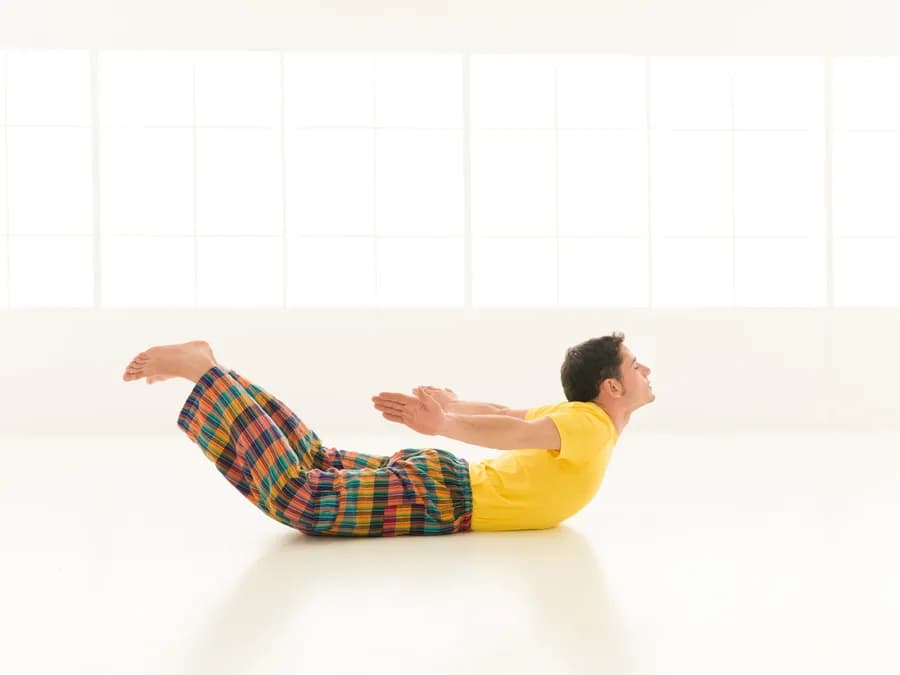
Shalabhasana (Locust Pose): Steps, Back Benefits and Precautions
Practice shalabhasana with Habuild. Try shalabhasana yoga to strengthen your back, improve posture, and boost core strength. Start your yoga session today!
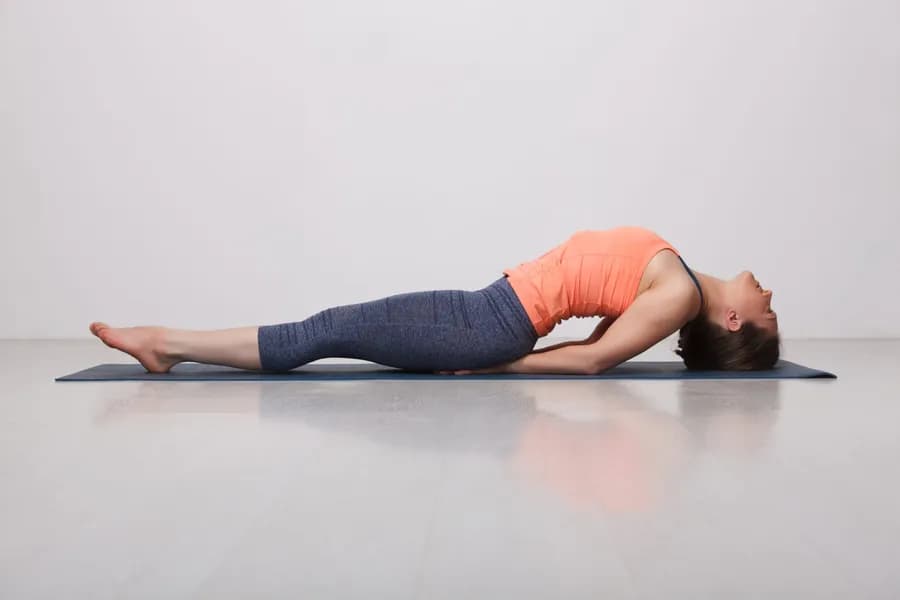
Matsyasana (Fish Pose): Steps Benefits and Safety Tips
Explore matsyasana and ardha matsyasana with Habuild. Discover the benefits of matsyasana to improve posture, open your chest, and boost thyroid health today!
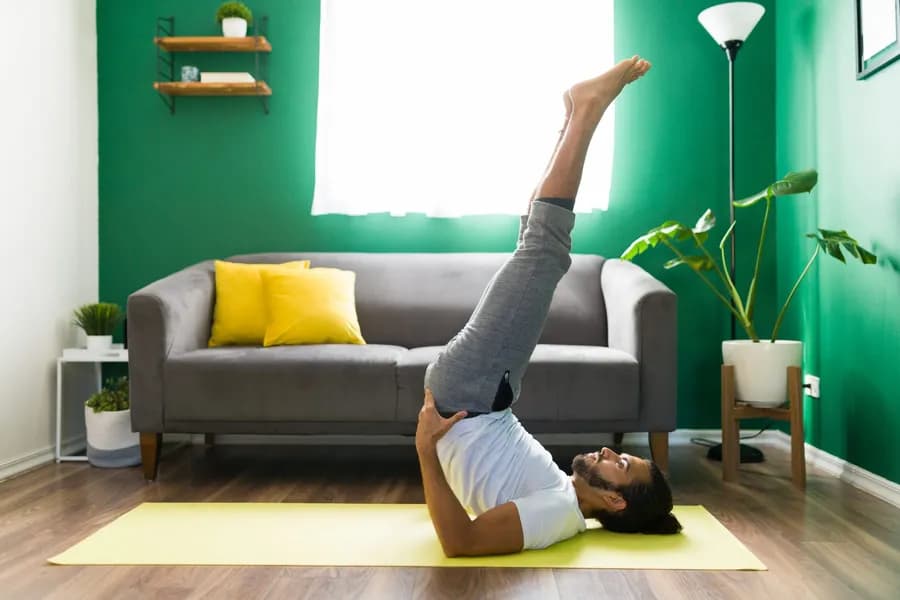
Sarvangasana: Steps Benefits and How to Practice Safely
Practice sarvangasana with Habuild. Explore the sarvangasana pose to boost thyroid health, improve circulation, and calm your mind. Start your session today!
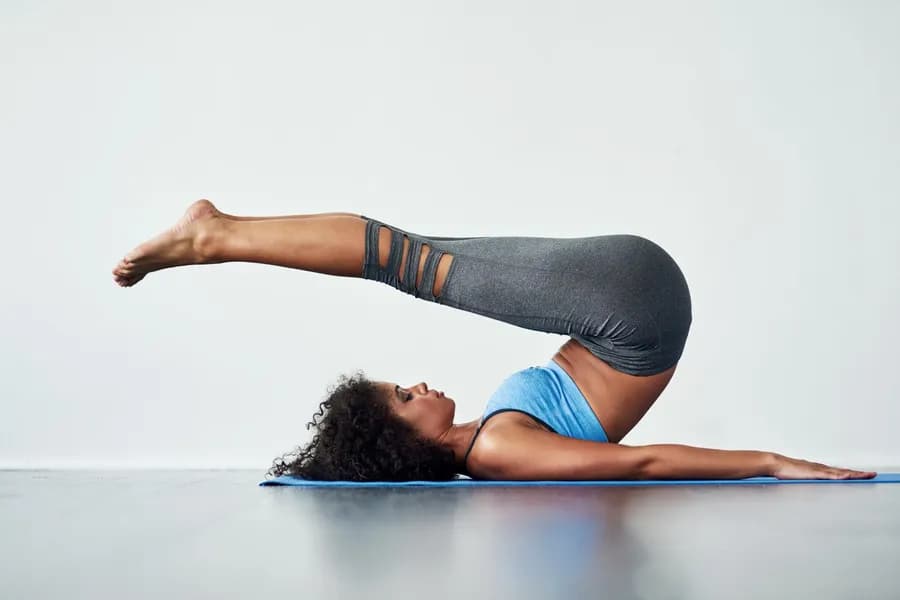
Bandha Sarvangasana: Steps Full Body Benefits and Precautions
Practice Bandha Sarvangasana with Habuild. Follow the bridge shoulder stand steps to strengthen your back, improve circulation, and boost health. Start today!
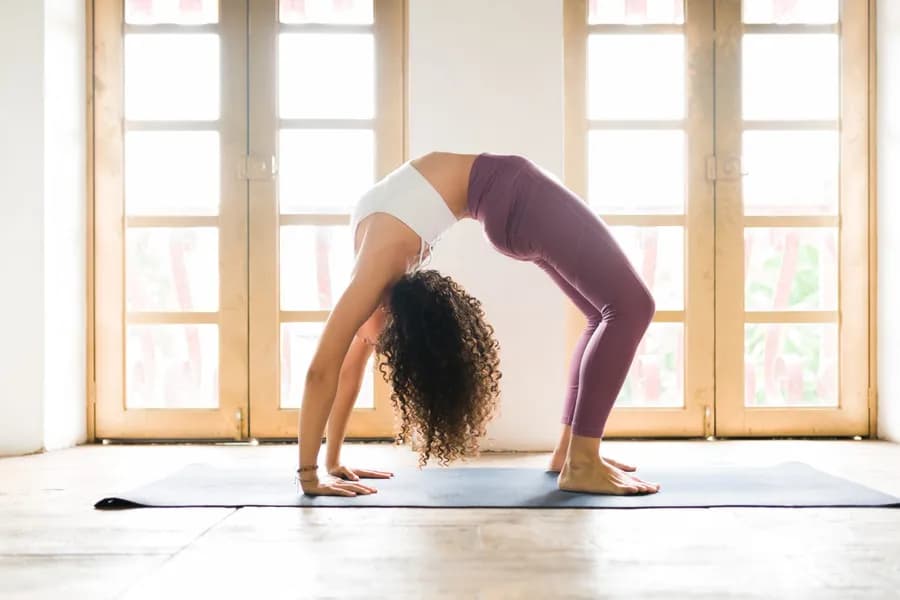
Chakrasana (Wheel Pose): Steps Benefits and Safety Precautions
Practice Chakra Asana with Habuild. Follow the wheel pose steps to open your chest, strengthen your spine, and improve flexibility and hormonal health. Start!
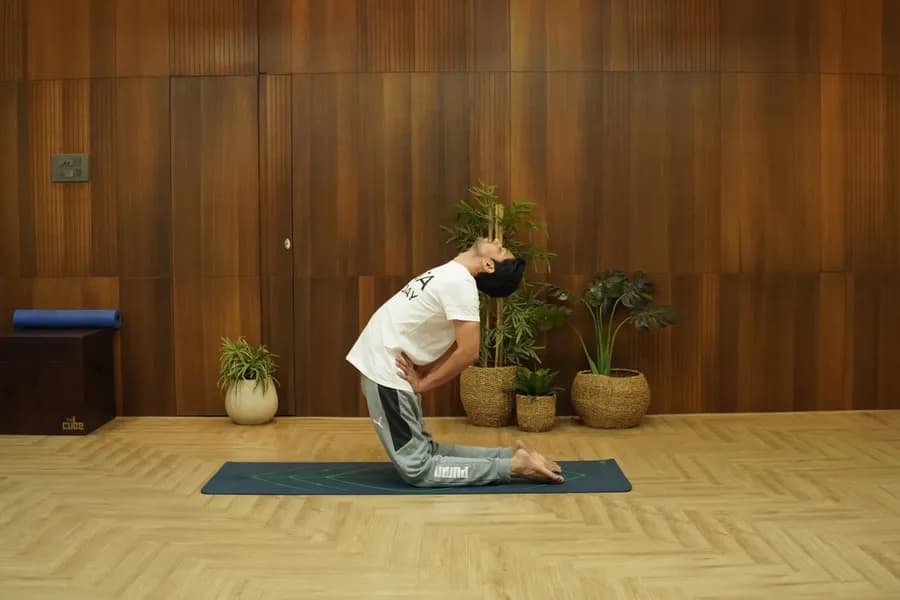
Ustrasana: Camel Yoga Pose, Steps & Yoga Benefits
Ustrasana, or Camel Pose, is a kneeling backbend that deeply stretches the hip flexors, chest, and entire anterior spine while strengthening the back.