7 Exercises for Lower Abs
A 7-move lower abs routine that targets the hardest-to-develop, last-to-show section of the rectus abdominis.
Key Takeaways
- Lying leg raises target full-range lower ab strength
- Reverse crunches add a stability-focused variation
- Dead bugs round out the lower-ab training pattern
- Guided by senior instructor Saurabh Bothra's live classes
- Targets the section most home training misses
What Are Exercises for the Lower Abs?
Exercises for the lower abs are core movements specifically designed to bias the bottom portion of the rectus abdominis (the visible six-pack muscle). Anatomically, the rectus abdominis is one continuous muscle from the ribs to the pelvis. There is no separate lower ab muscle. However, different exercises emphasise different sections through subtle differences in pelvic and spinal movement. Crunches and sit-ups bias the upper abs because the rib cage moves toward a fixed pelvis. Leg raises and reverse crunches bias the lower abs because the pelvis moves toward a fixed rib cage. The 3-exercise routine below targets the lower section directly.
The mechanism is pelvic mobility against a fixed upper body. When you perform a leg raise, your pelvis tilts upward as your legs lift, contracting the lower fibres of the rectus abdominis hard. When you perform a reverse crunch, the same mechanism occurs at a smaller range of motion. The result is a stronger, more defined lower ab section. Visibility depends on body composition — visible abs typically require body fat in the lean range (commonly cited as roughly under ~18% for men and ~24% for women, though individual genetics vary). Below those ranges, training produces visible results. Above them, the muscle is built but hidden under fat. Lower ab workouts for men and lower ab exercises for women follow the same principle, with diet doing most of the visibility work — a principle covered across generally.
Benefits of Exercises for the Lower Abs
Targets the Hardest-to-Train Ab Section
The lower abs are the last section to develop in most home trainers. Direct lower ab work bridges this gap and produces the complete, defined ab look most people want.
Improves Hip Flexor and Pelvic Strength
Lower ab exercises engage the hip flexors and pelvic stabilisers, building functional strength that transfers to running, jumping, and lifting. Pair them with broader for full abdominal-wall development.
Reduces Lower Back Strain
Strong lower abs counterbalance the hip flexors and reduce the anterior pelvic tilt that causes much of modern lower-back pain. The full core picture is best understood alongside , which addresses every layer of the abdominal wall.
Builds the Complete Six-Pack Look
Without dedicated lower ab work, the visible bottom two abs of the six-pack rarely emerge clearly. Direct training is what completes the look.
Best Lower Ab Exercises — 3 Movements
Exercise 1: Lying Leg Raise — Lower Rectus Abdominis — 3 sets of 12 reps
How to perform: Lie on your back with legs extended. Place your hands under your lower back for support. Lift both legs together until they are perpendicular to the floor. Lower slowly. Why it suits this goal: This is the foundation lower ab exercise. The full pelvic movement directly loads the lower abs. Modification: Bend the knees if straight legs are too challenging. Build to straight legs over 2 to 3 weeks.
Exercise 2: Reverse Crunch — Lower Abs, Hip Flexors — 3 sets of 12 reps
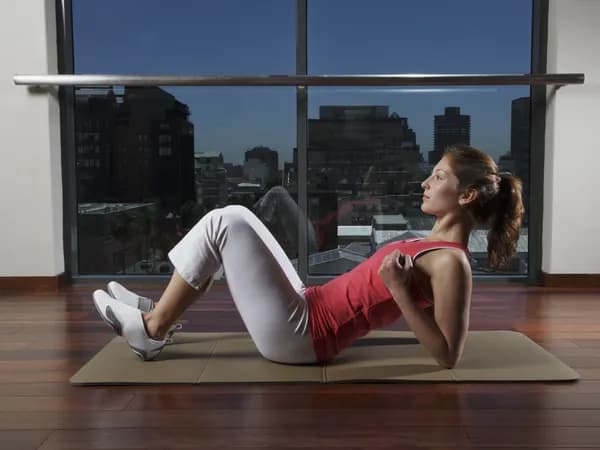
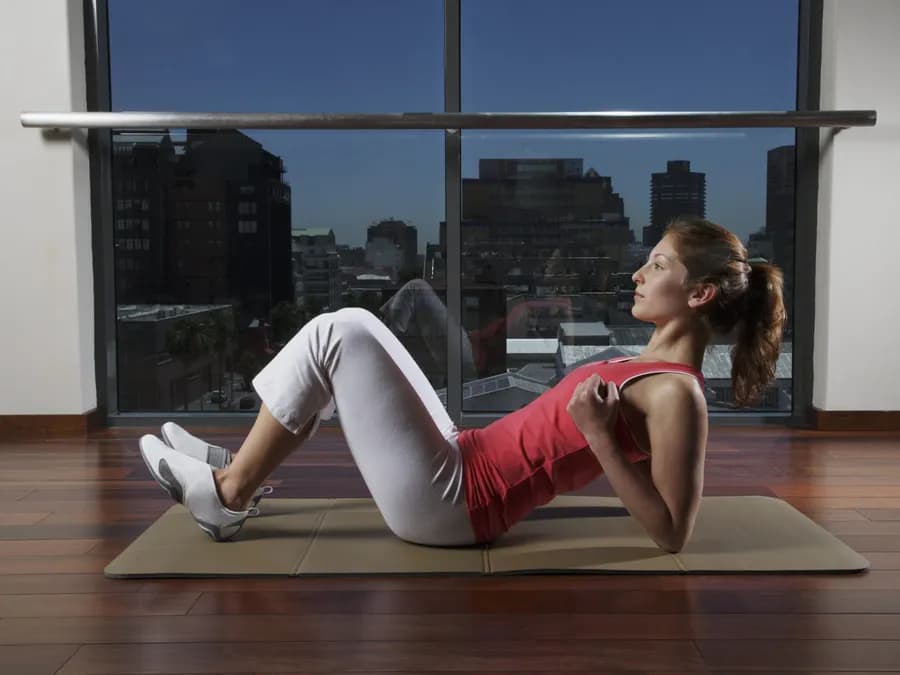
How to perform: Lie on your back with knees bent and feet off the floor. Curl your hips toward your chest by contracting the lower abs. Lower with control. Why it suits this goal: This is the most accessible lower ab exercise. The shorter range of motion makes it beginner-friendly while still loading the lower abs hard. Modification: Reduce the range of motion initially. Build the hip-curl movement before adding speed.
Exercise 3: Dead Bug — Anti-Extension Core Stability — 3 sets of 10 reps each side
How to perform: Lie on your back with arms extended toward the ceiling and knees bent at 90 degrees. Lower the right arm and left leg simultaneously toward the floor while keeping your lower back pressed flat. Return to start. Alternate sides. Why it suits this goal: This trains the lower abs in their stability function, building the core control most gym ab exercises miss. Modification: Move only the legs or only the arms initially. Build to the full pattern over 2 weeks.
Common Mistakes to Avoid in Lower Ab Training
Mistake 1: Lower Back Arching Off the Floor — Correction: Press Lower Back Flat
What it is and why it undermines results: When the lower back arches during leg raises, the hip flexors take over and the abs disengage. Strain transfers to the lumbar spine. What to do instead: Press your lower back firmly into the floor throughout every rep. If you cannot maintain this contact, reduce the range of motion.
Mistake 2: Using Momentum to Swing the Legs — Correction: Slow and Controlled
What it is and why it undermines results: Fast leg raises use momentum, not muscle. Lower ab activation drops substantially. What to do instead: Lift the legs over 2 seconds, lower over 3 seconds. Half the reps with full control deliver double the result.
Mistake 3: Doing Crunches and Calling Them Lower Ab Work — Correction: Use Pelvic-Movement Exercises
What it is and why it undermines results: Standard crunches bias the upper abs because the rib cage moves toward a fixed pelvis. They do not target the lower section. What to do instead: Use exercises where the pelvis moves toward a fixed rib cage. Leg raises, reverse crunches, and dead bugs all qualify. In a live Habuild class, the coach catches the lower-back-arch the moment it appears — invisible to the lifter, every time, and the silent reason most home lower-ab work produces minimal visible change.
50,000+ members already training with Habuild every morning
Live daily sessions · Expert instructor · Cancel anytime
How Habuild Trains You to Build Defined Lower Abs
Lower-Ab-Specific Programming, Not Generic Crunches
Habuild’s core sessions deliberately balance upper-ab work (crunches, planks) with lower-ab work (leg raises, reverse crunches) for complete development.
Live Daily Sessions With Real-Time Form Correction
The two invisible lower-ab failures (back-arching and momentum-swinging) are caught immediately by a live coach. Most home trainers default to both within 4 reps without realising it.
Progressive Overload Built Into Every Session
Members progress from bent-knee variations to straight-leg to weighted variations on a structured schedule based on rep benchmarks.
Accountability, Streaks, and Community
Visible lower ab definition takes 8 to 12 weeks of consistent training plus dietary discipline. Daily streaks and live cohort timing close the consistency gap.
Who Is Exercises for Lower Abs Best For?
Complete Beginners Starting from Zero
Lower ab exercises like dead bugs, lying leg raises, and flutter kicks require no equipment and minimal space. They begin at very low intensity and are scaled simply by adjusting leg height. The only requirement is showing up consistently — strength and technique follow from that.
Intermediate Trainees Looking to Fill a Gap
The lower abdominal region is one of the last areas to show definition — and one of the first to accumulate fat. Targeted lower ab exercises build the muscular foundation, which combined with a modest calorie deficit, produces the visible results most people are after. Adding lower ab exercises to an existing routine addresses a specific conditioning gap that most general workouts miss.
Those Targeting Ab Definition and Reducing Lower Belly Pouch
The lower abdominal region is one of the last areas to show definition — and one of the first to accumulate fat. Targeted lower ab exercises build the muscular foundation, which combined with a modest calorie deficit, produces the visible results most people are after.
Senior Citizens and Older Adults (50+)
Exercises for Lower Abs can be adapted for older adults by controlling tempo, reducing range of motion, and using supported variations. Habuild’s live instructors modify exercises in real time for different fitness levels and physical conditions in the same session.
Is Exercises for Lower Abs Good for Beginners?
Yes — absolutely. Exercises for Lower Abs begin at very low intensity with fully accessible entry-level variations. Habuild’s live instructor adapts the session in real time so beginners and experienced trainees can train together without either being left behind.
How to Add Exercises for Lower Abs to Your Training Routine
How Often to Do Exercises for Lower Abs — Frequency Guide
Train lower ab exercises 4–5 times per week. This frequency gives the muscle and nervous system adequate stimulus without outpacing recovery. Consistency matters more than intensity in the early weeks — showing up regularly produces better results than infrequent all-out sessions.
When in Your Workout to Do Exercises for Lower Abs
Place lower ab exercises in a dedicated core block, typically at the end of a training session after compound movements. Sequencing exercises correctly ensures you bring maximum quality to lower ab exercises rather than performing them under accumulated fatigue from earlier work.
What to Pair Exercises for Lower Abs With
Combine lower ab exercises with reverse crunches, bicycle crunches, and plank variations for a comprehensive core programme that targets all planes of movement. This combination develops complementary muscle groups in the same session and builds the balanced strength that prevents compensation and injury.
How to Progress Exercises for Lower Abs Over Time
Once the base movement feels controlled and repeatable, lower leg height closer to the floor (increases lever arm), add ankle weights, increase reps, then introduce hanging leg raises as strength develops. Progress only when form is consistent — adding difficulty before mastering the base movement reinforces poor mechanics and stalls long-term results.
How Habuild Teaches Exercises for Lower Abs
Habuild is India’s First Habit Building Program — and through its strength and fitness sessions, it brings the same habit-based philosophy to targeted exercise training. Every session is structured around your specific goal, not a one-size-fits-all class.
Goal-Specific Programming — Not a Generic Fitness Class
Every exercise, rep range, and rest period in Habuild’s lower ab exercises sessions is chosen because it produces results for lower ab exercises specifically. Habuild does not run the same session for every goal — the programme is structured to drive your specific outcome with every session, not general fitness that happens to include lower ab exercises.
Live Daily Sessions with Real-Time Form Correction
Unlike pre-recorded videos, Habuild’s live daily sessions allow the instructor to see and correct your form in real time — the specific errors that limit lower ab exercises results and increase injury risk. This live correction is the difference between training that works and training that wastes effort and creates bad habits.
Progressive Overload Built into Every Session
Members do not need to design their own progressive overload for lower ab exercises — it is built into the programme structure. Each week, sessions are deliberately more challenging than the last, ensuring the body never fully adapts and results continue coming rather than stalling.
Accountability, Streaks, and Community
The most common reason people stop exercising is not effort — it is missing sessions until the habit breaks. Habuild’s streak system, live session accountability, and community of members training the same goal alongside you resolves this directly. Members who join with a specific goal like lower ab exercises and stay consistent for 30 days almost universally report that showing up has become automatic.
Flexible Batch Timing
Choose morning or evening classes and join the slot that suits your day.
Morning
6:30 AM
7:30 AM
8:30 AM

Evening
5:00 PM
6:00 PM
7:00 PM
8:00 PM

Choose Your Membership Plan
Continue after the trial with membership options designed for long-term consistency support.
Continue your habit on the Habuild app
Use the Habuild app for reminders, live access, progress support, and habit tracking.