Exercises for Kegels: 7 Best Pelvic Floor Moves for Women and Men
A 7-move Kegel routine that strengthens the pelvic floor supporting the bladder, bowel, and reproductive organs.
Key Takeaways
- Strengthens the pelvic floor muscle hammock
- Improves bladder control for women and men
- Supports postpartum recovery and sexual function
- Guided by senior instructor Saurabh Bothra's live sessions
- Covers contraction and release patterns thoroughly
What Are Exercises for Kegels?
Exercises for kegels are pelvic floor strengthening movements that target the muscle hammock running from the pubic bone to the tailbone. These muscles support the bladder, bowel, and uterus in women, and the bladder and bowel in men. They also play critical roles in core stability, posture, and sexual function. Despite their importance, the pelvic floor is one of the most neglected muscle groups in fitness because it is invisible and never directly engaged in conventional workouts. The result is that most adults reach their 30s and 40s with weak pelvic floors, which is the underlying cause of urinary incontinence, postpartum complications, and chronic lower-back issues that other treatments fail to fix.
The mechanism of pelvic floor training is targeted contraction of the levator ani muscle group. The basic kegel involves drawing the pelvic floor muscles upward and inward, as if stopping the flow of urine mid-stream or holding back gas. Hold, then release fully. This simple action, performed correctly across multiple repetitions, builds pelvic floor strength within 6 to 12 weeks. Pelvic floor strong exercises also include integration with full-body movement, where the kegel contraction is held during exercises like glute bridges. Both kegel exercises for women and pelvic exercises for men follow the same principles. The 3-exercise routine below covers the foundation kegel, the quick flick variation, and the integrated bridge-with-kegel.
Benefits of Pelvic Floor Exercises
Reduces Urinary Incontinence in Women and Men
The Cochrane review of pelvic floor muscle training (Dumoulin et al. 2018 and follow-up updates) consistently finds significant reductions in stress urinary incontinence after structured 12-week protocols compared to no treatment. Pelvic exercises for men deliver similar benefits, particularly post-prostate surgery, when guided by a clinician.
Supports Postpartum Recovery
Pregnancy and vaginal delivery stretch and weaken the pelvic floor. Once cleared by a doctor (typically 6 weeks postpartum, longer for C-sections), kegel exercises for women support strength and tone restoration within 8 to 12 weeks — particularly when paired with broader for full postpartum recovery.
Improves Core Stability and Reduces Lower Back Pain
The pelvic floor is part of the deep core system. Strong pelvic floor muscles improve full-body core function, which makes them a natural complement to , where the deep stability system is being trained from multiple angles.
Enhances Sexual Function for Both Sexes
Stronger pelvic floor muscles can improve sexual sensation and function in both men and women, with effects measurable in clinical literature within 8 to 12 weeks of consistent training. The mechanism overlaps with broader principles — consistent loading, progressive overload, and recovery.
Best Pelvic Floor Exercises — 3 Movements
Exercise 1: Basic Kegel Hold — Pelvic Floor — 3 sets of 10 holds (5 seconds each)
How to perform: Sit, stand, or lie comfortably. Identify the pelvic floor muscles by imagining you are stopping the flow of urine mid-stream or holding back gas. Contract these muscles and hold for 5 seconds. Release fully for 5 seconds. Why it suits this goal: This is the foundation pelvic floor exercise. Master it before adding any variation. Modification: Start with 3-second holds and build to 5 seconds over 2 weeks.
Exercise 2: Quick Flicks — Pelvic Floor (Fast-Twitch) — 3 sets of 10 reps
How to perform: Same muscle action as the basic kegel, but contract and release rapidly (1 second each). Why it suits this goal: This trains the fast-twitch fibres of the pelvic floor that respond to sudden pressure (sneezes, coughs, lifting). The most relevant variation for stress incontinence. Modification: Start with 5 reps per set and build to 10.
Exercise 3: Bridge With Kegel — Pelvic Floor + Glutes + Core — 3 sets of 10 reps
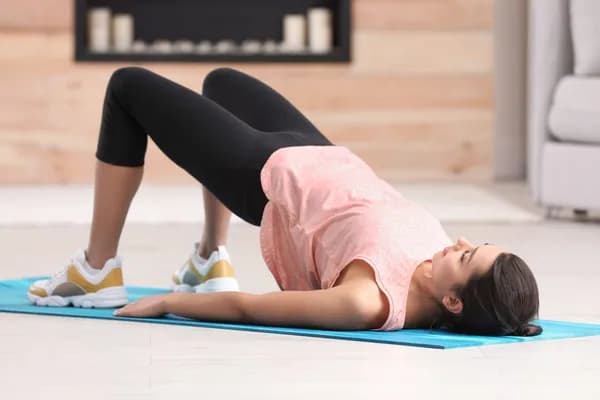
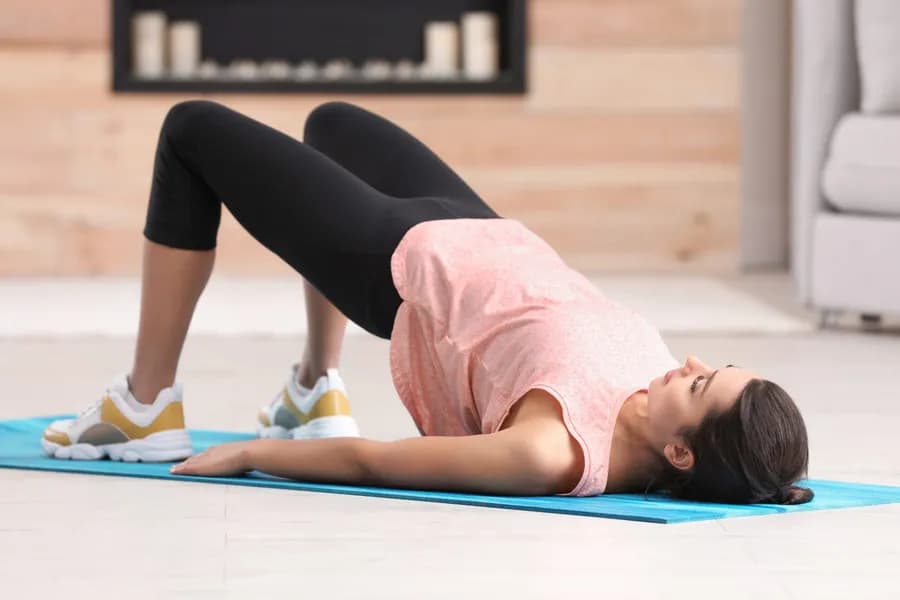
How to perform: Lie on your back with knees bent and feet flat on the floor. Engage a kegel hold, then lift your hips into a glute bridge. Lower with control while maintaining the kegel. Why it suits this goal: This trains the pelvic floor in its functional role of stabilising the deep core during full-body movement. Pelvic muscle exercises gain real-world transfer through this kind of integration — the same integration principle covered in . Modification: Practise the kegel and the bridge separately first. Combine them after 2 weeks of practice.
Common Mistakes to Avoid in Kegel Training
Mistake 1: Holding Breath During the Contraction — Correction: Breathe Normally
What it is and why it undermines results: Holding breath during a kegel makes the contraction feel stronger but bypasses the actual pelvic floor activation. What to do instead: Breathe normally throughout the entire exercise. The pelvic floor should contract independently of the diaphragm.
Mistake 2: Squeezing the Wrong Muscles — Correction: Isolate Pelvic Floor Only
What it is and why it undermines results: Most beginners contract the glutes, inner thighs, or abdominals along with the pelvic floor, which masks weak pelvic floor activation. What to do instead: Place a hand on your belly and your glutes during the kegel. Both should remain relaxed. Only the pelvic floor should contract.
Mistake 3: Skipping the Full Release — Correction: Relax Completely Between Reps
What it is and why it undermines results: Many practitioners hold low-grade tension between reps, which prevents the muscle from fully resetting. Over time this contributes to a hypertonic pelvic floor. What to do instead: Release completely between every rep. The relaxation phase is as important as the contraction. In a live Habuild class, the coach catches breath-holding and wrong-muscle activation through verbal cues — privacy is fully maintained because these exercises require no visible movement, and the cueing is what produces real results.
50,000+ members already training with Habuild every morning
Live daily sessions · Expert instructor · Cancel anytime
How Habuild Trains You to Build a Stronger Pelvic Floor
Pelvic-Floor-Specific Programming, Not Generic Core Work
Habuild’s core sessions deliberately include pelvic floor activation alongside conventional ab work. The pelvic floor is part of the deep core system and benefits from integrated programming.
Live Daily Sessions With Real-Time Form Correction
The three invisible kegel failures (breath-holding, wrong-muscle activation, and incomplete release) are caught immediately by a live coach who guides verbal cues. Privacy is maintained because these exercises require no visible movement.
Progressive Overload Built Into Every Session
Members progress from basic holds to integrated bridge-with-kegel variations on a structured schedule based on muscle response.
Accountability, Streaks, and Community
Pelvic floor strength takes 8 to 12 weeks of daily practice. Daily streaks and live cohort timing keep members showing up across the long timeline change requires.
Who Is Exercises for Kegels Best For?
Complete Beginners Starting from Zero
Kegel exercises are invisible and silent — they can be done anywhere, including seated at a desk or standing in a queue. There is no equipment and no fitness prerequisite to start. The only requirement is showing up consistently — strength and technique follow from that.
Intermediate Trainees Looking to Fill a Gap
Pelvic floor weakness affects a significant proportion of adults — particularly postpartum women and those over 40. Kegel exercises directly address incontinence, pelvic organ prolapse risk, and postpartum recovery without any equipment or gym access. Adding kegel exercises to an existing routine addresses a specific conditioning gap that most general workouts miss.
Postpartum Women, Those with Bladder Leakage, and Adults 40+
Pelvic floor weakness affects a significant proportion of adults — particularly postpartum women and those over 40. Kegel exercises directly address incontinence, pelvic organ prolapse risk, and postpartum recovery without any equipment or gym access.
Senior Citizens and Older Adults (50+)
Exercises for Kegels can be adapted for older adults by controlling tempo, reducing range of motion, and using supported variations. Habuild’s live instructors modify exercises in real time for different fitness levels and physical conditions in the same session.
Is Exercises for Kegels Good for Beginners?
Yes — absolutely. Exercises for Kegels begin at very low intensity with fully accessible entry-level variations. Habuild’s live instructor adapts the session in real time so beginners and experienced trainees can train together without either being left behind.
How to Add Exercises for Kegels to Your Training Routine
How Often to Do Exercises for Kegels — Frequency Guide
Train kegel exercises daily, 3 sets of 10 reps. This frequency gives the muscle and nervous system adequate stimulus without outpacing recovery. Consistency matters more than intensity in the early weeks — showing up regularly produces better results than infrequent all-out sessions.
When in Your Workout to Do Exercises for Kegels
Place kegel exercises any time of day — morning, midday, and evening sets spread throughout the day often produce the fastest results. Sequencing exercises correctly ensures you bring maximum quality to kegel exercises rather than performing them under accumulated fatigue from earlier work.
What to Pair Exercises for Kegels With
Combine kegel exercises with glute bridges, dead bugs, and diaphragmatic breathing for complete pelvic floor and core integration. This combination develops complementary muscle groups in the same session and builds the balanced strength that prevents compensation and injury.
How to Progress Exercises for Kegels Over Time
Once the base movement feels controlled and repeatable, increase hold duration (from 3 seconds to 10 seconds per contraction), add quick-contract pulses, then combine with functional movements like squats and bridges. Progress only when form is consistent — adding difficulty before mastering the base movement reinforces poor mechanics and stalls long-term results.
How Habuild Teaches Exercises for Kegels
Habuild is India’s First Habit Building Program — and through its strength and fitness sessions, it brings the same habit-based philosophy to targeted exercise training. Every session is structured around your specific goal, not a one-size-fits-all class.
Goal-Specific Programming — Not a Generic Fitness Class
Every exercise, rep range, and rest period in Habuild’s kegel exercises sessions is chosen because it produces results for kegel exercises specifically. Habuild does not run the same session for every goal — the programme is structured to drive your specific outcome with every session, not general fitness that happens to include kegel exercises.
Live Daily Sessions with Real-Time Form Correction
Unlike pre-recorded videos, Habuild’s live daily sessions allow the instructor to see and correct your form in real time — the specific errors that limit kegel exercises results and increase injury risk. This live correction is the difference between training that works and training that wastes effort and creates bad habits.
Progressive Overload Built into Every Session
Members do not need to design their own progressive overload for kegel exercises — it is built into the programme structure. Each week, sessions are deliberately more challenging than the last, ensuring the body never fully adapts and results continue coming rather than stalling.
Accountability, Streaks, and Community
The most common reason people stop exercising is not effort — it is missing sessions until the habit breaks. Habuild’s streak system, live session accountability, and community of members training the same goal alongside you resolves this directly. Members who join with a specific goal like kegel exercises and stay consistent for 30 days almost universally report that showing up has become automatic.
Flexible Batch Timing
Choose morning or evening classes and join the slot that suits your day.
Morning
6:30 AM
7:30 AM
8:30 AM

Evening
5:00 PM
6:00 PM
7:00 PM
8:00 PM


Choose Your Membership Plan
Continue after the trial with membership options designed for long-term consistency support.
Continue your habit on the Habuild app
Use the Habuild app for reminders, live access, progress support, and habit tracking.