
Strength Training vs Hypertrophy
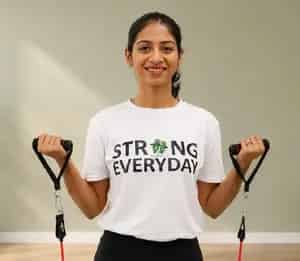
Join live strength training classes from home with beginner-friendly guidance and expert coaching.

Quick Comparison: Strength Training vs Hypertrophy
Calories Burned — Strength Training: Moderate, short sets, long rest. Hypertrophy: Moderate to High, higher total volume.
Muscle Building — Strength Training: Moderate, size as a side effect. Hypertrophy: Very High, primary goal.
Strength Gain — Strength Training: Very High, primary goal. Hypertrophy: Moderate, submaximal loading.
Fat Loss — Strength Training: Moderate, boosts resting metabolism. Hypertrophy: Moderate, higher per session burn.
Bone Density — Strength Training: Excellent, heavy loads drive adaptation. Hypertrophy: Good, moderate load stimulus.
Metabolism Boost — Strength Training: High, lean mass raises BMR. Hypertrophy: High, muscle mass raises BMR.
Beginner Friendly — Strength Training: Moderate, form critical at heavy loads. Hypertrophy: High, safer rep ranges to learn.
What Is Hypertrophy?
Hypertrophy is the scientific term for muscle growth — specifically, the increase in size of individual muscle fibres in response to mechanical tension, metabolic stress, and mild muscle damage. This three-pronged framework was formalised by Brad Schoenfeld in his 2010 paper "The Mechanisms of Muscle Hypertrophy and Their Application to Resistance Training" in the Journal of Strength and Conditioning Research, which remains the most cited model in applied hypertrophy science.
It is the training style bodybuilders use, the look most recreational lifters chase, and the foundation behind every "fuller, more defined" physique transformation. A typical hypertrophy session involves 8–12 reps per set, 3–5 sets per exercise, 60–90 seconds rest between sets, and loads at 65–75% of your one rep max, with controlled tempo and a focus on the muscle "squeeze" or pump.
Hypertrophy training also builds real strength — just not the peak strength a powerlifter chases — making it the most balanced entry point for most lifters seeking visible body composition change.
Strength Training vs Hypertrophy for Muscle Size
How Effective Is Each for Muscle Size?
For pure muscle size, hypertrophy wins clearly; it is literally engineered for this outcome. The 8–12 rep zone creates the precise blend of mechanical tension and metabolic stress that activates muscle growth pathways including mTOR signalling and satellite cell recruitment. A 2017 meta-analysis by Schoenfeld, Grgic, Ogborn, and Krieger in the Journal of Strength and Conditioning Research confirmed that moderate load training consistently produces superior muscle growth when total volume is matched. Strength training also builds muscle, particularly in the first year of training, but its primary adaptation is neurological — your brain learning to recruit more muscle fibers faster, not necessarily growing larger fibers.
Training Impact & Body Response
Hypertrophy sessions produce the trademark "pump" — blood rushing into the working muscle and creating temporary fullness that, repeated weekly, translates into permanent size gains. Soreness (DOMS) is more common, recovery feels muscle-specific, and physique changes show up in photographs within 6–8 weeks. Strength training feels different — heavy lifts, long rests, no chasing fatigue. You leave feeling strong, not swollen, and central nervous system fatigue takes 48–72 hours to fully recover.
Speed of Results & Sustainability
Visible size gains from hypertrophy: typically 4–8 weeks for beginners, slower thereafter as adaptation ceiling approaches. Strength gains from strength training: 15–30% one-rep-max increases in the first month from neural adaptation alone, with slower muscle-driven gains following a pattern first documented by Moritani and deVries in their 1979 paper "Neural Factors Versus Hypertrophy in the Time Course of Muscle Strength Gain." Hypertrophy is slightly more sustainable long term because submaximal loads create less joint and connective tissue wear.
Best Choice for Muscle Size
If your only goal is to look bigger, more defined, and more sculpted, choose hypertrophy as your primary method. But the smartest programmes — Strong Everyday included — cycle between both styles to break plateaus and build size on a foundation of real strength. Pure hypertrophy without strength work hits ceilings; pure strength without hypertrophy looks lean but not full.
Strength Training vs Hypertrophy for Maximum Strength
How Effective Is Each for Strength?
Strength training wins decisively for raw strength. Lifting at 85–95% of your one-rep max teaches your nervous system to fire more muscle fibres simultaneously and synchronise their contraction — which is why focused powerlifters routinely out-lift bodybuilders despite being visibly smaller. Hypertrophy builds usable strength too, but it peaks lower because submaximal loads do not fully train maximum neural recruitment. After six months of focused strength work, your deadlift will be measurably higher than after six months of hypertrophy even if your physique looks less developed.
Training Impact & Body Response
Strength training taxes the central nervous system far more than the muscle tissue. Sessions feel intense but short, with long rest periods and a focus on max output rather than fatigue. Recovery requires 48–72 hours per movement pattern, and the cumulative neural fatigue makes systematic deloads every 4–6 weeks essential; without them, plateaus and overuse injuries appear quickly.
Speed of Results & Sustainability
Strength gains arrive faster than size gains. Your first month of focused strength work can produce 15–30% one-rep-max increases purely from neural adaptation. Beyond that, gains slow and require careful periodisation. Strength training is harder on joints long term, which is why deload weeks, mobility work, and recovery practices matter more than they do for hypertrophy training.
Best Choice for Strength
If you want to lift heavier, perform better in athletic contexts, and build the kind of functional power that translates to sport and daily life, strength training is the answer. Adding hypertrophy-style accessory work two days per week prevents plateaus and addresses muscular weak points that pure strength programmes often miss.
When Strength Training May Be the Better Long-Term Choice Than Hypertrophy
Strength training has long-term advantages that compound beyond aesthetics. Heavy compound lifts stimulate bone density more effectively than moderate-load volume work — confirmed by the Watson et al. 2018 LIFTMOR trial in the Journal of Bone and Mineral Research, which demonstrated significant bone mineral density gains in postmenopausal women through high-intensity resistance training that moderate-load programmes did not replicate.
Strength training builds the lean mass that drives resting metabolic rate, supports healthy testosterone and growth hormone responses, and protects grip strength and leg power — two of the most reliable longevity predictors in adults over 40. The Leong et al. 2015 PURE study in The Lancet, tracking 139,691 adults across 17 countries, found grip strength to be a stronger predictor of cardiovascular mortality than systolic blood pressure.
Sessions are also time-efficient: 45 minutes of focused strength work three days a week often produces better physique and performance outcomes than 75-minute hypertrophy sessions five days a week. That said, hypertrophy is not inferior; it offers easier recovery, lower acute injury risk, and superior body composition control through volume manipulation. The most sustainable lifelong approach blends both, which is exactly what most solo lifters fail to structure on their own.
Best Strength Training Approaches That Compete with Hypertrophy
If you want strength-style training that also delivers genuine size, these approaches blend the best of both methods:
Compound lifts in the 4–6 rep range — squats, deadlifts, bench press, overhead press done with moderate volume produce strength gains AND meaningful muscle growth simultaneously.
Powerbuilding programmes — heavy compound work followed by hypertrophy-style accessory exercises in the same session, the most popular hybrid approach for recreational lifters.
Block periodisation — rotating 4–6 week hypertrophy blocks with 4–6 week strength blocks to maximise both adaptations across the year.
5×5 programmes — classic strength templates that use moderate volume to drive both strength and muscle gain, ideal for intermediate lifters.
Cluster sets — heavy loads broken into mini sets with brief rest, capturing strength stimulus while accumulating hypertrophy-relevant volume.
How Habuild Strong Everyday Classes Compare to Hypertrophy
Build Muscle & Burn Fat Together
Strong Everyday programmes both compound strength work and hypertrophy-style accessory volume across each week. You get measurable size gains AND strength gains without designing your own split, and the metabolic conditioning built into the programming addresses fat loss simultaneously — something pure hypertrophy or pure strength routines rarely deliver.
Guided Live Format vs Solo Training
Solo hypertrophy training fails most often when lifters cut reps short, skip progression, or ego-lift on heavy days. In a live class, the instructor calls out form cues, tempo, and intensity in real time — accountability that pre-recorded videos cannot match.
Progressive Overload with Expert Guidance
Every week, Trishala Bothra programmes specific load increases, rep adjustments, and exercise variations so you are never stuck in the same routine. Most solo lifters lift the same weight for months because they have no structured progression plan.
Daily Structured Practice for Habit Building
The hardest part of any strength programme is not the workout itself — it is showing up consistently for months. Daily live classes at fixed times solve attendance through structure.
Works for All Fitness Levels
Beginners receive scaled versions with bodyweight progressions and lighter loads. Intermediates receive full programming with weekly progression. Advanced lifters receive periodised cycles with deload weeks and progression challenges.
Flexible Batch Timing
Choose morning or evening classes and join the slot that suits your day.
Morning
6:30 am - 7:15 am
7:30 am - 8:15 am
8:30 am - 9:15 am

Evening
5pm - 5:45pm
6pm - 6:45pm
7pm - 7:45pm

Meet Your Strength Training Trainer

Trishala Bothra
COO & Co-Founder, Habuild
Trishala's online strength training sessions combine practical coaching with progressive programming — her methods have helped thousands build sustainable strength.
Choose Your Membership Plan
Continue after the trial with membership options designed for long-term consistency support.
Continue your habit on the Habuild app
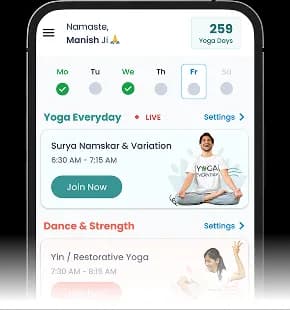
Use the Habuild app for reminders, live access, progress support, and habit tracking.