
Pranayama Asana: A Guide to Breathing Poses Benefits and Practice
Practice Pranayama Asana with Habuild. Learn pranayama breathing types, steps, and benefits for lung health, stress relief, and daily vitality. Start today!
Key Takeaways
- Pranayama is Patanjali’s fourth limb, formally bridging physical asana and internal meditation.
- Ranges from energising Kapalbhati and Bhastrika to calming Nadi Shodhana and Bhramari.
- Extended-exhale ratios specifically activate the baroreceptor reflex to lower blood pressure.
- Kapalbhati’s rapid abdominal contractions massage digestive organs mechanically during practice.
- Named the most direct yogic tool for shifting between sympathetic and parasympathetic dominance.
- Taught as a dedicated system, not an afterthought tacked onto the end of asana practice.
Pranayama is the yogic science of breath regulation — the fourth limb of Patanjali’s Ashtanga yoga — using deliberate control of breath rate, depth, and retention to improve lung capacity, regulate blood pressure, stimulate digestion, and calm the nervous system. It bridges physical practice and meditation. Suitable for all levels progressively.
What is Pranayama Asana?
Pranayama — from Sanskrit: Prana (life force or vital breath) and Ayama (extension, expansion, or control) — is the yogic science of breath regulation. As the fourth limb of Patanjali’s Ashtanga yoga, pranayama formally bridges the physical dimension of asana practice and the internal dimensions of pratyahara, dharana, dhyana, and samadhi.
Pranayama practices range from the vigorously energising (Kapalbhati, Bhastrika) to the profoundly calming (Nadi Shodhana, Bhramari) to the specifically therapeutic (Suryabhedan, Chandrabhedan, Sitali). Each produces distinct physiological and psychological effects through deliberate manipulation of breath rate, depth, ratio, and retention.
At Habuild, pranayama is taught as a dedicated dimension of yoga — not as an afterthought following asana but as a complete, sophisticated system of breath education that deepens the benefits of every physical posture practised.
Pranayama Asana Benefits
Physical Benefits
- Improves Lung Capacity and Respiratory Function Regular pranayama — particularly Kapalbhati, Bhastrika, and Nadi Shodhana — progressively strengthens the respiratory muscles, improves vital capacity, and enhances gas exchange efficiency. Directly beneficial for asthma management and all conditions characterised by restricted lung function.
- Regulates Blood Pressure and Cardiovascular Health Slow, rhythmic pranayama — particularly extended exhale ratios — activates the baroreceptor reflex and increases vagal tone, producing measurable blood pressure reductions. One of the most clinically supported yoga interventions for blood pressure management.
- Stimulates Digestive Organs and Supports Metabolic Health Kapalbhati’s rapid abdominal contractions provide direct mechanical massage of the digestive organs — stimulating gut motility, digestive enzyme production, and liver function.
- Supports Hormonal Balance Through Nervous System Regulation The autonomic nervous system is the primary regulator of endocrine function — and pranayama is the most direct yogic tool for shifting between sympathetic and parasympathetic dominance.
Mental Benefits
- Reduces Anxiety and Supports Better Sleep The parasympathetic activation from slow pranayama — particularly extended exhale ratios — reduces cortisol, lowers heart rate, and produces the nervous system calming that anxiety relief and sleep quality require.
- Improves Cognitive Function and Mental Clarity The dramatic increase in cerebral oxygenation from energising pranayama and stress-hormone reduction from calming pranayama produce complementary improvements in cognitive function.
Key Pranayama Practices
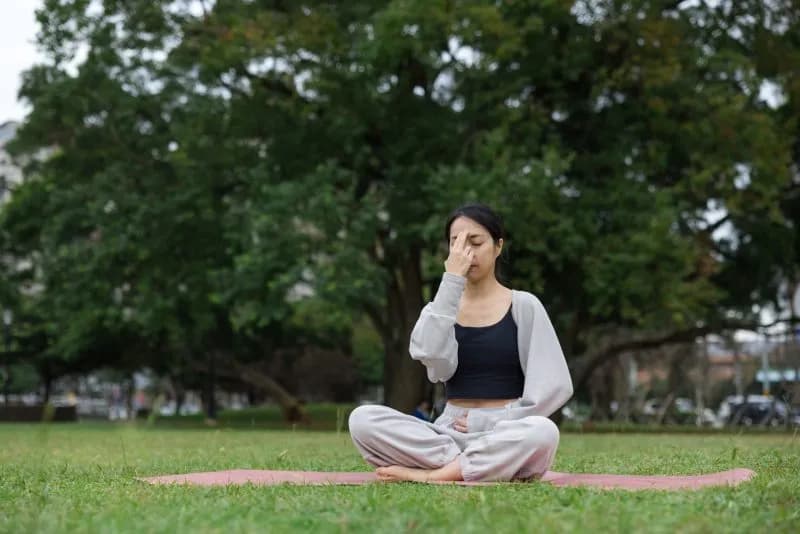
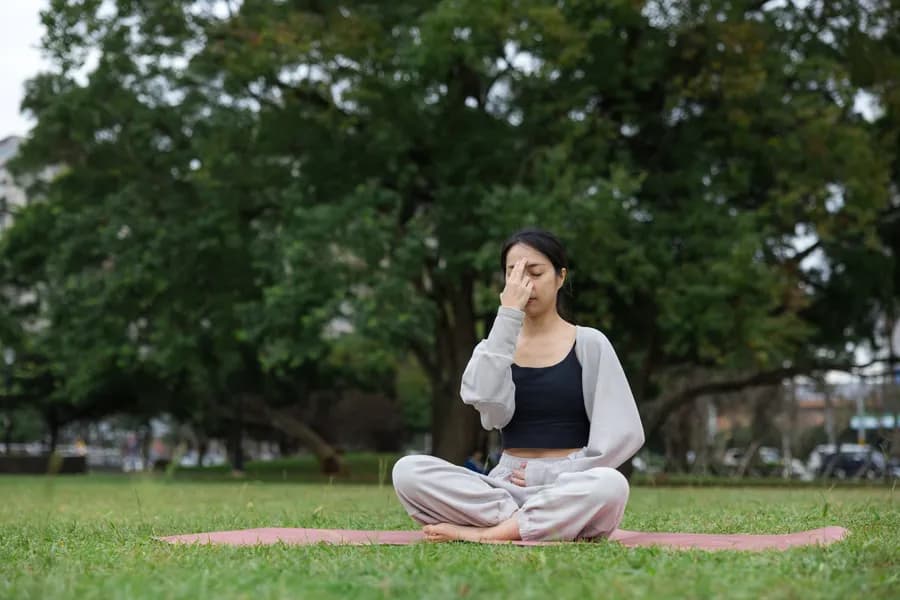
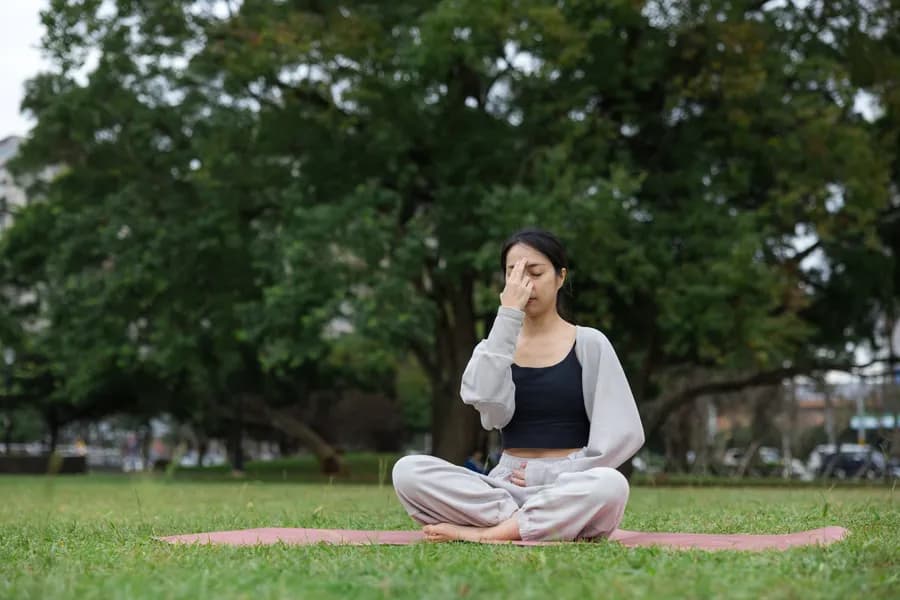
Nadi Shodhana — Alternate Nostril Breathing The most widely practised pranayama — alternating the breath between right and left nostrils through Vishnu Mudra. Balances the autonomic nervous system, reduces anxiety, and regulates hormonal health. Ideal for all practitioners at all times of day.
Kapalbhati — Skull-Shining Breath Forceful exhalations produced by sharp abdominal contractions. One of the most effective pranayama practices for digestion, metabolic activation, and core strengthening.
Bhramari — Humming Bee Breath The practitioner hums on the exhalation — the vibration stimulates the vagus nerve and reduces anxiety. One of the most effective practices for insomnia when practised for 5–10 minutes before sleep.
Ujjayi — Ocean Breath A gentle throat constriction during both inhale and exhale creates the characteristic oceanic sound. Used throughout asana practice to regulate pace, deepen concentration, and build internal heat.
How to Practise Nadi Shodhana — Step-by-Step
Key Principles
Three foundations: correct seated posture — spine erect, chest open; quality of attention — pranayama is meditative practice, not mechanical exercise; and progressive development — begin with shorter, simpler practices and build gradually over weeks.
Nadi Shodhana — Step by Step
Step 1: Seated Position and Hand Mudra Sit in Sukhasana — spine tall, eyes closed. Bring the right hand to Vishnu Mudra — index and middle fingers folded, thumb and ring finger extended. Left hand on left knee in Chin Mudra.
Step 2: Close Right Nostril and Inhale Left Close the right nostril with the right thumb. Inhale slowly and fully through the left nostril for 4 counts.
Step 3: Optional Retention Close both nostrils. Hold gently for 4 counts if comfortable. Beginners omit retention initially.
Step 4: Exhale Through Right Nostrils Release the thumb. Exhale completely through the right nostril for 8 counts.
Step 5: Complete One Round Inhale through the right nostril for 4 counts. Hold for 4. Exhale through the left for 8. This completes one full round.
Step 6: Continue 5-10 Rounds Practise 5–10 complete rounds. Build over weeks to a 4:4:8 ratio or further.
Duration and Frequency
Begin with 5–10 minutes daily. Build gradually to 20–30 minutes over weeks. Consistency matters more than session length. Morning practice provides the greatest clarity; evening practice provides the parasympathetic calming most valuable for sleep.
Common Mistakes to Avoid
- Forcing the Breath Pranayama should feel expansive and easeful, never strained. Any effort that produces tension, light-headedness, or discomfort signals the need to slow down or reduce the duration.
- Practising Kapalbhati Too Vigorously Too Early Build abdominal strength and technique gradually — the most common beginner error that produces hyperventilation and dizziness is forcing the pace before the abdominal technique is established.
- Neglecting the Seated Posture A collapsed spine restricts the diaphragm and prevents effective breathing. Invest in proper seated posture before introducing pranayama techniques.
Who Should Practise?
- Those with Respiratory Conditions Pranayama is the most directly beneficial yoga dimension for respiratory health — strengthening breathing muscles, improving lung capacity, and training the conscious breath control that asthma specifically benefits from.
- All Yoga Practitioners — The Practice That Transforms All Others Pranayama transforms asana from physical exercise into a genuine mind-body practice. Every yoga practitioner benefits from integrating dedicated daily pranayama alongside physical practice.
- Is Pranayama Good for Beginners? Nadi Shodhana is the ideal first pranayama for all beginners — safe, immediately accessible, calming, and a reliable foundation for all subsequent practices.
Make Pranayama Asana a Part of Your Practice
Pranayama is yoga’s most transformative and most universally beneficial dimension — its deliberate breath regulation delivering respiratory health, cardiovascular regulation, nervous system balance, hormonal support, and the meditative qualities that physical practice alone cannot access.
Whether beginning with 5 minutes of Nadi Shodhana, building a complete morning pranayama sequence, or integrating Ujjayi throughout asana practice, pranayama rewards every level of consistent daily practice.
The most effective way to learn pranayama correctly — with technique instruction, pace guidance, and contraindication awareness — is under live expert guidance with Habuild.
Start your 14 day free yoga journey with Habuild, today!
Related reads: Adi Mudra: How to Practice and Its Benefits for Breathing and Calm · Health Benefits of Bhramari Pranayama
Breathing practices are unusual among yoga techniques in that their benefits are almost entirely dependent on repetition — a single pranayama session might leave you calmer for an hour, but the lung capacity and stress resilience this guide describes only build with daily practice over weeks. Picking one or two techniques and returning to them consistently matters more than trying every variation once. Habuild’s Yoga Everyday program pairs pranayama with asana in a structured daily sequence for exactly this reason.
Frequently Asked Questions
Related Articles
Kapalbhati Pranayam: How to Practice Benefits and Precautions
Practice Pranayam Kapalbhati with Habuild. Follow the skull-shining breath steps to boost digestion, strengthen your core, and energise your body. Start today!
Suryabhedan Pranayam: How to Practice and Its Energy Benefits
Practice Suryabhedan Pranayam with Habuild. Follow the right nostril breathing steps to boost energy, improve circulation, and activate your body. Start today!
Chandrabhedan Pranayam: How to Practice and Its Cooling Benefits
Practice Chandrabhedan Pranayam with Habuild. Follow the left nostril breathing steps to calm your mind, cool your body, and improve sleep quality. Start today!
Moola Bandha (Root Lock): How to Practice and Its Energy Benefits
Practice Moola Bandha with Habuild. Learn the root lock steps to strengthen your pelvic floor, improve digestion, and support hormonal balance. Start today!
Sukhasana (Easy Pose): Steps Benefits and Meditation Foundation
Try sukhasana with Habuild. Discover the sukhasana pose to improve posture, reduce stress, and cultivate a calm and focused mind. Start your session today!