
Parvat Asana (Mountain Pose): Steps Posture and Upper Body Benefits
Practice Parvat Asana with Habuild. Follow the mountain pose steps to strengthen your arms, lengthen the spine, and deepen your yoga practice. Start today!
Key Takeaways
- Forms either the inverted-V of Surya Namaskara or a seated triangle with arms overhead.
- The seventh posture in the twelve-step Surya Namaskara sequence, bridging prone and standing.
- Its triangular shape is said to represent stability, permanence, and upward aspiration.
- The seated arm-extension form specifically supports the chest opening pranayama requires.
- Balances the spinal compression of the preceding eight-limbed prone posture in the sequence.
- Progressively strengthens the deltoids, rotator cuff, and upper trapezius over time.
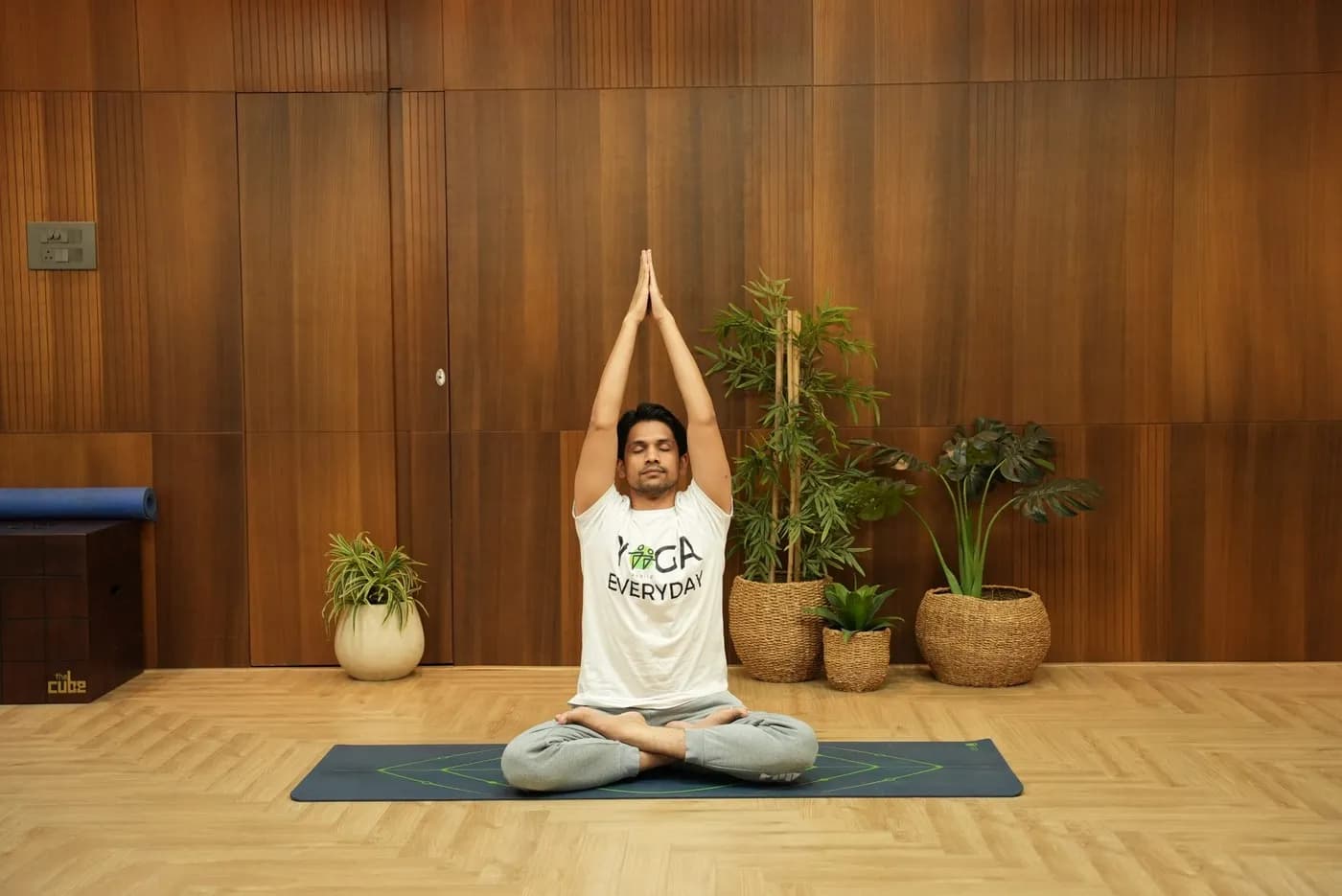
Parvat Asana, or Mountain Pose, creates a triangular mountain shape either in the inverted-V form of Surya Namaskara (the seventh Sun Salutation step) or in the seated form with arms extended overhead. It lengthens and decompresses the spine, strengthens the shoulders and upper back, stretches the posterior chain, and deepens the breath — a key transitional and pranayama support posture.
What is Parvat Asana?
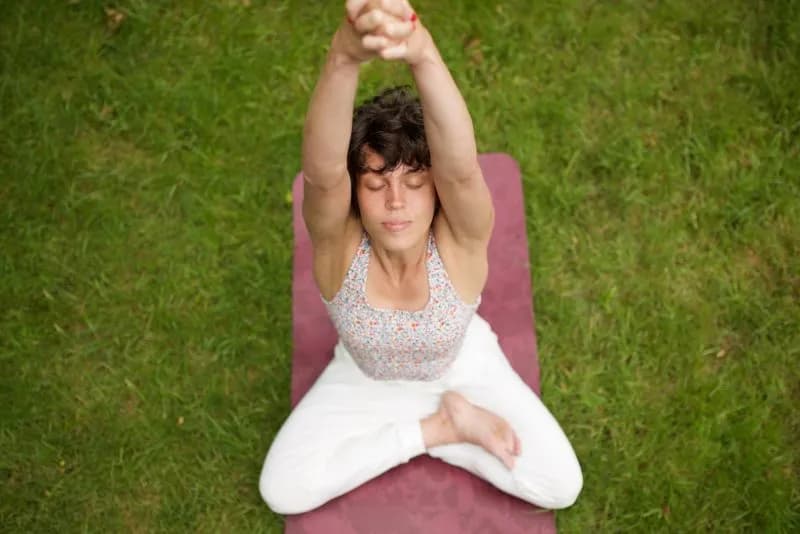
Parvat Asana — the Mountain Pose — derives from Sanskrit: Parvat (mountain) and Asana (posture). The pose creates the shape of a mountain or pyramid with the body — either in the inverted-V form of Surya Namaskara (palms and feet on the floor, hips raised, body forming a triangle) or in the seated form (sitting cross-legged with arms extended overhead and palms joined, creating the triangular shape from base to peak).
In Surya Namaskara, Parvat Asana is the seventh posture in the twelve-pose sequence — the pivotal transition that follows the eight-limbed prone position and precedes the standing lunge. Its triangular form represents the stability, permanence, and upward aspiration of the mountain, and its biomechanical function is the comprehensive spinal decompression and posterior chain stretching that balances the preceding spinal compression postures.
At Habuild, Parvat Asana is taught both within every Surya Namaskara sequence — with the spinal elongation, heel-direction, and head-relaxation cues that distinguish therapeutic from mechanical practice — and as the seated arm-extension posture that supports the thoracic opening required for optimal pranayama.
Parvat Asana Benefits
Physical Benefits
- Lengthens and Decompresses the Spine The inverted-V form creates axial traction through the entire spinal column — the gravitational pull of the elevated hips combined with the active elongation of the back producing meaningful intervertebral decompression. This spinal lengthening reverses the compression of sitting and prone postures, making it one of yoga’s most therapeutically important spinal health movements.
- Strengthens the Shoulders and Upper Back The sustained weight-bearing through the arms in the inverted-V form, and the sustained overhead extension in the seated form, both progressively strengthen the deltoids, rotator cuff, serratus anterior, and upper trapezius that shoulder health and postural integrity require over time.
- Stretches the Complete Posterior Chain The inverted-V form provides a comprehensive stretch of the hamstrings, calves, and entire posterior chain — one of its most immediately appreciated benefits for practitioners with the tight hamstrings and lower back tension of sedentary lifestyles.
- Improves Posture and Deepens the Breath Both forms of Parvat Asana encourage thoracic extension and upright spinal alignment — directly counteracting the forward-hunching and thoracic rounding of desk and screen use. The seated form’s overhead arm extension additionally opens the chest cavity, deepening the breath and providing the optimal thoracic freedom that pranayama requires.
Mental Benefits
- Calms the Mind Through Focused Upward Aspiration The sustained muscular engagement and breath awareness of Parvat Asana — maintaining the inverted-V or the upright seated extension — focuses the mind through the body, producing the quiet, present-moment awareness that sustained posture work cultivates. The mountain shape itself embodies the quality of stable, unmoving upward aspiration.
How to Do Parvat Asana — Step-by-Step Instructions
Key Principles
Key Principles Two forms, one principle: prioritise spinal elongation over all other demands. In the inverted-V form, spinal length takes precedence over heel contact — bent knees with a long spine is always more correct than straight legs with a rounded back. In the seated form, the arms extend from an upright, rooted spine — not from a collapsed or rounded base.
Parvat Asana — Step by Step (Surya Namaskara Form)
Step 1: From Ashtang Namaskar — Press the Palms and Tuck the Toes From the eight-limbed prone position of Ashtang Namaskar, press the palms firmly into the floor and tuck the toes under. This is the preparation for the lift.
Step 2: Lift the Hips Upward and Back on the Exhale On an exhalation, lift the hips upward and backward — creating the inverted V shape. Bend the knees generously at first, focusing entirely on spinal length before any heel-contact effort.
Step 3: Extend the Tailbone Away From the Crown Draw the sitting bones upward toward the ceiling. Simultaneously extend the crown of the head toward the floor — creating maximum spinal length from coccyx to crown.
Step 4: Relax the Head and Heel-Press Toward the Floor Relax the head completely between the arms — ears level with the upper arms, not straining forward. Once the spine is long, begin pressing the heels toward the floor without compromising the spinal length.
Step 5: Hold for the Surya Namaskara Duration Hold for one to three breath cycles within Surya Namaskara, maintaining spinal length and shoulder-blade-away-from-ears positioning throughout. Breathe into the back body.
Step 6: Seated Form — Arms Extended Overhead for Pranayama For the seated Pranayama form: sit in Sukhasana or Padmasana, spine erect. Inhale and extend both arms overhead — palms joined, fingers pointing upward. Hold throughout the pranayama session.
Breathing in Parvat Asana
In Surya Namaskara: exhale to lift into the inverted-V, hold with natural breathing for one to three cycles. In the seated form: each inhale extends the spine further upward through the joined palms; each exhale grounds deeper through the sitting bones. The seated Parvat Asana’s chest-open, arm-extended position provides the optimal thoracic freedom for all pranayama practices.
Preparatory Poses Before Parvat Asana
Parvat Asana in Surya Namaskara does not require preparation beyond the preceding sequence. As a standalone hold:
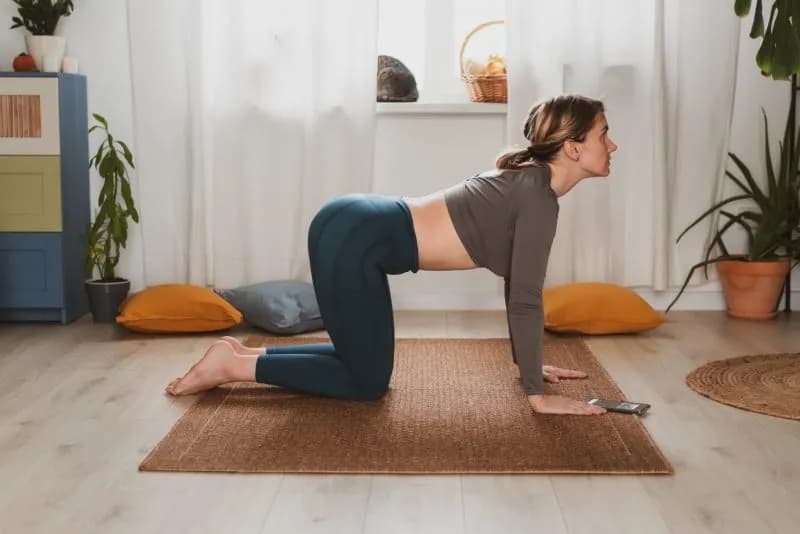
- Marjariasana-Bitilasana (Cat-Cow, 10 cycles) — Warms the complete spine before the extended-line demand of the inverted V.
- Wrist warm-up (circles, prayer stretch) — For the inverted-V weight-bearing form.
- Shoulder rolls and cross-body stretch — Prepares the shoulders before the overhead extension of the seated form.
Variations of Parvat Asana
- Variation 1: Bent-Knee Inverted V — Beginner Form Knees generously bent with full focus on spinal elongation — the universally correct beginner form for the Surya Namaskara Parvat Asana. Identical to the beginner form of Adho Mukha Svanasana in all respects.
- Variation 2: Full Inverted V — Standard Surya Namaskara Form Legs progressively straightening as posterior chain length develops — the standard form that emerges from consistent daily bent-knee practice over weeks.
- Variation 3: Seated Parvat Asana with Extended Hold — Pranayama Form Arms extended overhead throughout a complete pranayama session — providing the optimal chest-open, thoracically-extended seated posture for Kapalbhati, Nadi Shodhana, and all pranayama practices.
Common Mistakes to Avoid in Parvat Asana
- Rounding the Lower Back Rather Than Extending the Tailbone The most common Parvat Asana error in the inverted-V form — lower back rounding as hamstring tightness prevents the full spinal extension. Always prioritise spinal length by bending the knees generously. The straight-leg expression develops naturally as the posterior chain lengthens through consistent practice.
- Tensing the Neck and Straining the Head Forward The head must hang completely relaxed between the upper arms — ears level with the arms, no muscular tension in the neck. Active neck tensing concentrates cervical spine compression rather than decompressing it.
- Bending the Elbows in the Inverted-V Form The arms must remain straight in the inverted-V form — bent elbows reduce the shoulder and back-body stretch and concentrate wrist-joint stress. If the arms cannot straighten without rounding the spine, use the bent-knee modification to allow straight arms and long spine simultaneously.
Who Should Practise Parvat Asana?
- All Surya Namaskara Practitioners Parvat Asana appears in every Surya Namaskara sequence — making it the most frequently practised posture in yoga outside of the transitions themselves. Every Surya Namaskara practitioner practises and benefits from correct Parvat Asana in every session.
- Pranayama Practitioners Seeking Thoracic Freedom The seated Parvat Asana with arms extended overhead provides the optimal thoracic extension and chest opening that all pranayama practices — particularly Kapalbhati and Surya Bhedana — benefit from throughout their duration.
- Is Parvat Asana Good for Beginners? Yes — the bent-knee inverted-V is immediately accessible and more therapeutically correct for beginners than forced straight-leg practice. The seated form with arms overhead is accessible to all practitioners regardless of flexibility.
Make Parvat Asana a Part of Your Daily Practice
Parvat Asana is yoga’s most frequently performed transitional posture and one of its most broadly beneficial spinal health practices — its daily repetition within Surya Namaskara accumulating spinal decompression, posterior chain flexibility, and shoulder strength benefits that compound progressively over weeks and months.
Whether you are establishing the correct spinal elongation priority of the inverted-V form in your first Surya Namaskara rounds, or using the seated form to optimise your pranayama thoracic freedom, Parvat Asana delivers its spinal and shoulder benefits in every correctly performed repetition.
The most effective way to learn Parvat Asana correctly — with tailbone-extension guidance, head-relaxation instruction, and seated-form pranayama integration — is under live expert guidance with Habuild.
Start your 14 day free yoga journey with Habuild, today!
Related reads: Chaturanga Asana: Steps Alignment Tips and Upper Body Benefits · Parsvakonasana (Side Angle Pose): Steps and Full Body Benefits
Parvat Asana’s overhead reach lengthens the spine and builds shoulder strength in small increments each time you hold it, which is why it tends to show up as a warm-up rather than a standalone practice — the benefits stack across a sequence. Returning to it daily, as part of a broader flow, is what keeps the shoulders and spine limber rather than tight. Habuild’s Yoga Everyday program uses poses like this to open a daily session.
Frequently Asked Questions
Related Articles
Sukhasana (Easy Pose): Steps Benefits and Meditation Foundation
Try sukhasana with Habuild. Discover the sukhasana pose to improve posture, reduce stress, and cultivate a calm and focused mind. Start your session today!

Tadasana — The Mountain Pose
Tadasana, or Mountain Pose, is the quiet foundation every standing yoga pose is built on — simple to look at, precise to get right.

Kapalbhati Pranayam: How to Practice Benefits and Precautions
Practice Pranayam Kapalbhati with Habuild. Follow the skull-shining breath steps to boost digestion, strengthen your core, and energise your body. Start today!
Suryabhedan Pranayam: How to Practice and Its Energy Benefits
Practice Suryabhedan Pranayam with Habuild. Follow the right nostril breathing steps to boost energy, improve circulation, and activate your body. Start today!
Vajrasana: How to Do It Benefits and Precautions
Practice vajrasana pose with Habuild. Try vajrasana to ease digestion, reduce back pain, and calm your mind. Ideal for all levels. Start your session today!