
Bhujangasana: Cobra Pose Steps, Benefits & Tips
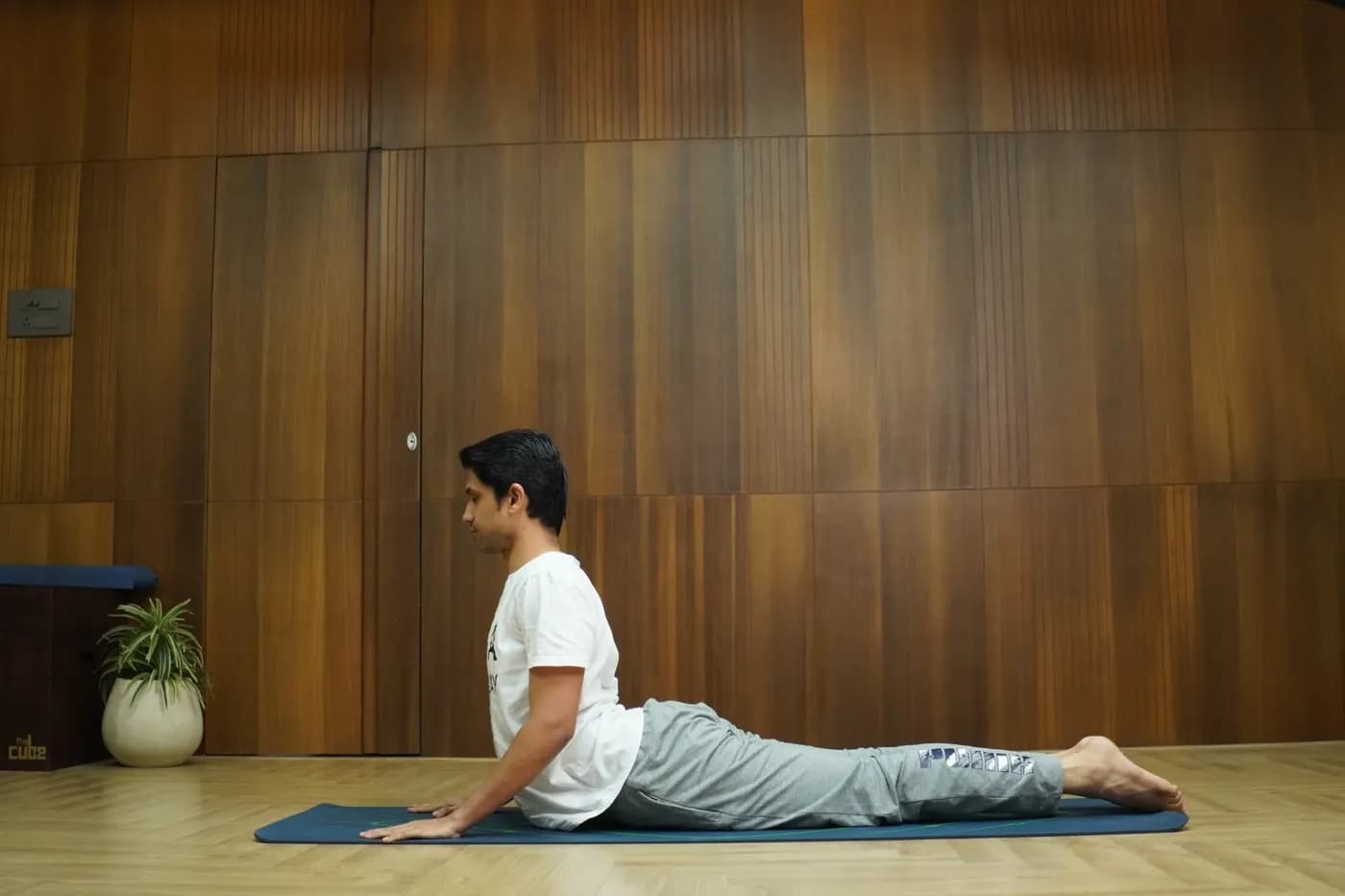
Bhujangasana, or Cobra Pose, strengthens the spine and entire back musculature, opens the chest, stimulates abdominal organs, and corrects the postural damage of prolonged sitting.
Key Takeaways
- Sits as Step 7 within the classical twelve-step Surya Namaskara sequence.
- Concentric contraction of the erector spinae and multifidus builds protective spinal support.
- One of the most accessible postures for complete beginners despite its deep therapeutic value.
- Anterior chest expansion directly counteracts the forward-hunch of desk and screen use.
- Abdominal compression during the hold massages the liver and kidneys.
- Combines breath synchronisation with progressive depth in every structured daily session.
Bhujangasana, or Cobra Pose, strengthens the spine and entire back musculature, opens the chest, stimulates abdominal organs, and corrects the postural damage of prolonged sitting. It improves respiratory capacity and reduces stress. One of the 12 steps of Surya Namaskara and a foundational daily practice suitable for all levels — including complete beginners.
What is Bhujangasana?
Bhujangasana — known in English as Cobra Pose — is one of the most recognised and therapeutically powerful backbend postures in yoga. The name derives from Sanskrit: Bhujanga meaning serpent or cobra, and asana meaning posture. The pose replicates the raised hood of a cobra — the chest lifted, the spine arched, the gaze forward — and in doing so delivers a profound opening of the anterior body that few other postures can replicate.
Bhujangasana belongs to the prone backbend family — postures performed lying face down — and sits within the classical Sun Salutation sequence as Step 7 as well as standing as a powerful independent practice. It is simultaneously one of the most accessible postures for complete beginners and one of the most therapeutically valuable for those managing back stiffness, poor posture, and respiratory restriction.
At Habuild, Bhujangasana is practised daily as part of every structured yoga session — taught with precise alignment cues, breath synchronisation, and progressive depth to ensure every practitioner receives the full range of its physical and energetic benefits safely.
Bhujangasana Benefits
Physical Benefits
- Strengthens the Entire Spine and Back Musculature — The primary Bhujangasana benefits centre on spinal health. As the chest lifts in Bhujangasana, the erector spinae, multifidus, and deep spinal stabilisers contract concentrically — building the muscular support that protects the vertebral column from the cumulative damage of prolonged sitting and forward-flexion postures.
- Opens the Chest and Improves Respiratory Capacity — The anterior chest expansion of Bhujangasana stretches the pectorals, intercostal muscles, and anterior shoulder capsule — directly counteracting the forward-hunched posture that desk work, driving, and screen use systematically create. This thoracic opening improves lung expansion capacity and the quality of breathing.
- Stimulates Abdominal Organs and Supports Digestion — The compression of the abdominal region in Bhujangasana — combined with the deep breath required to hold the posture — massages the digestive organs, stimulates the liver and kidneys, and supports peristaltic movement. Regular practice relieves constipation and supports healthy digestive function.
- Improves Posture and Corrects Thoracic Kyphosis — By strengthening the thoracic extensors and stretching the anterior chest, it directly addresses the rounded shoulders, forward head posture, and thoracic kyphosis that modern sedentary living produces. Even five minutes of daily practice produces measurable postural improvement within weeks.
Mental and Emotional Benefits
- Reduces Fatigue and Lifts Energy — Backbends gently stimulate the sympathetic nervous system and produce the alert, expanded feeling associated with chest-opening. Practitioners consistently report a noticeable shift from fatigue and mental dullness to clarity and physical readiness.
- Reduces Stress, Anxiety, and Emotional Contraction — The chest-opening action of Bhujangasana engages the cardiac plexus and vagal pathways running through the thoracic region — producing a measurable reduction in anxiety, emotional constriction, and the physical holding patterns that stress creates in the chest and upper body.
How to Do Bhujangasana — Step-by-Step Instructions
Key Principles
Three principles govern safe Bhujangasana: the lift leads from the sternum, not the chin — the chest rises forward and upward, not the head; the elbows remain slightly bent for most practitioners — full elbow extension should only be approached when the spinal flexibility genuinely supports it; and the shoulders actively draw back and away from the ears throughout the hold.
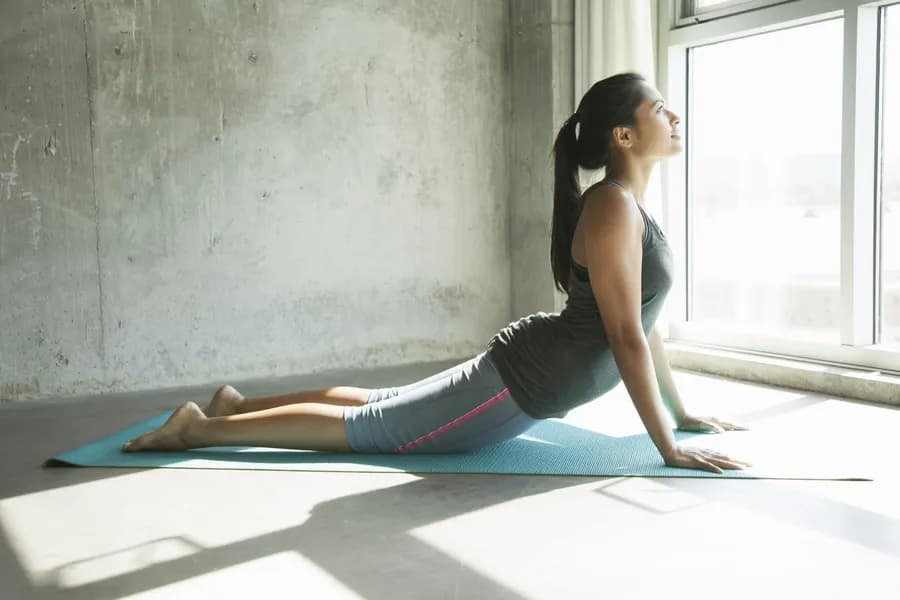
Step 1: Starting Prone Position — Lie face down on the mat with legs together and extended, tops of feet flat on the floor, and forehead resting on the mat. Allow the body to relax completely into the floor before beginning.
Step 2: Position the Hands — Place the palms flat on the mat directly beneath the shoulders — fingers spread wide, pointing forward. Draw the elbows in toward the ribcage. The elbows should not flare outward.
Step 3: Ground the Lower Body — Press the tops of the feet, thighs, and pubic bone gently into the mat. Engage the legs without gripping the buttocks excessively. This lower body grounding protects the lumbar spine throughout the lift.
Step 4: Inhale and Lift the Chest — On an inhalation, begin to straighten the arms and lift the chest off the mat — leading with the sternum rather than the chin. Keep the shoulders drawing back and down, away from the ears.
Step 5: Final Position and Hold — Lift only as high as the back muscles can comfortably support — for most beginners, a baby Cobra with elbows still bent is both safer and more beneficial than forced full extension. Hold for three to five breaths, breathing fully into the expanded chest.
Step 6: How to Come Out of Bhujangasana — On an exhalation, slowly lower the chest back to the mat — reversing the movement, leading with the sternum returning down. Rest with the forehead on the mat for one to two breaths before repeating or transitioning.
Breathing in Bhujangasana
Inhale initiates the lift; the hold is maintained with full, expansive breathing. Each inhalation creates more space in the expanding chest — directing breath into the intercostal spaces opened by the backbend. Each exhalation maintains the structural lift without deflating the chest. Never hold the breath in Bhujangasana.
Preparatory Poses Before Bhujangasana
These poses warm the spine and anterior body before the Cobra backbend.
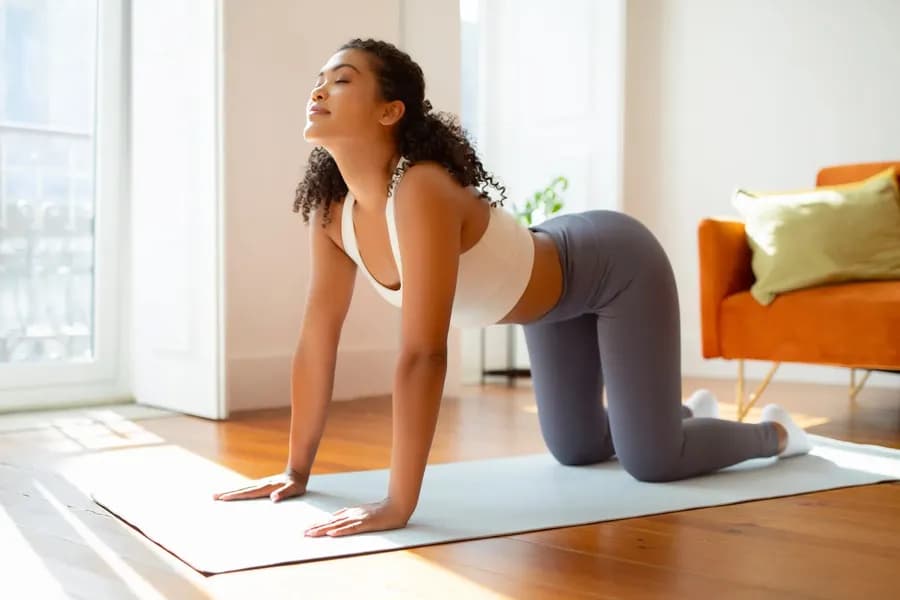
- Cat-Cow (Marjaryasana-Bitilasana, 5-8 rounds) — The essential spinal warm-up — moves the spine through its full flexion-extension range before the Cobra's sustained extension.
- Sphinx Pose (held 30-60 seconds) — A gentler prone backbend on the forearms that warms the spinal extensors before the more demanding Cobra.
- Child's Pose (Balasana, 30 seconds) — Releases the lumbar and sacral region before the extension-focused practice.
- Gentle neck rolls — Warms the cervical spine before the sustained extension of the Cobra hold.
Variations of Bhujangasana
- Variation 1: Baby Cobra — Beginner — Elbows remain generously bent throughout — the chest lifts only a few inches from the floor. This variation is the safest and most therapeutically appropriate for all beginners, those with lower back sensitivity, and practitioners in the early weeks of building spinal extension capacity.
- Variation 2: Full Cobra — Intermediate — Arms gradually extend further as spinal flexibility and back muscle strength develop — approaching full elbow extension when the back muscles (not the arms) can genuinely support the height. The distinction: in Full Cobra, the hands could be lifted from the floor without the chest dropping.
- Variation 3: Purna Bhujangasana — Advanced — The complete expression of Cobra — arms fully extended, spine arching maximally, with the feet optionally drawn toward the head through deep hip flexor and quadriceps flexibility. Requires months of consistent preparatory work and should only be developed under qualified instruction.
Common Mistakes to Avoid in Bhujangasana
- Straightening the Arms Fully Before the Back Is Ready — Straightening the arms fully in Cobra before the spinal flexibility and back muscle strength to support it has developed compresses the lumbar vertebrae and can produce acute lower back pain. Gradual arm extension over weeks and months is correct progression.
- Leading with the Chin Rather Than the Sternum — Lifting the head first — cranking the neck back — creates cervical compression and bypasses the thoracic extension the pose is designed to develop. Always initiate the lift from the sternum, allowing the head to follow naturally.
- Compressing the Shoulders Toward the Ears — Allowing the shoulders to rise toward the ears creates neck tension and restricts the chest-opening action of the pose. Actively draw the shoulder blades back and down throughout.
Who Should Practise Bhujangasana?
- Office Workers and Desk Professionals — For anyone spending six or more hours seated at a desk, Bhujangasana is one of the most valuable corrective postures available. Even five minutes of daily practice produces measurable postural and respiratory improvement within weeks.
- Older Adults and Those with Back Stiffness — The progressive spinal extension builds the paraspinal strength that prevents the flexion-dominant postural collapse associated with ageing. Baby Cobra is accessible to virtually all older adults.
- Is Bhujangasana Good for Beginners? — Yes — Baby Cobra is one of the most beginner-friendly postures in yoga. It requires no prior flexibility or strength beyond the simple act of lying face down and lifting the chest a few inches.
Make Bhujangasana a Part of Your Daily Practice
Bhujangasana is the yoga tradition's most accessible and comprehensively beneficial spinal backbend — its simultaneous spinal strengthening, chest opening, digestive stimulation, and postural correction delivering a breadth of physical and physiological benefit that no other single prone posture matches.
Whether you are using Bhujangasana as a gentle five-minute morning back-health practice, as Step 7 of your daily Surya Namaskara sequence, or as a postural counterpose after hours of desk work, the posture is accessible, progressive, and consistently rewarding.
The most effective way to learn Bhujangasana correctly — with the precise sternum-led lift, shoulder alignment, and progressive depth that delivers maximum benefit safely — is under live expert guidance with Habuild.
Start your 14 day free yoga journey with Habuild, today!
Related reads: Purna Bhujangasana: Steps Benefits and Difference from Cobra Pose · Salamba Bhujangasana (Sphinx Pose): Steps and Back Health Benefits
Cobra Pose energises almost instantly, but the spinal strength and chest opening that Bhujangasana is known for take shape over repeated practice, as the muscles supporting the backbend gradually get stronger. A single stretch loosens things temporarily; consistent practice changes the baseline. Habuild's Yoga Everyday program sequences backbends like this into a daily flow that builds spinal strength progressively.
Frequently Asked Questions
Related Articles

Tadasana — The Mountain Pose
Tadasana, or Mountain Pose, is the quiet foundation every standing yoga pose is built on — simple to look at, precise to get right.

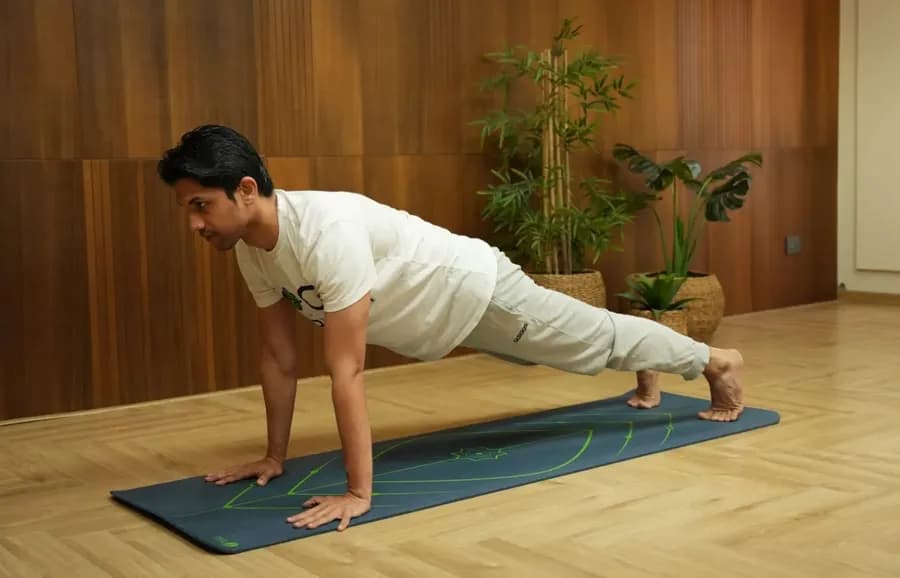
Adho Mukha Svanasana — The Downward-Facing Dog Pose
Adho Mukha Svanasana, universally known as Downward-Facing Dog, is one of yoga's most iconic and versatile postures.
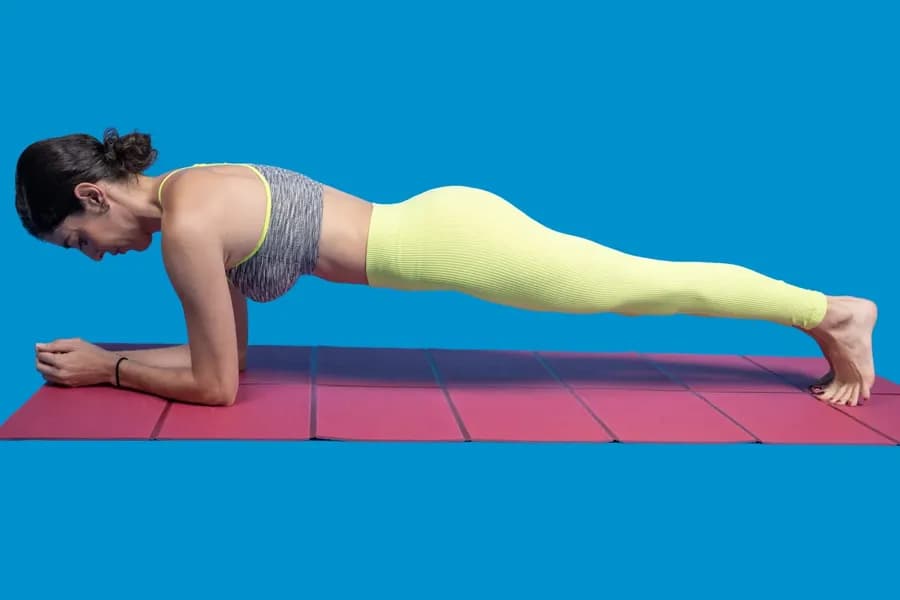
Marjaryasana–Bitilasana — The Cat–Cow Pose
Marjaryasana–Bitilasana, commonly known as Cat–Cow Pose, is a gentle, dynamic flow between two postures that warms up the body and brings flexibility to the entire spine.
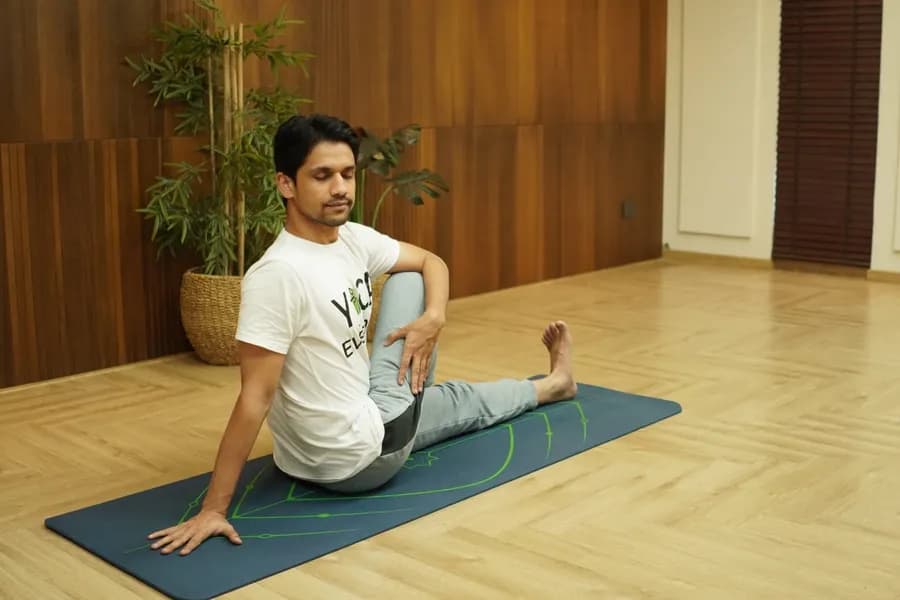
Vakrasana: Twisted Pose, Steps & Yoga Benefits
Vakrasana, or Twisted Pose, is a seated spinal rotation that improves spinal flexibility, stimulates digestive organs, and strengthens the core.
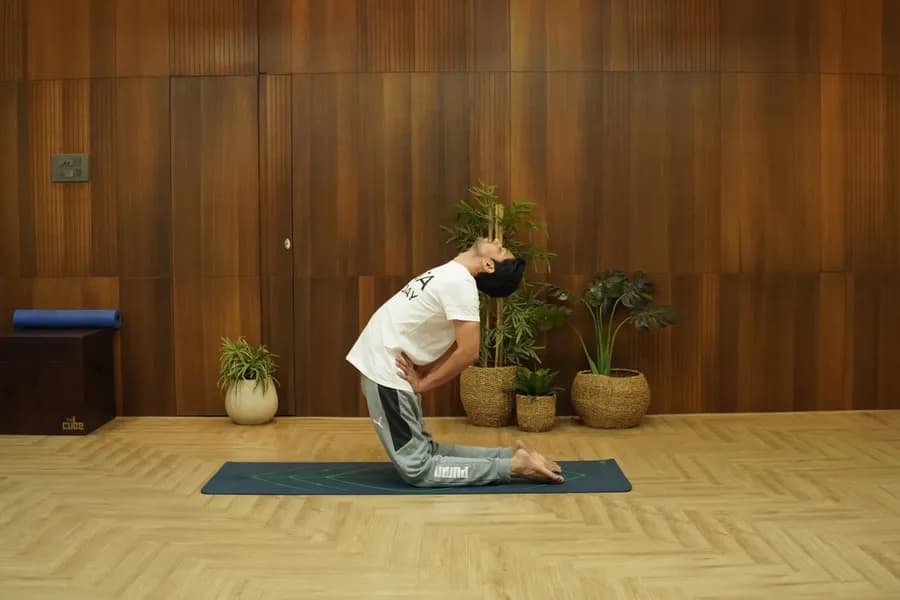
Ustrasana: Camel Yoga Pose, Steps & Yoga Benefits
Ustrasana, or Camel Pose, is a kneeling backbend that deeply stretches the hip flexors, chest, and entire anterior spine while strengthening the back.